
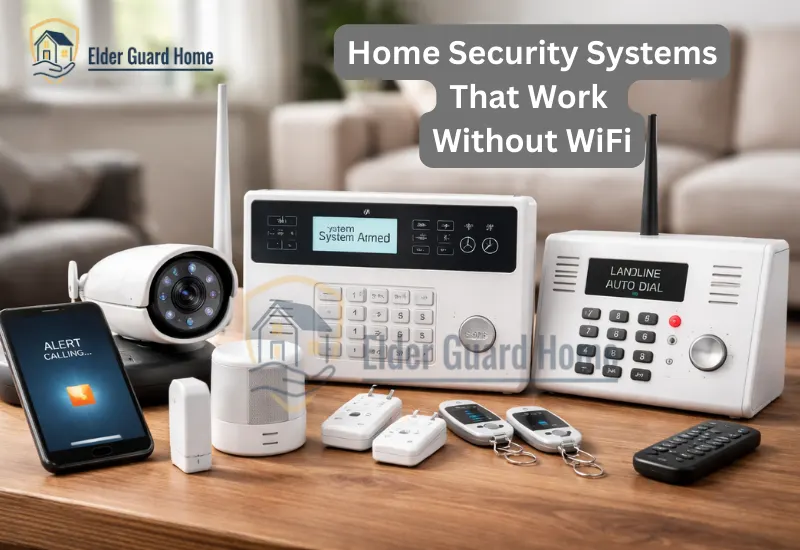
A home security system without WiFi is becoming increasingly important, especially for homes in rural areas or locations where internet connectivity is unreliable. While many modern security systems depend on WiFi, offline security technology provides a dependable alternative that continues working even when the internet fails.
For example, systems that use cellular home security alerts or a landline auto dial alarm system can still notify homeowners or caregivers when suspicious activity occurs. Because of this, many families searching for the best home security system without WiFi choose solutions that operate independently from internet connections.
These systems are particularly useful for:
Seniors living alone, where a GSM alarm system for seniors can send simple call or SMS alerts
Rural homes where internet service is slow or unstable
Remote cabins, farms, or vacation homes without broadband access
Outdoor monitoring using a security camera without WiFi or internet
If your property experiences unstable internet connectivity, understanding how these offline security systems work can help you choose a more reliable protection solution. In this guide, we will explain how offline alarm systems operate and when they are the best choice for protecting homes and seniors.
Can a Home Security System Work Without WiFi?
Yes. A home security system without WiFi can function effectively using alternative communication methods such as cellular networks or traditional phone lines.
For instance, a GSM alarm system for seniors uses a SIM card to send SMS or call alerts. Similarly, cellular home security alerts notify homeowners through mobile networks, while a landline auto dial alarm system calls emergency contacts when sensors detect motion or intrusion.
Why Some Home Security Systems Don’t Need Wi-Fi
Most modern smart security systems rely on internet connectivity. However, Wi-Fi dependency can be a major weakness in certain situations.
Common problems with Wi-Fi security systems
Internet outages disable alerts
Weak rural broadband coverage
Router failures or power cuts
Elderly users uncomfortable with apps
A home security system without WiFi solves this problem by using cellular networks or landline calls to deliver alerts.
This means the alarm can still notify you even when internet access is unavailable.
How a Home Security System Without WiFi Works
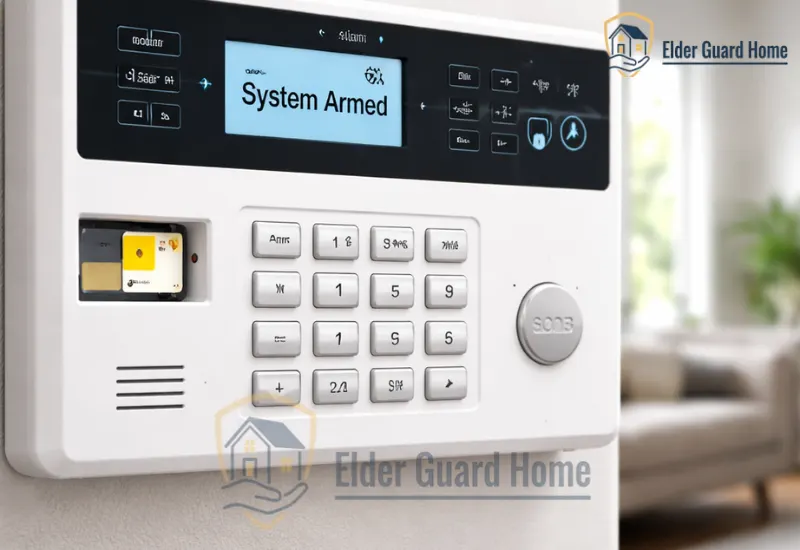
Offline security systems rely on alternative communication networks instead of internet connections. Instead of sending alerts through a cloud server, these systems transmit signals through cellular networks or landline telephone connections.
Consequently, they continue working even when the router fails or the internet goes offline. Because of this reliability, many homeowners consider them the best home security system without WiFi in locations where broadband connectivity is unreliable.
Many modern setups now use home security cameras without cloud storage that store footage locally instead of sending it to the cloud. If you’re concerned about data security, read our guide on privacy-first home monitoring systems that protect your data without cloud storage.
GSM Alarm System for Seniors and Rural Homes
A GSM alarm system for seniors uses a built-in cellular module with a SIM card. When sensors detect motion or a door opening, the alarm panel immediately sends alerts through the mobile network.
Key features typically include:
SIM-based communication module
SMS notifications to family members
automatic phone call alerts
keypad or remote arming options
Because these systems communicate through cellular networks, they remain functional even when WiFi is unavailable. Therefore, they are often used in rural areas where internet infrastructure is limited.
Furthermore, caregivers can receive alerts instantly when an alarm is triggered. This makes GSM systems particularly useful for elderly homeowners living alone.
Cellular Home Security Alerts Using Mobile Networks
Another important component of offline security technology is cellular home security alerts. These systems rely on LTE or GSM networks to send messages when sensors detect activity.
Unlike WiFi-based alarms, cellular systems communicate directly with mobile towers. As a result, they can deliver notifications through SMS or automated calls even when the home internet is offline.
Typical alert methods include:
SMS messages sent to multiple contacts
automated voice calls
cellular app notifications
In addition, caregivers or family members can receive alerts instantly, allowing them to respond quickly if a security event occurs.
Landline Auto Dial Alarm System for Emergency Calls
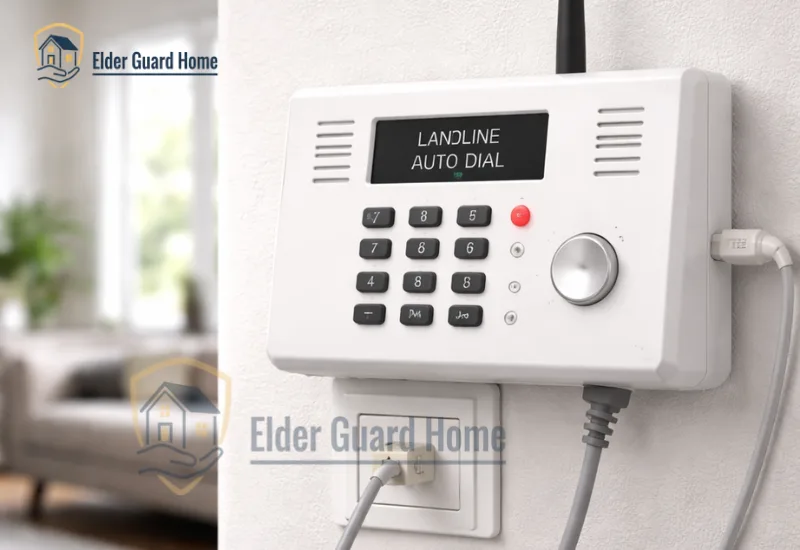
A landline auto dial alarm system is another reliable offline security option. Instead of using cellular networks, these alarms connect to a traditional telephone line.
When the system detects a security event, it automatically calls preset contacts.
Typical functions include:
automatic dialing of emergency contacts
recorded voice messages describing the alert
continuous calling until someone answers
Because landline systems operate independently from internet networks, they remain reliable during broadband outages. In fact, they are still widely used in older homes where traditional phone lines are available.
Who Should Use a Non-WiFi home security system
Although many households rely on internet-based security devices, certain environments benefit significantly from offline systems.
1. Rural Homes With Unreliable Internet
Rural areas frequently experience slow or unstable internet connections. Consequently, WiFi-based alarms may fail to send alerts during outages.
However, systems that rely on cellular home security alerts continue working as long as mobile coverage is available. Because of this advantage, many rural homeowners prefer a Non-WiFi home security system for dependable protection.
2. Seniors Living Alone Who Need Simple Alarm Alerts
Older adults often prefer simple security systems that do not require smartphone apps or internet configuration.
In these situations, a GSM alarm system for seniors is particularly useful. Instead of sending complicated app notifications, the system can simply:
send a text message
call a family member
activate a loud alarm siren
Therefore, caregivers receive immediate alerts when security sensors detect activity.
Some families also explore passive monitoring technologies that automatically detect accidents inside the home. Our guide on radar vs camera fall detection explains how these systems work and which one is more reliable.
3. Remote Cabins, Farms, and Vacation Homes
Properties located far from cities often lack reliable internet service. As a result, smart security cameras connected to cloud services may not function properly.
Instead, a security camera without WiFi or internet or a GSM alarm system can monitor these properties more effectively. Because they operate independently from broadband networks, they provide consistent monitoring even in remote areas.
Bathrooms remain one of the highest-risk areas for falls in remote homes. Installing specialized monitoring solutions such as bathroom fall detection systems can significantly improve safety for elderly residents.
WiFi-independent home security system vs WiFi Security Systems
| Feature | Home Security System Without WiFi | WiFi Security Systems |
|---|---|---|
| Internet Requirement | No internet needed | Requires stable WiFi connection |
| Alert Method | SMS alerts or phone calls via GSM or landline | Mobile app notifications and cloud alerts |
| Reliability During Internet Outage | Works normally without internet | Stops sending alerts if WiFi fails |
| Remote Monitoring | Limited or unavailable | Full remote access through mobile apps |
| Installation Complexity | Simple installation with sensors and dialer | Requires router setup and app configuration |
| Best Use Case | Rural homes, cabins, senior monitoring | Urban homes with stable internet |
GSM Alarm System vs Landline Auto Dial Alarm System
| Feature | GSM Alarm System | Landline Auto Dial Alarm System |
|---|---|---|
| Communication Method | Mobile network using SIM card | Traditional telephone landline |
| Network Requirement | Cellular signal required | Active landline connection required |
| Alert Speed | Instant SMS or phone call alerts | Sequential phone calls to saved contacts |
| Installation Complexity | Moderate (SIM setup required) | Very simple plug-and-play |
| Reliability During Internet Outage | Works without internet | Works without internet |
| Best For | Homes without landlines or rural properties | Seniors using traditional home telephones |
Both systems provide dependable alerts. However, GSM alarms are generally more flexible because they work anywhere with cellular coverage.
Key Features to Look for in a Home Security System Without WiFi
Choosing the best home security system without WiFi requires evaluating several important features.
Cellular Network Compatibility for GSM Alarm Systems
Before purchasing a GSM alarm system, ensure it supports the mobile networks available in your region. Some older alarms rely on outdated 2G networks, which are gradually being phased out.
Therefore, modern systems that support LTE or multi-band GSM networks offer better long-term reliability.
Battery Backup for Power Outages
Power outages can disable security systems that lack backup power. For this reason, most reliable alarms include rechargeable batteries capable of running the system for several hours.
This ensures the alarm remains operational during electricity failures.
Multi-Contact Cellular Home Security Alerts
Another important feature is the ability to notify multiple contacts.
For example, a system might send alerts to:
the homeowner
a caregiver
a trusted neighbor
Because cellular home security alerts reach several contacts simultaneously, the chances of someone responding quickly increase.
Loud Siren and Emergency Call Dialer
Even though alert notifications are important, a loud siren can also discourage intruders.
Most security systems include alarms ranging from 90 to 120 decibels. In addition, many models include an automatic dialer that calls emergency contacts immediately.
Pros and Cons of Home Security Systems That Work Without WiFi
Pros
Works without internet
Reliable during Wi-Fi outages
Simple setup
Ideal for rural homes
Direct phone call alerts
Cons
Limited smartphone features
No cloud video monitoring
Requires cellular or landline access
Some systems use outdated networks
Advantages of GSM and Cellular Alarm Systems
Offline security systems offer several important benefits.
They function even when internet service fails
They provide direct phone call alerts
Installation is usually simple
They are ideal for rural homes
They support cellular home security alerts for quick notifications
Because of these advantages, many homeowners consider them the best home security system without WiFi in areas where broadband access is unreliable.
Limitations of Offline Alarm Systems
However, these systems also have some limitations.
Limited smart home integration
No cloud video storage
fewer smartphone features compared to WiFi systems
may require a SIM card for cellular communication
Additionally, users looking for the best outdoor security camera without WiFi or internet may find fewer options compared with WiFi-enabled cameras.
Nevertheless, for properties where internet reliability is uncertain, offline security systems still provide dependable protection.
3 Best home security systems without WiFi
1. SimpliSafe 8‑Piece Wireless Home Security System
Key Benefits:
- Works with cellular backup, so alerts still function if WiFi fails
- Includes motion sensors, entry sensors, and loud siren for complete protection
- Simple DIY installation with no professional setup required
- Backup battery protection during power outages
- Highly rated and widely used home alarm system
Many modern security systems rely entirely on WiFi. However, this system can send cellular alerts, allowing the alarm to continue working even if the internet goes down.
When to Use
This system is best for:
- Homes that want backup protection if WiFi fails
- Families monitoring elderly parents living alone
- Homeowners wanting a reliable DIY security system
2. SANSCO 4G LTE Cellular Security Camera
(Best Security Camera Without WiFi or Internet)
Key Benefits:
- 4G LTE cellular connectivity instead of WiFi
- 360° live view and motion detection alerts
- Built-in SIM card support for remote monitoring
- Night vision and local video storage
- Ideal outdoor security camera for remote areas
Unlike traditional cameras that depend on a router, this device uses cellular networks to send alerts and stream video, making it suitable for places without internet access.
When to Use
This camera is ideal for:
- Remote cabins or farms
- Vacation homes without internet
- Outdoor areas where WiFi signals cannot reach
3. Telephone Voice Auto Dial Alarm System
(Best Landline Auto Dial Alarm System)
Key Benefits:
Automatically calls preset phone numbers during an alarm
Compatible with traditional landline phones
Supports recorded emergency voice messages
Simple plug-and-play installation
Reliable option for homes with no internet or mobile apps
Landline auto dial alarms remain popular because they call family members immediately when a sensor is triggered.
When to Use
This system works best for:
Senior homes using traditional landline phones
Houses without internet connectivity
Simple emergency alert systems for elderly monitoring
Limitations of GSM Alarm Systems and Landline Auto Dial Alarm Systems
Although a Non-WiFi home security system provides reliable protection in many situations, it is important to understand its limitations. By recognizing these factors in advance, homeowners can choose the most suitable system for their needs.
SIM Card Costs
First, many GSM alarm systems require a SIM card to send alerts. Because the system relies on SMS messages or phone calls, users may need a small prepaid balance or a monthly mobile plan.
However, in most cases, the cost remains relatively low compared with professional monitoring services. Still, it is an additional expense that homeowners should consider when selecting the best home security system without WiFi.
Cellular Coverage Dependency
Another limitation involves cellular signal strength. Since GSM alarms depend on mobile networks, they require adequate coverage to send alerts successfully.
Therefore, before installing a system that uses cellular home security alerts, homeowners should confirm that their location has stable mobile network service. Otherwise, alerts may be delayed or occasionally fail to transmit.
However, many families now combine cellular alarm alerts with passive monitoring technology. If you’re deciding between traditional alert buttons and automated detection, see our comparison of AI fall detection vs medical alert buttons.
Fewer Smart Features
Finally, offline security systems usually offer fewer advanced features compared with internet-based smart systems.
For instance, many WiFi security systems provide:
live video streaming
cloud storage
smart home integration with voice assistants
In contrast, most GSM alarms focus primarily on sensor detection and phone alerts. Consequently, users searching for the best outdoor security camera without WiFi or internet may notice that options are more limited.
Nevertheless, despite these limitations, offline systems remain extremely reliable for homes where internet connectivity cannot be trusted.
Reliability is an important factor when choosing any home monitoring technology. If you want to understand how detection systems minimize incorrect alerts, read our analysis of fall detection false alarm rates.
When a Non-internet home security system Is the Best Choice
Although modern smart security systems are popular, there are several situations where a Non-internet home security system is actually the better solution.
Rural Homes With Internet Problems
In many rural areas, internet service can be slow, unstable, or completely unavailable. Because of this, WiFi security cameras and smart alarms may stop working during outages.
However, systems that use cellular home security alerts continue functioning as long as a mobile signal is present. Therefore, homeowners in remote regions often rely on GSM alarms for dependable protection.
Monitoring Elderly Family Members
Another important use case involves senior safety. Many older adults prefer security systems that do not require smartphone apps or complex setup.
A GSM alarm system for seniors provides a simple and reliable solution. When sensors detect activity or an emergency occurs, the system can automatically call or send SMS alerts to family members.
Creating a Backup Security Layer
Even in homes with strong internet connections, offline alarms can serve as a backup layer of protection.
If a router fails or a power outage disrupts WiFi connectivity, a GSM alarm or landline auto dial alarm system can still deliver emergency notifications. Because of this redundancy, many homeowners use offline alarms alongside modern smart security systems.
Some modern monitoring devices even work without traditional cameras or wearables. One example is discussed in our detailed Pontosense Silver Shield review, which explains how radar-based monitoring improves home safety for seniors.
FAQ
Do home security systems work without WiFi?
Yes. A home security system without WiFi can operate using cellular networks or traditional telephone lines. Systems such as GSM alarms and landline auto dial alarm systems send alerts through SMS messages or phone calls rather than relying on internet connectivity.
Are GSM alarm systems reliable for seniors?
Yes, they are generally very reliable. A GSM alarm system for seniors sends alerts directly to caregivers or family members using mobile networks. Because these systems do not depend on internet connectivity, they continue working during WiFi outages.
Do cellular home security alerts require a monthly fee?
Sometimes. Many systems require a SIM card to send cellular home security alerts, which may involve a small prepaid balance or a low-cost monthly plan. However, these fees are usually lower than professional monitoring subscriptions.
Can a landline auto dial alarm system call multiple contacts?
Yes. Most landline auto dial alarm systems can store several phone numbers. When an alarm is triggered, the system automatically calls each contact in sequence until someone answers.
Choosing the Right Home Security System Without WiFi
Selecting the right home security system without WiFi depends largely on your home environment, communication options, and monitoring needs.
For example, GSM alarm systems are usually the best option for homes with reliable cellular coverage. Because they send alerts through SMS or phone calls, they work well in rural areas where internet service is inconsistent.
On the other hand, a landline auto dial alarm system can provide dependable alerts in homes that still maintain a traditional telephone connection.
Furthermore, these systems can play an important role in protecting older adults. Many families combine security alarms with other monitoring technologies designed for senior safety.
Additionally, understanding the accuracy of monitoring technologies is essential when evaluating safety solutions.
Ultimately, the best system is one that provides consistent alerts, simple operation, and dependable communication, even when internet connectivity fails. For homes where broadband reliability cannot be guaranteed, an offline alarm system remains one of the most practical security solutions available.