
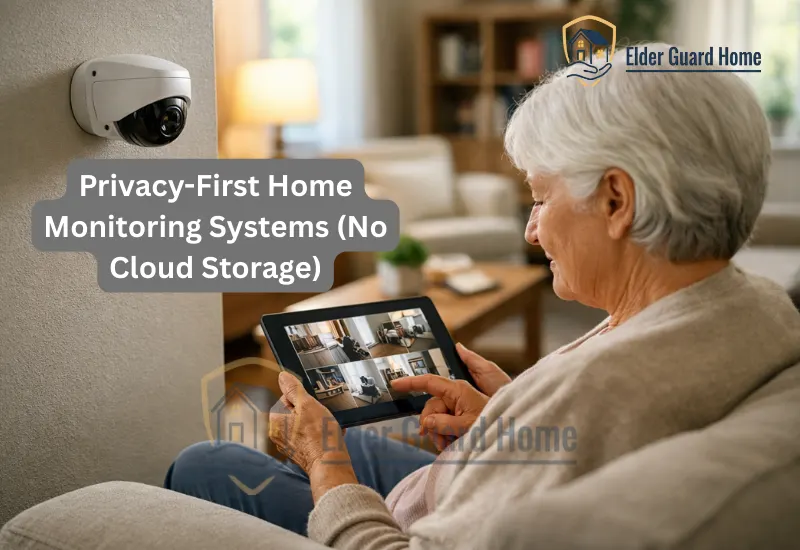
Home monitoring technology has evolved rapidly in recent years. Today, many smart cameras and security devices automatically upload footage to remote servers. While this approach makes remote access easy, it also raises serious concerns about data privacy and recurring subscription fees. As a result, more homeowners are beginning to question where their security footage is actually stored.
In addition, cloud-based systems often require ongoing payments just to access recordings. For families who want better control over their data, this model can feel limiting. Some people also worry about potential breaches if sensitive footage is stored on external servers.
Because of these concerns, privacy-first home monitoring systems are gaining popularity. These systems focus on storing video and alerts locally rather than sending them to cloud services. As a result, homeowners keep full control over their recordings and personal information.
While monitoring systems improve security, basic home safety habits are equally important. Our guide on senior home safety tips for elderly living alone explains simple daily changes that reduce risks inside the home.
If you are exploring different monitoring options, you may also find it helpful to read our guide on home security systems without WiFi. Many privacy-focused setups rely on similar offline or locally controlled technologies.
What Are Privacy-First Home Monitoring Systems?
Privacy-first home monitoring systems are security setups designed to protect household safety while keeping user data private. Instead of uploading footage to cloud servers, they rely on local storage security cameras and local networks. As a result, recordings remain under the homeowner’s control and are not stored by third-party services.
In simple terms, these systems prioritize privacy over convenience. Rather than depending on remote servers, they store recordings on devices within your home.
Typically, they include:
Local storage security cameras
Network video recorders (NVRs)
Encrypted local storage options
Offline motion sensors
Because of this design, video footage stays inside your home network instead of being transferred to cloud platforms.
Why Some Homeowners Avoid Cloud Storage Security Cameras
Cloud-based monitoring systems can be convenient. However, they also introduce several concerns that cause many homeowners to look for alternatives.
1. Data Privacy Risks
First, cloud storage means your security footage is stored on external servers. Even when companies use encryption, some users still feel uncomfortable with private footage stored outside their homes.
Additionally, any system connected to the internet carries potential security risks.
2. Monthly Subscription Costs
Another common complaint is the recurring cost. Many popular brands require subscriptions to unlock features like video history or motion alerts.
This is why some people prefer security cameras without cloud subscription, which allow them to access recordings without paying ongoing fees.
3. Potential Data Breaches
Unfortunately, even large technology companies occasionally experience data breaches. When this happens, stored footage or account information could potentially be exposed.
While such incidents are rare, privacy-conscious homeowners often prefer systems that avoid these risks entirely.
4. Limited Control Over Footage
Finally, cloud platforms control how long recordings are stored and how they are accessed. In contrast, locally stored footage gives homeowners complete ownership and control.
However, monitoring cameras are only one part of home protection. Many families also upgrade lighting to reduce nighttime fall risks, which you can learn about in this guide on safe home lighting design for seniors.
How Privacy-First Monitoring Systems Work
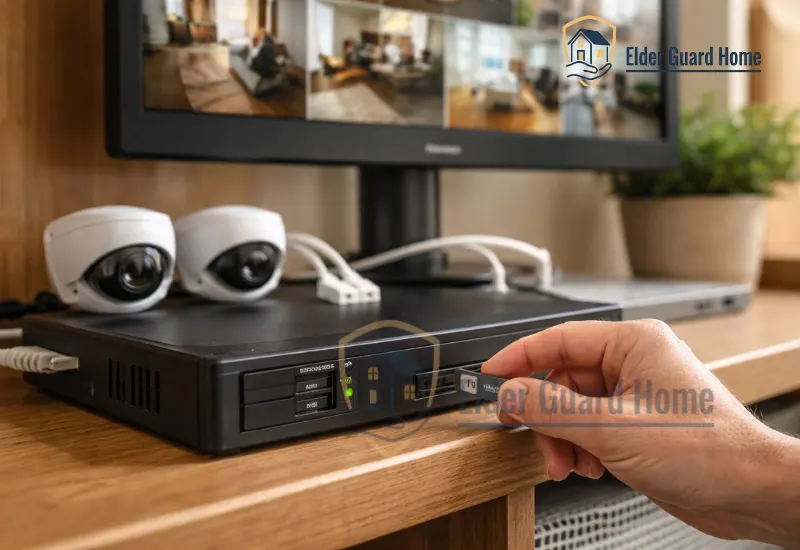
Although these systems avoid cloud storage, they still provide effective home monitoring. Instead of relying on remote servers, they use local networks and storage devices.
Local Storage Security Cameras
Many local storage security cameras save recordings directly to internal storage devices.
Common options include:
MicroSD cards
Network Video Recorders (NVR)
Network Attached Storage (NAS) systems
This approach allows cameras to record footage continuously without uploading it to the cloud.
Because the data remains local, homeowners maintain full ownership of their recordings.
In high-risk areas like bathrooms, many families combine cameras with specialized sensors such as a bathroom fall detection system for elderly to improve safety without requiring wearable devices.
Local Network Monitoring
Another key feature of privacy-first systems is local network access. Instead of accessing footage through cloud servers, users can connect directly through their home network.
For example, homeowners can view camera feeds through:
Local mobile apps
Desktop monitoring software
Secure network dashboards
This method allows convenient monitoring while keeping data inside the home network.
Offline Alert Systems
Privacy-focused systems often include motion sensors or alarm triggers that work without cloud connections.
For instance, sensors can:
Detect movement
Trigger alarms
Send local alerts
In some setups, these alerts can also notify family members directly. If this feature is important for your household, you may also want to explore systems designed to alert family members during emergencies.
Types of Home Security Cameras Without Cloud Storage
Different types of monitoring setups support local storage. Understanding these options can help homeowners choose the right system.
SD Card Security Cameras
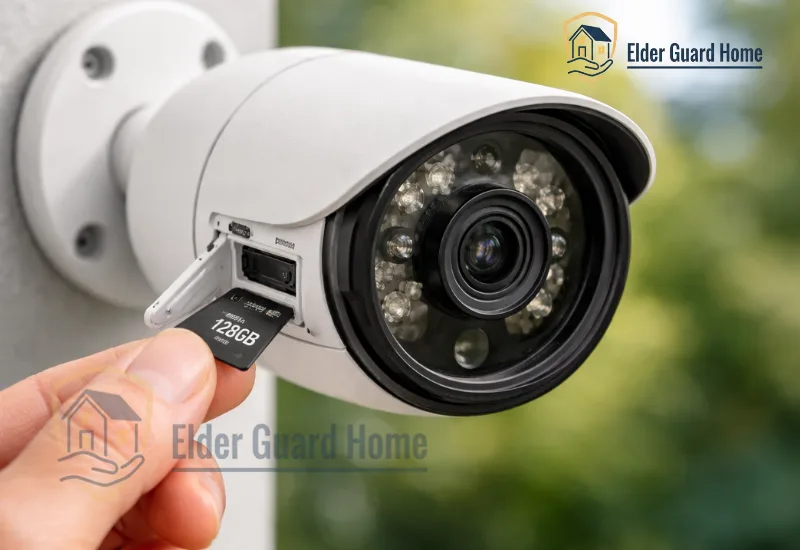
The simplest option is a camera that records directly to an SD card.
These devices are often used as home security cameras without cloud storage because they operate independently.
Advantages include:
- Easy installation
- No subscription fees
- Direct access to recordings
However, storage capacity depends on the size of the memory card.
Buy Tapo 2K+ Indoor/Outdoor Security Camera with Local Storage.
NVR-Based Security Systems
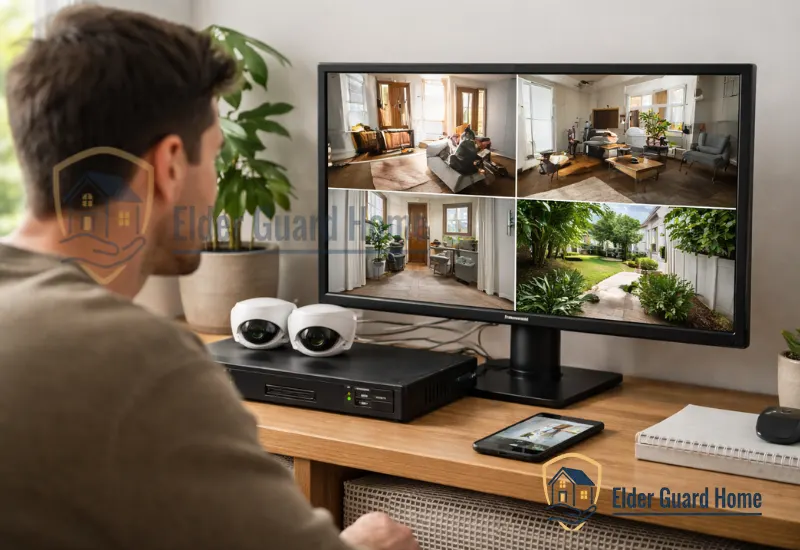
Another popular solution is a Network Video Recorder (NVR) system.
In this setup:
- Multiple cameras connect to a central recorder
- Footage is stored on internal hard drives
- Video can be reviewed from a local network
Because of this structure, NVR systems are commonly used in advanced privacy-focused security setups.
Buy Hiseeu Wireless Security Camera System.
NAS-Connected Monitoring Systems
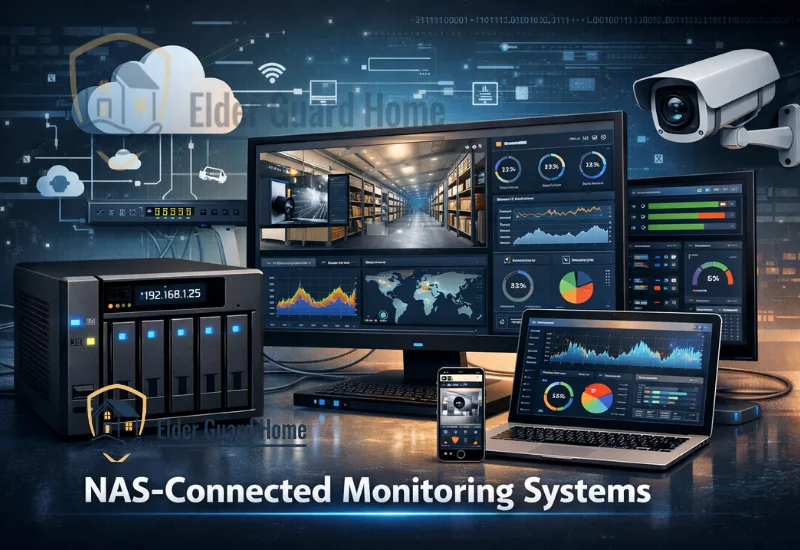
More advanced users sometimes connect cameras to Network Attached Storage (NAS) devices.
NAS storage provides:
- Large storage capacity
- Encrypted backups
- Flexible access controls
As a result, this option is often considered one of the most powerful privacy-focused monitoring setups.
Buy Best NAS-Connected Wireless Security Camera System.
Some systems also integrate with smart edge devices like the Reolink AI Box for senior home safety, which adds intelligent motion detection and activity monitoring to compatible cameras.
Benefits of Privacy-First Home Monitoring Systems
Choosing privacy-first home monitoring systems offers several advantages for homeowners who value data security and control.
Key benefits include:
No cloud subscriptions – recordings remain locally stored
Greater data privacy – footage is not sent to third-party servers
Full ownership of recordings – users control storage and deletion
Reduced hacking risks – fewer external connections limit vulnerabilities
Works even with limited internet access – many systems function offline
Additionally, these systems pair well with other offline monitoring tools. For example, some families combine them with solutions like security systems that alert family members to create a more comprehensive home safety setup.
Overall, privacy-focused monitoring systems allow homeowners to protect their property while maintaining control over their personal data.
Advanced monitoring technology can even detect movement patterns that signal potential risks. For example, modern AI fall prediction systems for seniors analyze mobility changes before accidents happen.
Potential Limitations of local storage security cameras
While privacy-first home monitoring systems offer strong privacy protection, they also come with a few limitations. Understanding these can help homeowners choose the right security setup.
1. Remote access can be limited
Many local storage systems prioritize privacy. Therefore, remote viewing outside the home network may require additional configuration such as VPN access.
2. Requires manual storage management
Because recordings are stored locally, users must occasionally manage storage space. For example, SD cards or NVR drives may need periodic cleanup or upgrades.
3. Setup may be more technical
Compared to plug-and-play cloud cameras, privacy-focused systems may require more setup. However, once configured, they provide long-term control and independence from cloud services.
Despite these drawbacks, many users prefer the added privacy and cost savings.
Who Should Use security cameras without cloud subscription?
Not every household needs a fully cloud-based system. In fact, privacy-first home monitoring systems are ideal for specific users.
These systems are especially suitable for:
Privacy-conscious homeowners who want full control over their video data
Seniors who prefer simple monitoring without complicated apps or cloud accounts
Rural homeowners with unstable or slow internet connections
Families that want reliable offline security systems for daily protection
Additionally, homeowners concerned about cyber threats often choose local storage security cameras because their data remains inside their own network.
Seniors living independently often benefit from combining monitoring systems with reliable home security systems for seniors living alone that alert family members during emergencies.
How to Choose the Right Privacy-First Home Monitoring System
Choosing a privacy-first monitoring system requires more than comparing basic features. Homeowners should evaluate how the system processes data, how alerts are generated, and whether sensitive information stays within the home network.
The right solution should balance security, privacy protection, and ease of use. This is especially important for households monitoring elderly family members or individuals living alone.
Below are the most important factors to consider before installing a privacy-focused monitoring system.
Local Data Processing
A strong privacy-first monitoring system processes data locally rather than sending it to external cloud servers.
Local processing ensures that video footage, motion activity, and behavioral signals remain inside the home network. This reduces the risk of unauthorized access or third-party data collection.
Systems with edge AI processing can also generate alerts faster because they do not rely on cloud communication.
Smart Behavioral Monitoring
Advanced monitoring systems use artificial intelligence to learn normal activity patterns inside the home.
These platforms can identify unusual behavior, such as sudden inactivity, wandering at night, or changes in daily routines.
This capability is particularly useful for elderly monitoring systems where early detection of unusual behavior can prevent emergencies.
Secure Remote Alerts
Even privacy-focused systems should provide secure remote notifications.
Family members or caregivers should be able to receive alerts through encrypted mobile notifications without exposing sensitive household data to external platforms.
Secure notification systems ensure that important safety alerts are delivered quickly while maintaining privacy protection.
Integration With Smart Home Devices
Many modern monitoring platforms integrate with smart home devices such as door sensors, motion detectors, and voice assistants.
When these devices work together, the system can build a more accurate understanding of household activity patterns.
This integration helps create a safer emotion recognition smart home environment, especially for seniors living alone.
Simple Setup and User Control
Privacy-focused technology should still remain easy to manage.
The best systems allow homeowners to control data storage, access permissions, and monitoring settings through a simple dashboard.
User-controlled privacy settings ensure that families maintain full ownership of their monitoring data.
Privacy-First Monitoring vs Cloud-Based Security Systems
Many homeowners compare privacy-first monitoring systems with cloud-based security platforms before choosing a smart home solution. The table below explains the key differences in privacy protection, data control, and system reliability.
| Feature | Privacy-First Monitoring Systems | Cloud-Based Security Systems |
|---|---|---|
| Data Storage Location | Data and video footage are stored locally inside the home network or on a local hub. | Footage and behavioral data are uploaded to external cloud servers managed by providers. |
| User Data Control | Homeowners maintain full control over who can access monitoring data. | Service providers often control storage, processing, and access permissions. |
| Privacy Risk | Lower privacy risks because sensitive data does not leave the home network. | Higher risk of data exposure if servers are breached or accessed by third parties. |
| Internet Dependency | Most features continue working even if the internet connection fails. | Many functions stop working during internet outages. |
| Response Speed | Local AI processing enables faster alerts and real-time monitoring. | Cloud processing may introduce delays while data travels to servers. |
| Monthly Subscription | Usually no monthly subscription fees for local monitoring. | Many cloud platforms require monthly subscription plans for storage and alerts. |
| System Updates | Updates may require manual installation or user configuration. | Automatic updates and patches are typically handled by the provider. |
| Security Responsibility | The homeowner or local administrator manages security settings. | Cloud providers manage cybersecurity and infrastructure protection. |
| Best Use Case | Ideal for privacy-focused households and elderly monitoring systems. | Suitable for users who want easy remote access and minimal setup. |
Cloud systems offer convenience. However, home security cameras without cloud storage provide stronger privacy and lower long-term costs.
Pros and Cons of Privacy-First Monitoring Systems
Privacy-first home monitoring systems are designed to protect sensitive household data while still providing real-time safety alerts. However, like any technology, these systems also come with certain limitations.
Advantages of Privacy-First Monitoring
- Personal data stays inside the home network.
- Lower risk of third-party data sharing.
- Faster alerts because AI processing happens locally.
- No monthly cloud storage subscription fees.
- Better protection for sensitive household activities.
Limitations of Privacy-First Monitoring
- Remote access features may be limited.
- System setup may require more configuration.
- Hardware costs can be higher initially.
- Software updates may require manual installation.
Best Features to Look for in Local Storage Security Cameras
When choosing local storage security cameras, certain features improve both performance and security.
Look for the following capabilities:
SD card support for direct camera storage
NVR compatibility for centralized recording
End-to-end encryption to protect stored footage
Offline alert systems that trigger alarms without cloud servers
Mobile access without cloud dependency through local network apps
Furthermore, combining these features creates a reliable home security camera system without cloud storage that remains private and secure.
If you’re still exploring camera types, you may also want to read our guide on choosing the right home security camera system to understand installation options and camera placements.
FAQ
Many homeowners have questions about how privacy-first monitoring systems work and how they compare with traditional security solutions. The answers below explain the most important aspects of privacy-focused home monitoring technology.
Are there security cameras without cloud storage?
Yes. Many home security cameras without cloud storage use SD cards, NVRs, or NAS systems for local recording. These cameras store footage directly on local devices rather than uploading it to cloud servers.
What is the benefit of local storage security cameras?
The biggest advantage is privacy and control. Since recordings stay inside your home network, users avoid cloud subscriptions and reduce the risk of remote data breaches.
Do privacy-first home monitoring systems work without internet?
Yes. Most privacy-first home monitoring systems can operate completely offline. Cameras record locally, and alert systems trigger alarms through local networks rather than cloud services.
Are security cameras without cloud subscriptions safe?
In many cases, they are safer from data leaks. Because the footage stays on local storage devices, hackers cannot access it through cloud servers. Proper encryption and network security further increase protection.
How is privacy-first monitoring different from cloud security systems?
Privacy-first monitoring systems store and process data locally, while cloud-based security systems send footage and activity data to external servers.
Local processing improves privacy protection and reduces the chances of third-party access. Cloud systems, however, often provide easier remote access and automatic updates.
Can privacy-first monitoring systems detect unusual behavior?
Yes. Many modern privacy-first systems use artificial intelligence to learn normal activity patterns inside the home.
If the system detects unusual behavior such as long inactivity, wandering at night, or sudden changes in routine, it can send alerts to caregivers or family members.
Conclusion
Modern homeowners increasingly value privacy-first home monitoring systems because they offer control, security, and independence from cloud services.
Unlike traditional cloud cameras, these systems store footage locally. As a result, users avoid subscription fees while maintaining full ownership of their recordings.
For anyone concerned about data privacy, recurring cloud costs, or unreliable internet connections, security cameras without cloud subscriptions provide a practical and secure home monitoring solution.