
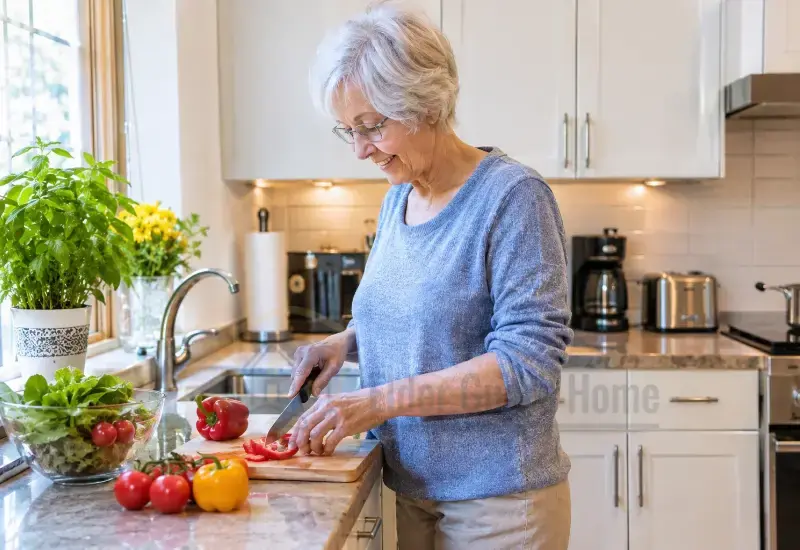
A kitchen should make everyday tasks easier, not turn cooking into a daily challenge. However, reaching high cabinets, bending into deep drawers, and standing for long periods can become difficult with age.
Changes in balance, strength, flexibility, and vision can affect how someone uses an ordinary kitchen. Even familiar tasks, such as getting a plate or preparing breakfast, may require more effort.
An accessible kitchen for seniors does not always require expensive renovations. Simple changes to storage, lighting, counter space, and appliance placement can make a noticeable difference.
Families can begin by identifying the tasks that have become difficult. They can then choose modifications that match the older adult’s abilities and daily routine.
This guide explains practical kitchen modifications for elderly people who want to remain independent at home. It covers affordable improvements, larger renovation options, and ways caregivers can assess the kitchen.
Why Kitchen Accessibility Matters for Seniors Aging in Place
Many kitchens are designed around the needs of adults who can stand comfortably, bend easily, and reach overhead storage. These assumptions may not suit someone experiencing age-related mobility or strength changes.
A senior may struggle to reach a frequently used pan on a high shelf. Another person may find it difficult to stand while chopping vegetables. Someone using a walker may have trouble moving between crowded counters.
These challenges can make ordinary kitchen activities tiring or uncomfortable.
Common difficulties include:
Reaching overhead cupboards and deep shelves.
Bending to retrieve heavy pots and pans.
Standing for extended periods during meal preparation.
Reading small appliance controls and labels.
Moving around counters with a walker or wheelchair.
Opening jars, drawers, and cabinet doors with limited grip strength.
Carrying heavy dishes between the sink and cooking area.
These difficulties can also affect confidence. Someone who once enjoyed cooking may begin avoiding certain tasks because the kitchen feels uncomfortable or inconvenient.
A few thoughtful changes can help restore access to familiar activities. For example, moving everyday dishes to a lower shelf may eliminate repeated overhead reaching. A seated preparation area may reduce the need to stand throughout meal preparation.
The goal is not to make every kitchen look the same. It is to create a space that supports the individual person’s comfort, abilities, and independence.
Start by Identifying the Kitchen Tasks That Have Become Difficult
Before purchasing equipment or planning a renovation, observe how the senior uses the kitchen.
A modification is most useful when it solves a real problem. Replacing every cabinet may be unnecessary if rearranging the existing shelves would improve access.
Notice Where Reaching and Bending Cause Problems
Watch which items the person struggles to retrieve during normal activities.
Look for frequently used objects stored in inconvenient places. These may include plates, drinking glasses, cooking oil, spices, pans, and small appliances.
Notice whether the person bends deeply to reach lower cabinets. Also check whether they stretch or stand on their toes to access upper shelves.
Repeated bending and stretching can be uncomfortable. They may also affect balance when someone is carrying an object.
Move frequently used items to comfortable locations. Store heavier cookware where it can be retrieved without lifting it overhead.
Check Whether the Kitchen Has Enough Movement Space
A kitchen may have enough storage but still be difficult to navigate.
Check the space between counters, appliances, and furniture. Look for obstacles that make walking or turning difficult.
Pay particular attention to:
Narrow spaces between kitchen counters.
Waste bins placed in walking routes.
Chairs or stools that obstruct movement.
Loose mats near the sink or cooking area.
Appliance doors that block access when open.
Items stored on the floor.
A person using a walker needs room to approach counters and appliances. Someone using a wheelchair may need additional space to turn and position themselves.
Keep the main walking routes as clear as possible. Do not assume that a layout suitable for someone walking independently will also work for someone using mobility equipment.
Consider Strength, Grip, Vision, and Stamina
Different physical changes create different kitchen challenges.
Someone with arthritis may struggle with small cabinet knobs and stiff faucet controls. A person with reduced vision may have difficulty reading appliance displays. Someone with limited stamina may need a place to sit during food preparation.
Consider these needs separately before choosing modifications.
A kitchen should support the person’s actual abilities. Avoid making changes based only on age or assumptions about what older adults need.
Make Kitchen Cabinets and Storage Easier for Seniors to Reach
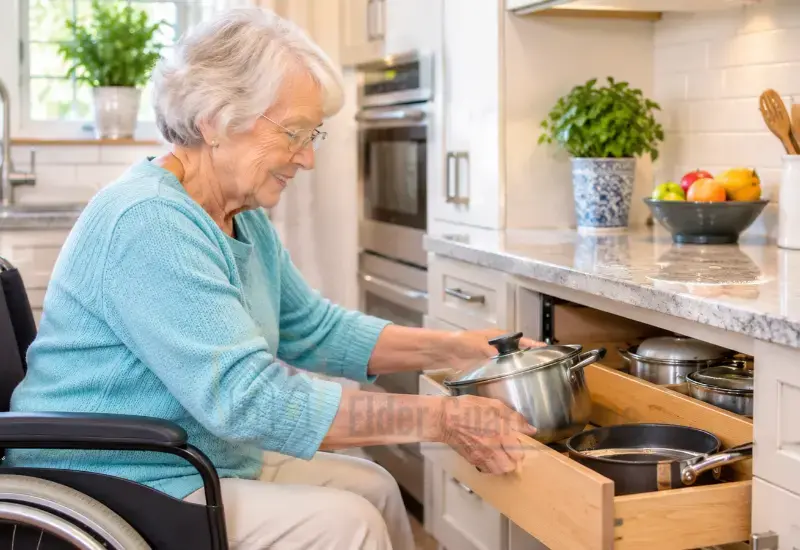
Storage is one of the most useful places to start when improving kitchen accessibility.
Many older kitchens have deep lower cabinets and high overhead cupboards. Both can create unnecessary reaching and bending.
Reorganizing existing storage may solve some problems without replacing the cabinets.
Move Frequently Used Items to Comfortable Heights
Keep everyday kitchen items in locations that are easy to reach.
Place commonly used plates, glasses, bowls, and cooking ingredients on accessible shelves. Store frequently used pans in drawers that open smoothly.
Avoid placing heavy cookware on high shelves. Lifting a heavy object overhead can be uncomfortable and difficult to control.
A simple storage plan can help:
Keep everyday dishes near the dishwasher or sink.
Store frequently used ingredients near the preparation area.
Place common cooking utensils in an accessible drawer.
Keep heavy pans in a suitable lower drawer or pull-out shelf.
Move rarely used appliances to less accessible storage.
Try to keep similar items together. This makes it easier to find things without searching through several cabinets.
Install Pull-Out Shelves and Drawers
Deep cabinets can force someone to reach far inside to retrieve stored items.
Pull-out shelves bring the contents closer to the cabinet opening. This reduces the need to bend or reach into dark, deep spaces.
Useful options include:
Pull-out cabinet trays.
Full-extension drawers.
Sliding pantry shelves.
Pull-out organizers for cookware.
Rotating shelves for suitable corner cabinets.
Choose systems that move smoothly and remain stable when extended. Check the manufacturer’s weight limits before storing heavy cookware.
Installation quality matters. A poorly fitted shelf may tilt, jam, or move unexpectedly.
Choose Easy-Grip Cabinet Handles
Small round knobs can be difficult to operate for someone with arthritis or reduced grip strength.
Larger cabinet pulls may offer a more comfortable grip. D-shaped handles are one option because they allow the fingers to wrap around the handle.
When replacing hardware, consider:
Handles that are easy to grasp.
Smooth edges without sharp corners.
Secure mounting.
Consistent placement across cabinets.
A finish that contrasts with the cabinet surface.
The best handle depends on the person’s hand strength and dexterity. If possible, let the senior try a sample before replacing all the hardware.
Consider Pull-Down Shelving for Upper Cabinets
Some upper cabinets can be fitted with pull-down shelving mechanisms.
These systems lower selected stored items toward the user. They may help someone who struggles to reach overhead shelves.
However, not every cabinet can support every mechanism. Check the cabinet construction, installation requirements, and product weight limits.
The mechanism should also be easy for the person to operate. If it requires considerable pulling force, it may not solve the original problem.
Improve Kitchen Counter Space and Workstation Comfort
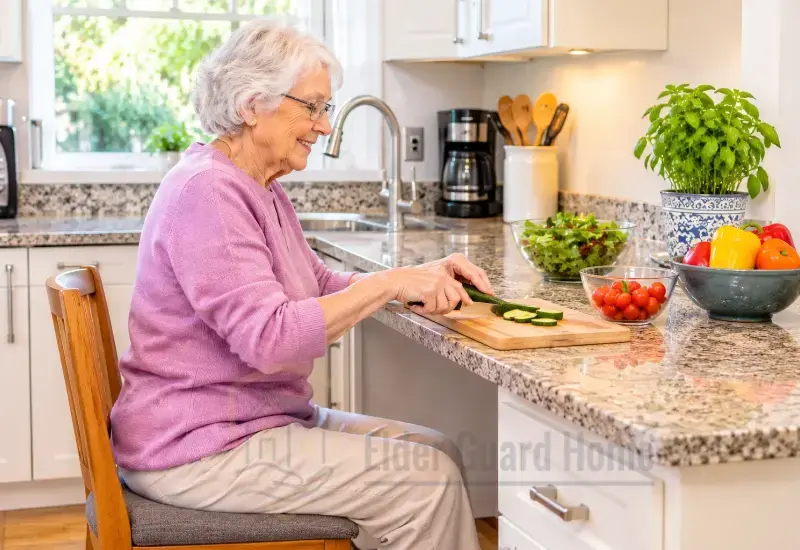
Counter space affects almost every food preparation task. A poorly positioned work surface can cause discomfort, especially when someone needs to stand for long periods.
A more comfortable workstation can reduce unnecessary movement and make everyday preparation easier.
Choose a Comfortable Counter Height
Standard kitchen counters do not suit every person.
Someone who is shorter may need to reach upward to work comfortably. A wheelchair user may find a conventional counter too high for seated preparation.
Consider the person’s height, posture, mobility, and preferred working position.
A suitable counter should allow comfortable food preparation without excessive shoulder lifting or forward bending.
If the existing counter is uncomfortable, consider whether a separate lower work surface could solve the problem. This may be less disruptive than replacing the entire countertop.
Create a Seated Food Preparation Area
A seated workstation can help someone who becomes tired while standing.
It may consist of a suitable section of counter with enough space for a stable chair. Where wheelchair access is required, the work surface may need appropriate knee and foot clearance.
Consider these details:
Choose a stable chair with suitable back support.
Keep the work surface within comfortable reach.
Provide enough room for legs and mobility equipment.
Place frequently used utensils nearby.
Keep the floor around the workstation clear.
Avoid unstable stools or makeshift seating.
The chair should not obstruct other people using the kitchen.
A seated preparation area can be especially useful for washing vegetables, sorting ingredients, and performing other tasks that do not require direct access to a hot cooking surface.
Keep Frequently Used Appliances Near the Work Area
Repeatedly lifting and moving appliances can create unnecessary strain.
Keep everyday appliances in convenient locations when counter space allows. This might include a kettle, toaster, or microwave used regularly.
Avoid storing heavy appliances in high cupboards. Also consider how much space is available around each appliance.
Leave enough room to use the appliance safely. Electrical cords should not cross walking routes or hang where they can be pulled accidentally.
Choose Practical Countertop Surfaces
A countertop should be easy to clean and comfortable to use.
Very reflective surfaces may create glare under bright lighting. This can make it harder for some people to distinguish objects.
A surface with suitable visual contrast can help make food, utensils, and containers easier to identify.
Also consider the countertop’s condition. Damaged edges, loose sections, and raised joints should be repaired.
Rounded or softened edges may be worth considering during a renovation, especially where someone has difficulty moving around tight spaces.
Make the Kitchen Easier to Navigate With a Walker or Wheelchair
Kitchen accessibility is not only about reaching shelves. People also need enough space to move safely between work areas.
A layout that feels comfortable when empty may become difficult when cabinet doors, refrigerator doors, and dishwasher doors are open.
Keep Walkways Clear
Start by removing objects that do not need to remain in the main walking area.
Move waste bins away from frequently used routes. Keep stools, baskets, and small tables out of narrow passages.
Loose rugs and mats can shift underfoot. Consider removing them if they create a tripping or mobility obstacle.
If a mat is necessary, choose one designed to remain securely in place. Check its edges regularly for curling or movement.
Keep frequently used items off the floor. This includes shopping bags, cleaning supplies, and small kitchen appliances.
Check Space Around Counters and Appliances
A person using a walker needs enough room to approach the sink, refrigerator, and work surfaces.
A wheelchair user may need additional space to turn and position themselves.
Check whether the person can:
Approach the refrigerator comfortably.
Open drawers without blocking the walking route.
Reach the sink without leaning excessively.
Position a mobility aid near the preparation area.
Move away from the cooking area without obstruction.
Do not rely on a single clearance measurement for every kitchen. Actual needs depend on the mobility equipment, the user’s movement, and the kitchen layout.
For substantial modifications, ask an accessibility professional to assess the available space.
Consider Appliance Door Placement
Open appliance doors can create unexpected obstacles.
Check the direction in which refrigerator, dishwasher, and oven doors open. Notice whether they block a walkway or prevent someone from approaching another work area.
Where possible, arrange frequently used appliances so their doors do not create unnecessary movement problems.
During a kitchen renovation, consider door swing and landing space before choosing appliance locations.
Plan for Assistance From a Caregiver
Some older adults prepare meals with help from a family member or caregiver.
The kitchen should allow both people to work without constantly blocking each other.
Keep the main preparation area accessible. Store commonly used items where either person can reach them.
If the senior uses a walker or wheelchair, avoid placing the caregiver’s chair, trolley, or other equipment in the main movement route.
A little planning can make shared kitchen activities more comfortable.
Reduce Bending, Reaching, and Heavy Lifting During Everyday Tasks
Small changes to storage and kitchen routines can reduce unnecessary physical effort.
The aim is to keep everyday items convenient and avoid repeated lifting or carrying.
Store Heavy Cookware at Comfortable Heights
Heavy pots, pans, and casserole dishes should not be stored on high shelves.
Choose a suitable drawer or cabinet where the person can retrieve cookware without stretching or bending deeply.
If the cookware is still difficult to lift, consider smaller and lighter alternatives where appropriate.
Keep the most frequently used items close to the cooking area. This reduces the need to carry heavy cookware across the kitchen.
Make Refrigerator Storage Easier to Access
Refrigerator organization can also improve kitchen accessibility.
Frequently used foods should be stored on shelves that are comfortable to reach. Avoid placing heavy containers on high shelves or at the very bottom.
Clear containers and simple labels can help people identify food more easily.
Try grouping similar items together. For example, keep breakfast foods in one area and commonly used ingredients together.
Good organization also supports food safety. For more guidance, read our article on refrigerator food safety for seniors.
Reduce the Need to Carry Heavy Pots
Carrying heavy cookware can be uncomfortable for someone with reduced strength or balance.
Prepare food close to the cooking area when practical. Use cookware that is manageable for the person.
Avoid carrying large pots filled with hot water across the kitchen. If a pot needs filling, consider whether it can be filled safely closer to the cooking area.
Never encourage someone to lift a heavy, hot pot simply to avoid changing the kitchen arrangement.
Keep Cleaning Supplies and Waste Bins Accessible
Cleaning supplies should be easy to retrieve without requiring deep bending or overhead reaching.
Store frequently used items in a convenient location. Keep potentially hazardous cleaning products secured and separate from food.
Place the waste bin where it is easy to reach but does not obstruct walking routes or appliance doors.
A smaller bin may be easier to move and empty than a large, heavy container.
Improve Kitchen Lighting and Make Appliance Controls Easier to See
Good lighting helps people see food, read labels, and operate appliances.
A single ceiling light may leave shadows over important work areas. Better lighting can make the kitchen more comfortable to use.
Add Task Lighting Above Work Surfaces
Task lighting provides additional illumination where people perform specific activities.
Useful locations include:
Under kitchen cabinets.
Above food preparation counters.
Near the sink.
Around frequently used storage areas.
Near appliance control panels.
Choose lighting that provides even illumination without creating harsh reflections.
Installation should be appropriate for the kitchen environment. Keep electrical fittings away from water sources unless they are designed for the location.
Reduce Glare and Improve Contrast
Bright lighting does not always mean better visibility.
Reflective countertops, glossy cabinet finishes, and poorly positioned lights may create glare.
Consider surfaces and finishes that make everyday objects easier to distinguish.
For example, contrasting cabinet handles may be easier to locate against a cabinet door. Clear contrast between a chopping board and the food being prepared may also help.
The best lighting and contrast depend on the person’s vision. Someone with specific visual difficulties may benefit from professional advice.
Make Appliance Controls Easier to Read
Small buttons and unclear displays can make appliances frustrating to operate.
Check whether the senior can read and understand the controls on frequently used appliances.
Look for:
Clearly marked buttons.
Readable display panels.
Simple operating steps.
Controls positioned at comfortable heights.
Adequate lighting around the control area.
Avoid assuming that a touchscreen is automatically easier to use. Some people may prefer large physical buttons and clearly marked dials.
Improve Visibility Around Kitchen Walkways
Lighting should cover more than the countertops.
Make sure entrances, walking routes, and areas around appliances are adequately illuminated.
Pay attention to shadows near the refrigerator, pantry, and sink. These areas may become difficult to navigate when the kitchen is busy.
A well-lit kitchen can make movement and everyday tasks easier.
Choose Kitchen Faucets and Fixtures That Are Easier to Operate
Faucets and sink fixtures are used throughout the day. Difficult controls can create unnecessary frustration for someone with limited grip strength.
Consider Lever-Handle or Easy-Use Faucets
Small twisting handles may be difficult for people with arthritis or reduced hand strength.
Lever-style faucets can be easier to operate because they do not require the same twisting movement.
Some faucets also offer touch or sensor controls. However, these are not suitable for everyone.
Consider the person’s ability to understand and operate the control. A simple, reliable design may be more useful than a complicated feature.
Consider a Pull-Down or Pull-Out Faucet
A pull-down or pull-out faucet can make it easier to rinse food and clean the sink.
The spray head can be moved closer to the task instead of requiring the person to stretch across the sink.
Check the hose movement, handle operation, and overall weight before choosing a model.
The faucet should return securely to its holder and should not require excessive pulling force.
Make Sink Use More Comfortable
The sink should be convenient to approach and use.
Keep frequently used cleaning items nearby without overcrowding the area. Avoid placing heavy objects where they require awkward lifting.
If someone needs to use the sink while seated, the surrounding counter and plumbing may require modification.
Any changes to sink height, pipe placement, or exposed plumbing should be assessed by a qualified professional. Hot pipes should be protected where seated access could bring legs into contact with them.
Make Kitchen Appliances More Accessible Without Replacing Everything
Replacing every kitchen appliance is rarely the first step toward better accessibility.
In many homes, rearranging appliances or changing their operating controls may solve some problems.
Position the Microwave at a Comfortable Height
A microwave should be easy to reach without overhead lifting or excessive bending.
Avoid placing it so high that the user must lift hot dishes above shoulder level. Also avoid a location that requires deep bending to retrieve food.
Leave enough counter space nearby for placing hot containers safely.
For additional advice on safe placement and everyday use, read our guide to microwave safety for seniors.
Check Oven and Cooktop Accessibility
Cooking appliances need particular attention because they involve heat, hot cookware, and potentially heavy dishes.
Check whether the senior can read the controls and reach them comfortably.
Also consider the space beside the oven. A suitable landing area can provide somewhere to place a hot dish without carrying it across the kitchen.
Avoid layouts that require twisting while holding hot cookware.
For households where unattended cooking is a concern, a separate safety measure may be appropriate. Our guide to automatic stove shut-off devices for elderly people explains this type of protection.
Make the Refrigerator and Dishwasher Easier to Use
Check whether refrigerator shelves, drawers, and door handles are comfortable to access.
Frequently used food should not require repeated deep bending or overhead reaching.
Dishwashers should also be easy to open and load. Consider whether the open door blocks a walking route or creates an obstacle.
Some households may benefit from a different appliance configuration during a future renovation.
Know When an Appliance Replacement May Be Worthwhile
Replacement may be worth considering when an appliance repeatedly creates difficulty.
Examples include:
Controls that are too small to read.
Doors that require excessive force.
Shelves that are difficult to reach.
An appliance positioned too high or too low.
Complicated controls that the user cannot operate comfortably.
Before replacing an appliance, consider whether a simpler adjustment could solve the problem.
The best choice is the one that makes the task easier and remains practical for the person using it.
Low-Cost Kitchen Modifications for Seniors That Do Not Require a Full Renovation
Improving kitchen accessibility does not always mean removing cabinets or installing new countertops.
Many useful changes involve reorganizing the existing space.
Here are some practical starting points:
Reorganize cabinet storage: Move everyday dishes, ingredients, and cookware to comfortable heights.
Replace difficult cabinet knobs: Install larger handles that are easier to grasp.
Clear walking routes: Remove unnecessary furniture, loose objects, and obstacles.
Improve task lighting: Add suitable lighting above frequently used work surfaces.
Use existing drawers more effectively: Group utensils and cooking tools by task.
Relocate small appliances: Keep frequently used appliances in convenient positions.
Create a seated preparation area: Use a stable chair and an appropriate work surface.
Organize refrigerator shelves: Keep commonly used food within comfortable reach.
Review floor mats: Remove loose mats that move or create raised edges.
Reduce unnecessary lifting: Store heavy cookware where it can be accessed safely.
Not every change will suit every household. Start with the modifications that address the senior’s most frequent difficulties.
Understand the Difference Between Small Changes and Renovations
Some improvements are simple, while others require professional installation.
| Modification level | Examples |
|---|---|
| Low-cost changes | Rearranging storage, clearing walkways, improving organization, replacing handles |
| Moderate modifications | Pull-out shelves, new faucet controls, additional lighting, selected cabinet adjustments |
| Larger renovations | Lowered counters, modified sinks, wider access routes, redesigned appliance placement |
Costs depend on the kitchen’s existing condition, materials, location, and installation requirements.
Avoid spending money on features the senior does not need. A targeted change can sometimes be more useful than a complete kitchen makeover.
Kitchen Accessibility Checklist for Seniors and Caregivers
Caregivers can complete this checklist while observing normal kitchen activities.
Do not rush through the assessment. Ask the older adult which tasks feel difficult and which changes would make the greatest difference.
When Should You Consider a Professional Kitchen Accessibility Assessment?
Some kitchen changes are straightforward. Others require careful planning and professional installation.
Consider an assessment when the older adult has difficulty moving around the kitchen, reaching essential work areas, or using appliances safely.
Professional advice may be particularly useful when:
The person uses a wheelchair or has significant mobility limitations.
The existing layout makes turning or approaching counters difficult.
There have been repeated falls or near-falls in the kitchen.
Hot cookware is difficult to lift or transfer safely.
Countertops, sinks, or cabinets need major changes.
Plumbing or electrical work is required.
The family is unsure which modifications will suit the person’s needs.
An occupational therapist can assess how someone performs everyday activities. They may recommend changes to storage, work surfaces, movement routes, and equipment.
A qualified kitchen contractor or accessibility professional can help plan and install larger modifications.
For substantial changes, it is better to assess the person’s needs before purchasing materials or starting construction.
The aim is to avoid expensive modifications that do not solve the actual problem.
FAQ
How can I make my kitchen more accessible for seniors?
Start by moving frequently used items within comfortable reach. Add pull-out shelves, improve lighting, replace difficult cabinet handles, and keep walkways clear. If standing is difficult, consider a suitable seated preparation area. Larger changes should be based on the person’s mobility and daily needs.
What is the best kitchen layout for seniors aging in place?
Yes. Some cameras can record directly to a compatible memory card or local recording device without using cloud storage for the recording itself. However, remote viewing, notifications, account management, or certain detection features may still depend on an internet connection or manufacturer services.
What is the best kitchen layout for seniors aging in place?
The best layout depends on the person’s mobility, kitchen dimensions, and daily routine. Keep the main walking routes clear and make the sink, refrigerator, and preparation area easy to approach. Avoid arrangements where open appliance doors block movement.
How can I make kitchen cabinets easier for elderly people to reach?
Move frequently used dishes and ingredients to comfortable shelf heights. Store heavy cookware where it can be retrieved without overhead lifting. Pull-out shelves, full-extension drawers, and suitable pull-down shelving can also improve access.
How do you make a kitchen wheelchair accessible?
A wheelchair-accessible kitchen needs suitable movement and turning space, reachable storage, and work surfaces that can be approached while seated. Some kitchens may also require modified sink access and appliance placement. The design should be assessed according to the user’s wheelchair and individual needs.
What are the cheapest kitchen modifications for seniors?
Some affordable changes include reorganizing cabinets, replacing small knobs with easier handles, clearing walking routes, improving task lighting, and relocating frequently used appliances. These changes can improve convenience without requiring a complete kitchen renovation.
What countertop height is best for elderly people?
There is no single countertop height that suits every older adult. The appropriate height depends on the person’s body proportions, mobility, and whether they prepare food while standing or sitting. A separate lower work surface may be useful in some kitchens.
Should seniors replace their kitchen cabinets to improve accessibility?
Not necessarily. Existing cabinets may become easier to use with pull-out shelves, drawer organizers, improved handles, and better storage arrangements. Full cabinet replacement may be worth considering when the existing layout cannot meet the person’s accessibility needs.
Conclusion: Build a Kitchen That Supports Independence as You Age
A more accessible kitchen can make everyday activities easier for older adults who want to remain independent at home.
The most useful changes often begin with simple improvements. Move frequently used items within reach, reduce unnecessary bending, improve lighting, and keep walking routes clear.
Some households may also benefit from pull-out shelves, comfortable work surfaces, or better appliance placement. Larger modifications should be planned around the person’s mobility and daily routine.
There is no single design that works for every senior. The best accessible kitchen for seniors is one that supports the individual person’s abilities, comfort, and changing needs.
Start with the tasks that cause the most difficulty. Make practical improvements one step at a time, and involve the older adult in every decision.