
Aging in Place Safely: A Practical Guide for Older Adults and Caregivers
- By Nisha Sharma
- Last Updated: September 12, 2026
What Does Aging in Place Safely Mean?
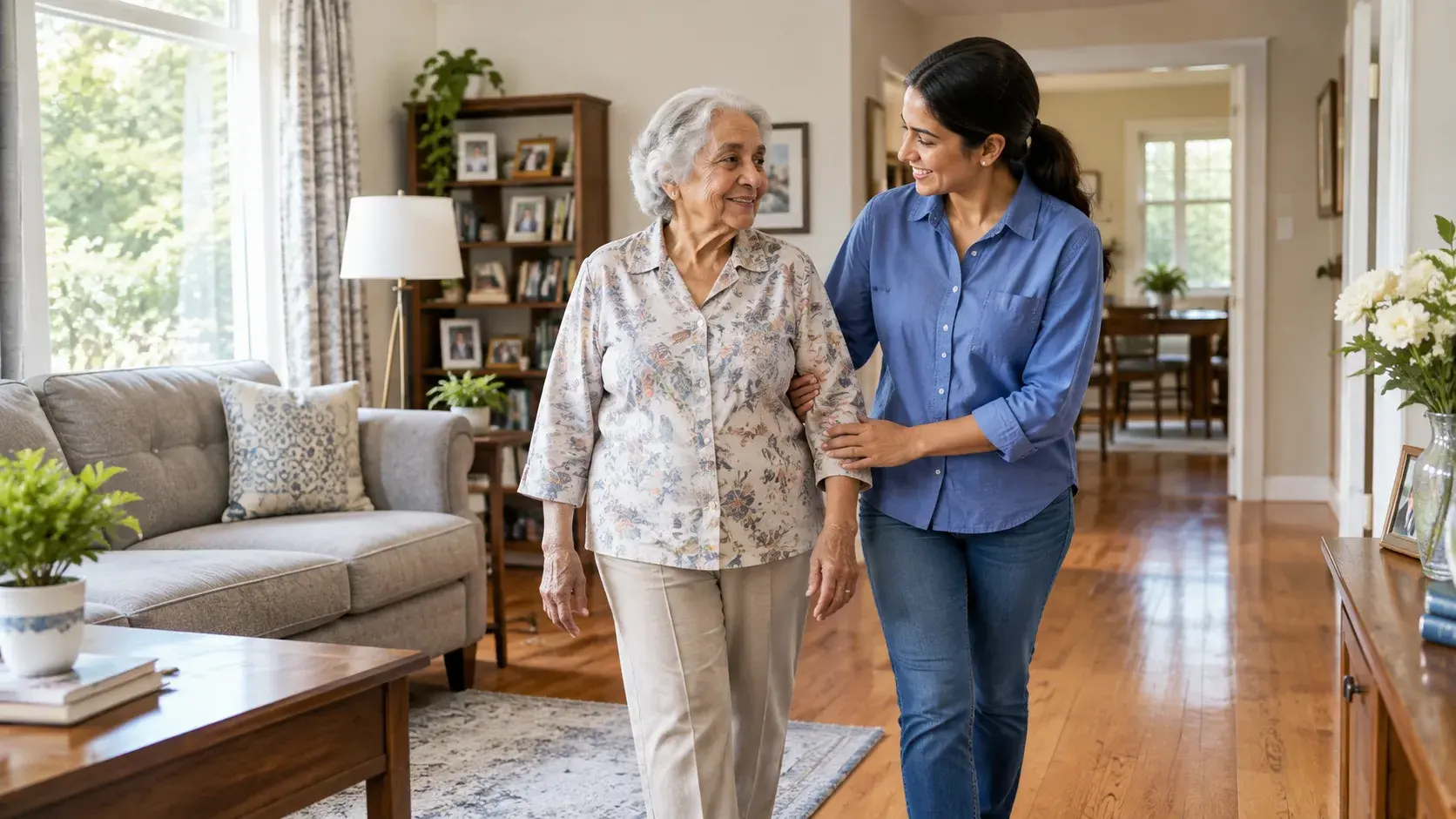
Aging in place means remaining in a familiar home while maintaining safety and independence.
It does not require every home to have expensive renovations or specialized equipment.
Some homes may need simple changes, while others may require professional accessibility modifications.
The first step is understanding how the person actually uses the home.
Watch how they move between rooms, prepare meals, use the bathroom, get into bed, and answer the door.
Pay attention to tasks that cause hesitation, fatigue, reaching, bending, climbing, or loss of balance.
These observations can reveal problems that a simple room inspection may miss.
A safer home should support the person’s real daily routine.
It should also allow the person to complete as many activities independently as possible.
Families should avoid buying safety products simply because they appear on general recommendation lists.
A product can be useful in one home but unsuitable in another.
The safest approach starts with the person’s needs and then considers the available solutions.
The Five Areas to Review Before Making Home Safety Changes
Before purchasing equipment or planning renovations, review five basic areas.
1. Daily Movement
Look at walking, standing, sitting, transfers, reaching, and moving between rooms.
Notice where the person needs extra effort or assistance.
2. High-Risk Rooms
Pay particular attention to bathrooms, bedrooms, kitchens, stairs, entrances, and frequently used living areas.
These spaces often involve transfers, reaching, carrying, or changes in floor surfaces.
3. Fall and Trip Hazards
Check rugs, cords, clutter, furniture placement, thresholds, flooring, and lighting.
Look at both normal daytime conditions and nighttime conditions.
4. Emergency Readiness
Make sure the person can reach a phone or communication device when needed.
Important contacts and emergency information should also remain easy to access.
5. Daily Independence
Consider whether the home makes ordinary tasks easier or harder.
A good modification should support independence without creating unnecessary complexity.
Start with the person’s routine rather than starting with a shopping list.
Step 1: Identify Where Everyday Activities Feel Difficult
Walk through the home and observe how everyday activities happen.
Focus on places where the person hesitates, reaches, bends, climbs, or needs additional support.
The Bathroom: Managing Slippery Surfaces
Focus on:
- Check shower entry, tub access, toilet transfers, flooring, and available hand support.
- Look for situations where the person needs to turn or balance in a small space.
- Review whether frequently used items are easy to reach without leaning or stretching.
- Installing ADA-compliant grab bars near the toilet and shower.
- Replacing standard bath mats with non-slip, high-traction alternatives.
- Considering a walk-in tub or a shower chair to reduce standing fatigue.
Pro TIP: Safety in the bathroom goes beyond just adding a mat. It requires a strategic approach to every fixture, from the height of the toilet to the grip of the shower floor. For a complete list of recommended hardware that fits any budget, see our expert review of the best bathroom safety for seniors.
The Living Room: Clearing the Path
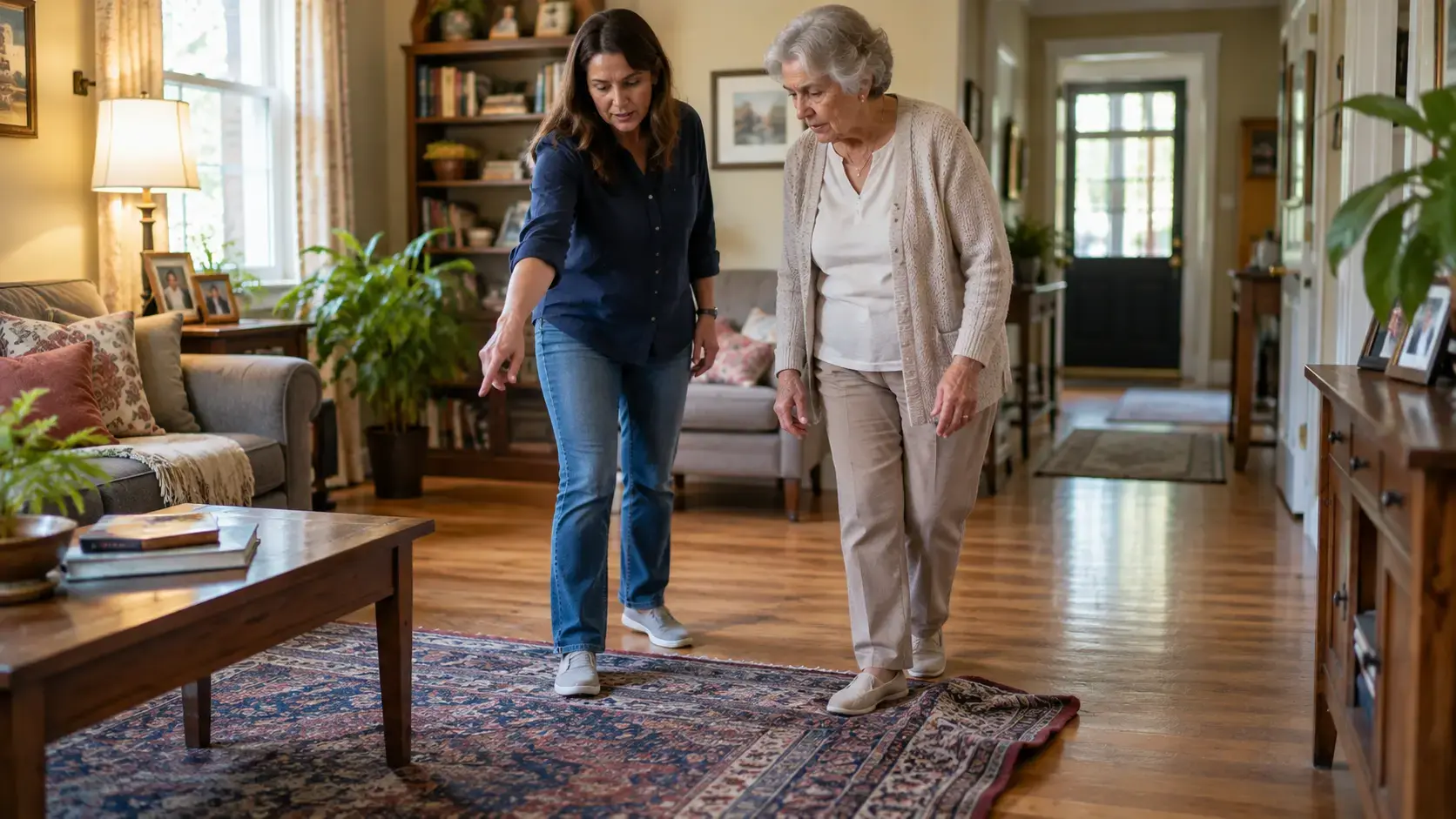
Look for loose rugs, cords, clutter, narrow pathways, and poorly lit areas.
Check whether furniture forces awkward turns or leaves limited walking space.
While the safest option is to remove small throw rugs entirely, we know that many homeowners prefer to keep their area rugs for comfort and decor. In these cases, it is vital to ensure they are anchored perfectly to the floor to prevent bunching or sliding. For a deep dive into the most reliable hardware for this, read our guide on the best non-slip rug pads for senior safety. These pads provide the necessary grip to keep rugs flat and secure, reducing the risk of a trip or slip.
The Bedroom: Lighting and Reach
Safety in the bedroom is about visibility:
- Check the route between the bed and bathroom.
- Look at bed height, nighttime lighting, floor hazards, and access to a phone.
- Make sure commonly used items can be reached without sudden bending or stretching.
Kitchen
- Check whether frequently used dishes, appliances, and cooking supplies are easy to reach.
- Look for tasks involving heavy lifting, overhead cabinets, climbing, or prolonged standing.
- Consider whether cooking equipment can be used comfortably and safely.
Stairs and Entryways
- Check handrails, lighting, thresholds, steps, and changes in floor height.
- Also consider whether the entrance remains accessible when carrying groceries or using mobility equipment.
How to Decide Which Safety Problem to Fix First
Not every home safety problem needs to be addressed immediately.
Start with the issue that affects an important daily activity or creates the greatest practical concern.
Consider these questions:
- Does the problem happen every day?
- Has the person already struggled with this activity?
- Could a mistake cause a fall or injury?
- Does the person need help completing the task?
- Has the difficulty become worse recently?
- Can a simple change reduce the difficulty?
- Would professional assessment be more appropriate?
Do not automatically begin with the most expensive project.
A small change can sometimes make an important daily activity easier.
For example, moving frequently used kitchen items can reduce unnecessary reaching.
Improving a dark walking route can make nighttime movement easier.
Adding appropriate bathroom support may also improve confidence during transfers.
The priority should always reflect the person’s actual needs.
Step 2: Add Technology Only Where It Solves a Real Problem
Technology can support aging in place when it solves a specific household problem.
However, more technology does not automatically mean a safer home.
Start by identifying the problem before choosing the device.
Problem: Forgetting Appliances
Automatic shut-off devices may help reduce concerns about appliances being left operating.
The appropriate solution depends on the appliance and installation requirements.
Problem: Difficulty Moving Around at Night
Motion-activated lighting can improve visibility without requiring a person to find a switch.
Place lighting where the person actually walks rather than simply adding lights throughout the home.
Problem: Family Cannot Check In Regularly
Communication and monitoring systems can help families stay connected.
Choose systems that the older adult can understand and use consistently.
Problem: Difficulty Reaching the Door
Video doorbells and related communication tools may reduce unnecessary trips to the entrance.
The device should remain simple enough for the person to operate comfortably.
Technology should reduce effort rather than create another system to manage.
Consider privacy, maintenance, internet requirements, alerts, and ongoing costs before purchasing.
Smart technology provides a digital safety net. For example, kitchen fires are a top concern for independent homeowners, but they are preventable. You can read our full guide on secure a stove for independent seniors to see the latest shut-off gadgets. Additionally, for daily tasks like tea or coffee, we recommend using specialized tools such as the safe tea kettles for seniors to avoid heavy lifting and hot water spills.
Step 3: Look for Hazards That Are Easy to Miss
Some household hazards are not obvious during a quick inspection.
Walk through the home slowly and consider how the person moves during normal activities.
Flooring Transitions
Check thresholds and uneven changes between rooms.
Small height differences can become more noticeable when someone uses a walker or other mobility aid.
We’ve researched the most reliable grip-enhancing coating for floors that add grip without changing the look of your floors.
Furthermore, even a small half-inch rise in a doorway (the threshold) can cause a trip. These small bumps are particularly dangerous for those using mobility aids. To smooth out these transitions, we suggest installing a threshold ramp for elderly home safety. These ramps create a seamless path between rooms and entryways, ensuring every inch of your home is accessible.
Rugs and Floor Coverings
Look for loose edges, curled corners, bunching, and movement underfoot.
Remove unnecessary rugs when they create avoidable walking hazards.
Changes in Lighting
Notice areas where bright rooms connect with darker hallways.
Check whether the person can see floor changes clearly during evening hours.
Reaching and Bending
Frequently used objects should not require repeated stretching or climbing.
Move commonly used items into comfortable reach when practical.
Furniture Placement
Furniture should leave enough space for normal movement.
Consider the turning space needed for walkers and other mobility equipment.
Everyday Obstacles
Look for electrical cords, decorative objects, small tables, pet items, and clutter.
The goal is not to remove everything from the home.
The goal is to remove obstacles that interfere with safe everyday movement.
When a Home Safety Checklist Is Not Enough
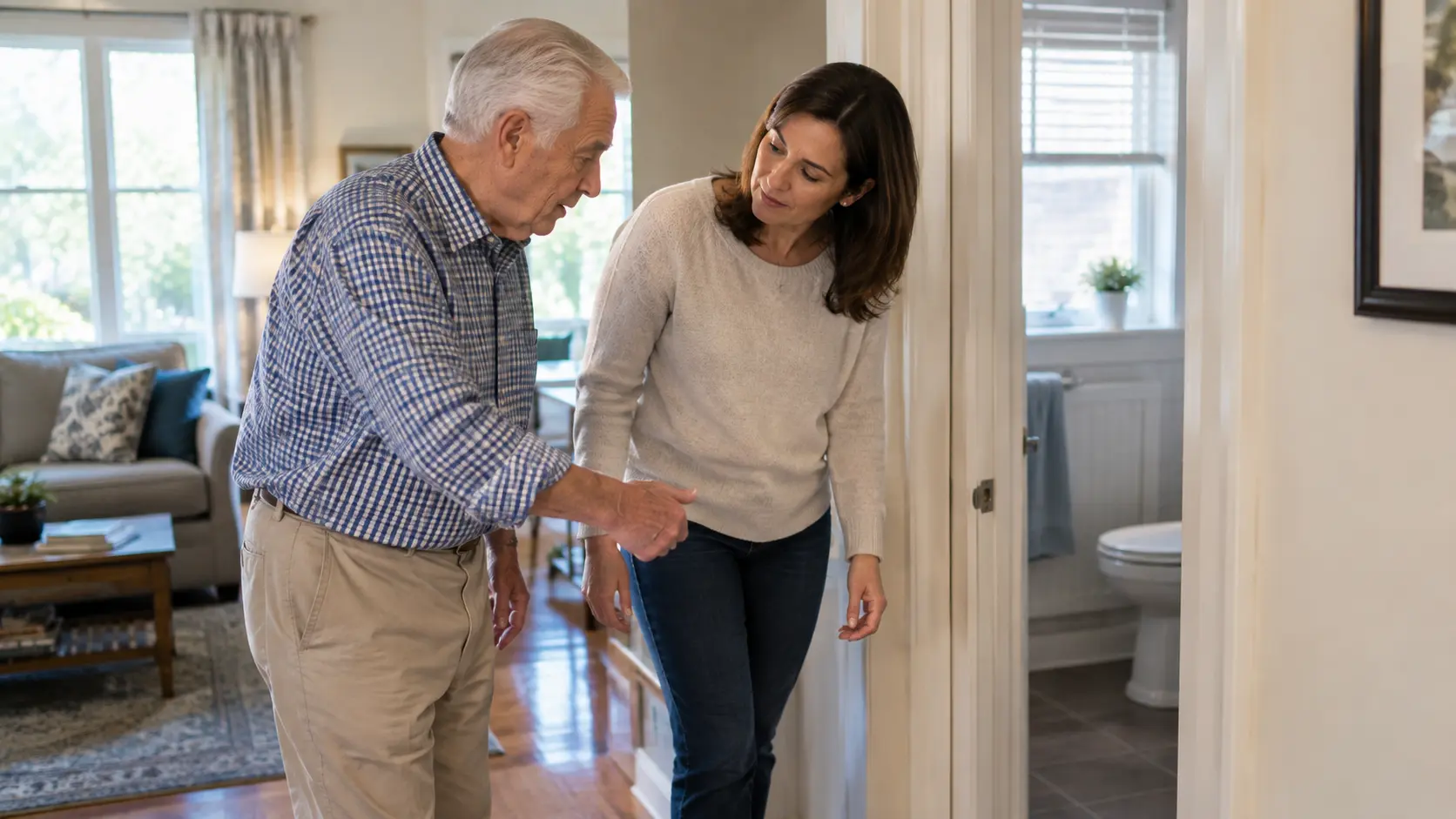
A checklist can help families identify common household hazards.
However, some situations require more individualized guidance.
Consider professional help when an older adult:
- Falls repeatedly
- Has significant balance difficulties
- Struggles with transfers
- Cannot safely use stairs
- Has difficulty using mobility equipment
- Needs major bathroom modifications
- Has complex accessibility requirements
- Experiences increasing difficulty with everyday activities
An occupational therapist can assess daily activities and recommend appropriate adaptations.
A qualified home modification professional may also help with larger accessibility projects.
Some equipment may require professional fitting or installation.
A checklist should organize the conversation, not replace professional assessment when needs are complex.
Families should also involve the older adult whenever possible.
Their preferences, abilities, routines, and comfort should influence the final decisions.
Step 4: Complete Your Room-by-Room Safety Check
A room-by-room checklist can make a large home safety project easier to manage.
Instead of trying to change everything at once, review one area at a time.
For each room, ask:
- Is the walking path clear?
- Is lighting adequate?
- Are frequently used items easy to reach?
- Does the person need to bend or climb unnecessarily?
- Are transfers comfortable and stable?
- Are there loose rugs, cords, or clutter?
- Can the person reach help during an emergency?
Record the problems you find before purchasing solutions.
Then decide which problems deserve attention first.
Use the checklist to work through the home one area at a time.
Explore Home Safety by Area
Bathroom Safety
Learn about grab bars, shower seating, raised toilet seats, non-slip surfaces, and safer bathroom layouts.
Explore Bathroom Safety Guides →
Kitchen Safety
Learn about safer cooking, appliance use, reach, movement, and kitchen organization.
Explore Kitchen Safety Guides →
Floor and Fall Prevention
Review walking paths, rugs, lighting, thresholds, stairs, and other common household concerns.
Explore Fall Prevention Guides →
Entryways and Exterior
Learn how handrails, lighting, thresholds, and entrance design can affect everyday access.
Explore Entryway and Exterior Safety Guides →
Smart Home Safety
Explore medical alerts, monitoring systems, family communication tools, sensors, and other technologies.
Choose Your Next Step
I Want to Check My Home
Start with a room-by-room review of common household hazards.
Use the Senior Home Safety Checklist →
I Need Help With One Specific Room
Find practical information for bathrooms, bedrooms, kitchens, stairs, and other areas.
Browse Senior Home Safety Guides →
I Am Caring for an Aging Parent
Learn practical ways to support safety while respecting independence and personal preferences.
Frequently Asked Questions
What should I change first to age in place safely?
Start with the activity creating the greatest difficulty or safety concern.
This may involve bathroom transfers, walking paths, nighttime lighting, or emergency access.
Can I age in place if I live alone?
Many older adults live independently with appropriate home changes and support.
The right approach depends on mobility, daily abilities, emergency access, and available support.
How much does it cost to make a home safer for an older adult?
Costs vary widely depending on the home’s condition and the changes required.
Some improvements involve simple adjustments, while accessibility renovations can require professional installation.
How can I convince my elderly parents to accept home safety changes?
Focus on the activity instead of describing the person as unsafe or incapable.
Involve the older adult when identifying problems and choosing possible solutions.
Are smart home devices easy for seniors to use?
Yes, provided they are chosen correctly. We specifically review senior-friendly technology that features voice control (like Alexa or Google Home) or simple one-touch interfaces. These tools eliminate the need for complex apps or tiny buttons, making it easier for seniors to control lighting, temperature, and home security without frustration.
What is the difference between aging in place and making a home accessible?
Aging in place focuses on supporting safe, independent living as needs change.
Accessibility modifications address physical barriers that can make everyday activities difficult.
Should I make home modifications before a problem occurs?
Planning ahead can help families address changing needs before everyday activities become difficult.
However, modifications should still reflect realistic needs rather than unnecessary equipment purchases.
When should I ask a professional for help?
Professional guidance can be useful when mobility, balance, transfers, or accessibility needs are complex.
An occupational therapist or qualified home modification professional can help identify appropriate solutions.
Sources and Further Reading
ElderGuardHome uses reputable sources to support safety information and explain important considerations.
Recommended sources include:
- National Institute on Aging
- Centers for Disease Control and Prevention
- U.S. Department of Housing and Urban Development
- U.S. Access Board
- Relevant manufacturer documentation for reviewed products
Product specifications can change over time. Always confirm current specifications, installation requirements, weight limits, and manufacturer instructions before purchasing or installing safety equipment.
Who Creates ElderGuardHome's Guides?
Nisha Sharma
Bachelor of Science in Social Work
Certified Senior Home Safety Specialist
Nisha Sharma focuses on practical home safety, fall prevention, aging-in-place modifications, and caregiver education.
ElderGuardHome’s guides combine research, product documentation, safety standards, and practical guidance for families supporting older adults.
About This Guide
This guide provides general home safety information for older adults and caregivers.
It does not replace medical advice, occupational therapy assessment, professional accessibility evaluation, or emergency services.
Home modifications should be selected according to the person’s individual abilities and circumstances.