
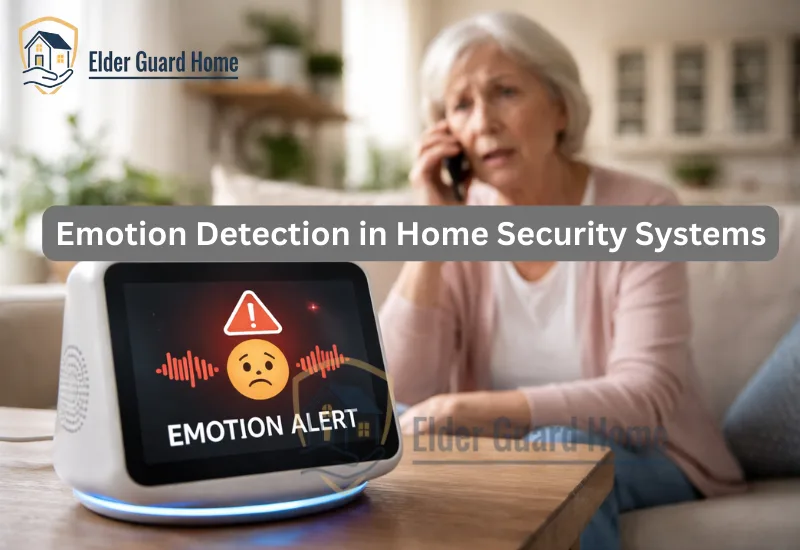
Emotion detection home security systems monitor emotional and behavioral signals inside the home. The goal is simple. Detect distress early. These systems use artificial intelligence to analyze voice tone, movement patterns, and behavior changes.
Many seniors live alone. Caregivers cannot watch them all day. Because of this, smart monitoring technology is evolving. Modern systems now look beyond motion detection. They track emotional signals and behavior patterns.
An AI emotional monitoring system can identify signs of confusion, stress, or panic. When something unusual appears, the system sends alerts. Families can respond faster and prevent serious problems.
What Is Emotion Detection Home Security
Emotion detection home security refers to smart systems that analyze emotional signals and behavior inside the home. These systems rely on artificial intelligence. The AI studies speech patterns, activity changes, and daily routines.
The system first learns normal behavior. It watches how a person moves, speaks, and interacts with the home. After learning these patterns, the AI detects unusual signals.
Examples include:
Sudden changes in speech tone
Unusual pacing or wandering
Long periods of inactivity
Signs of stress or agitation
When the system detects abnormal signals, it triggers an intelligent home alert system. The alert goes to caregivers or family members.
This technology focuses on prevention. Instead of reacting after an accident, it identifies warning signs earlier.
Emotion detection technology is also becoming part of the modern emotion recognition smart home environment. Smart home systems can now analyze voice patterns, movement behavior, and activity routines. These signals help the system understand emotional states and detect unusual behavior inside the home.
How AI Emotional Monitoring Systems Work
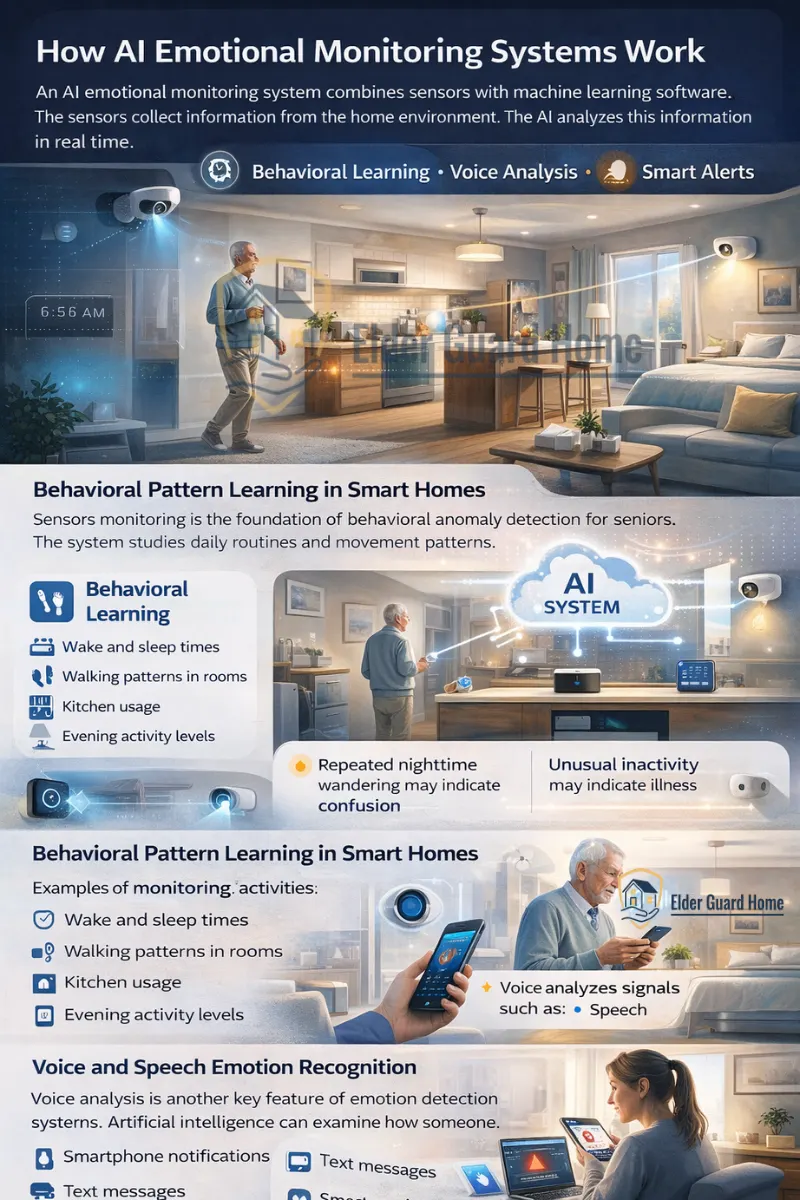
An AI emotional monitoring system combines sensors with machine learning software. The sensors collect information from the home environment. The AI analyzes this information in real time.
Many modern platforms use AI behavior monitoring for seniors to study daily activity patterns. The system learns how a person normally moves, speaks, and interacts with their home environment. When the routine changes, the AI identifies the difference and sends alerts.
Most systems use three types of analysis. Behavioral learning. Voice analysis. Smart alerts.
Together these components create a monitoring system that detects emotional changes and unusual behavior.
Behavioral Pattern Learning in Smart Homes
Behavior monitoring is the foundation of behavioral anomaly detection for seniors. The system studies daily routines and movement patterns.
Examples of monitored activities include:
Wake and sleep times
Walking patterns in rooms
Kitchen usage
Evening activity levels
The system records these behaviors over time. This creates a normal behavior profile.
If the routine changes suddenly, the system detects the difference. For example, repeated nighttime wandering may indicate confusion. Unusual inactivity may indicate illness.
Behavior monitoring helps detect risks before a fall or medical emergency occurs.
Voice and Speech Emotion Recognition
Voice analysis is another key feature of emotion detection systems. Artificial intelligence can examine how someone speaks.
Researchers are also developing AI emotion detection for elderly care using voice analysis technology. These systems examine tone, speech speed, and vocal stress patterns to identify emotional signals.
The system analyzes signals such as:
Speech speed
Voice pitch
Stress patterns in speech
Sudden tone changes
Research shows that emotional stress affects speech patterns. According to research published by the National Institutes of Health, AI models can detect emotional stress through voice signals.
Voice monitoring helps identify distress that may not appear through movement sensors.
AI Intelligent Home Alert System That Notify Caregivers
Once the system detects abnormal signals, it sends alerts. This process is handled by an intelligent home alert system.
Common alert methods include:
Smartphone notifications
Text messages
Caregiver dashboard alerts
Smart speaker announcements
These alerts allow caregivers to act quickly. A family member can call the resident or check the monitoring system.
Early alerts reduce response time during emergencies.
Why Emotional Monitoring Is Important for Seniors Living Alone
Seniors who live alone face unique risks. Small problems can escalate quickly without support nearby. Emotional monitoring helps detect these problems earlier.
Many families now explore AI monitoring systems for elderly living alone because traditional alarm systems detect problems too late. AI monitoring focuses on behavioral signals that appear before emergencies. This allows caregivers to respond earlier.
AI monitoring systems watch for behavior changes and emotional signals. These signals often appear before physical symptoms.
Early detection allows families to respond quickly.
Detecting Confusion and Cognitive Changes
Cognitive decline often begins with subtle behavioral changes. These changes may include confusion, agitation, or irregular activity.
Common signs include:
Repeated wandering
Forgetting routine tasks
Sudden mood changes
Disorientation at night
Through behavioral anomaly detection for seniors, monitoring systems identify these changes early.
Families can then investigate the situation and provide support.
For more privacy-focused monitoring technology, see our guide on Privacy-First Home Monitoring Systems.
Identifying Stress or Panic Situations
Stress or panic can affect seniors who live alone. Anxiety episodes may cause rapid speech, pacing, or unusual activity.
Emotion detection systems look for these signals.
Possible indicators include:
Increased speech intensity
Rapid movement between rooms
Sudden pacing
Raised voice tone
When these signals appear together, the system flags the behavior.
Caregivers receive alerts and can check the situation.
This approach is often described as emotional distress detection AI. The system analyzes behavioral signals and speech patterns to identify stress or panic situations. Caregivers receive alerts when these signals appear repeatedly.
Recognizing Unusual Behavioral Patterns
Many emergencies begin with unusual behavior patterns. A person may move less than usual or wander more frequently.
Examples include:
Staying in one room for long periods
Repeated movement between rooms
Nighttime wandering
Sudden inactivity
Emotion detection home security systems monitor these patterns continuously.
Because of this, the system detects problems earlier than traditional motion sensors.
Monitoring technology improves safety, but families should also learn how to prevent seniors leaving the stove on, which is a common household risk.
Installing automatic stove shut-off devices for elderly can reduce the risk of kitchen fires caused by forgotten burners.
Types of AI Technologies Used in Emotion Detection Home Security
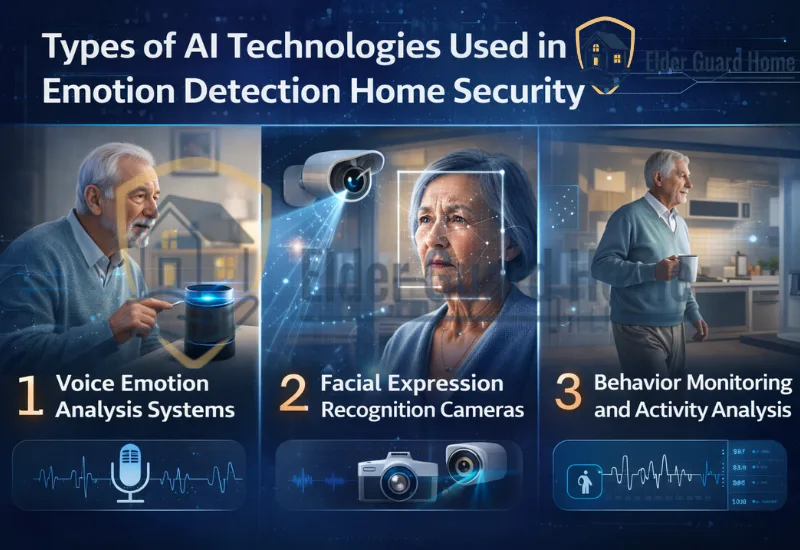
Several technologies work together to detect emotional signals and behavior changes. Each technology focuses on a different type of data.
When combined, they provide a clearer picture of what is happening inside the home.
Voice Emotion Analysis Systems
Voice analysis systems examine speech patterns to detect emotional states. These systems use machine learning models trained on thousands of voice samples.
The AI looks for patterns linked to stress or anxiety.
Signals analyzed include:
- Voice frequency changes
- Speech rhythm
- Tone variation
Researchers at MIT have demonstrated AI models that detect emotional cues through speech analysis.
Voice monitoring works well because speech changes often appear during emotional distress.
Facial Expression Recognition Cameras
Some systems use cameras to detect facial expressions. Computer vision software analyzes visual signals from the face.
These signals may include:
- Eye movement
- Facial tension
- Emotional expressions
Facial recognition can detect signs of stress or confusion. However, many families prefer privacy focused monitoring without cameras.
Some monitoring technologies use cameras while others rely on sensors, which is explained in this comparison of radar vs camera fall detection systems.
Behavior Monitoring and Activity Analysis
Activity monitoring systems track movement patterns inside the home. These sensors do not analyze facial expressions or voice.
Common sensors include:
- Motion sensors
- Radar monitoring sensors
- Smart home activity sensors
These systems focus on behavioral anomaly detection for seniors. The goal is to detect routine changes that signal risk.
Many modern monitoring systems combine activity tracking with AI fall detection technology.
Examples of Emotion Detection Technologies Being Developed
Emotion detection technology is still developing. However, research labs and technology companies are exploring new solutions.
Current research focuses on:
Voice stress detection
Behavioral monitoring AI
Smart home emotional sensing
According to research from the U.S. National Library of Medicine, emotion recognition technologies can support remote healthcare monitoring.
These technologies may soon become part of everyday home monitoring systems.
Pros of Emotion Detection Home Security Systems
Emotion detection monitoring offers several advantages for families and caregivers.
Key benefits include:
Early detection of distress signals
Continuous monitoring without wearable devices
Faster response from caregivers
Improved understanding of behavior patterns
Integration with smart home systems
Because of these benefits, emotion detection monitoring may become an important safety tool for seniors living alone.
Limitations of Emotion Detection Technology
Emotion detection technology also has limitations. Families should understand these challenges before relying on the system.
Important limitations include:
AI accuracy can vary between systems
Some solutions require microphones or cameras
Privacy concerns may affect adoption
Many technologies are still developing
Despite these challenges, the technology continues to improve.
Accuracy is an important factor when choosing monitoring technology, especially when evaluating AI fall detection false alarm rates.
Who Should Use Emotion Detection Monitoring Systems
Emotion detection monitoring works best in situations where early warning signals matter.
These systems may benefit:
Seniors living alone
People with early dementia symptoms
Families providing remote caregiving
Assisted living environments
Smart homes designed for aging in place
These environments benefit from constant monitoring and early alerts.
Emotion Detection vs Traditional Home Monitoring Systems
Traditional home monitoring systems detect physical events. These include motion sensors, door sensors, and fall detection devices.
Emotion detection systems add deeper analysis.
They monitor:
Emotional signals
Speech patterns
Routine changes
Behavior anomalies
This broader monitoring approach helps detect risks earlier.
Future of AI Emotional Monitoring Systems
Artificial intelligence is transforming home monitoring technology. Future systems will combine emotional analysis with other safety features.
Expected developments include:
Predictive health monitoring
Integrated fall detection and emotion analysis
Advanced caregiver dashboards
Fully automated emergency alerts
As technology improves, emotion detection home security systems may become a standard part of senior care.
FAQ
Can AI detect emotional distress in seniors
Yes. Some AI systems analyze speech patterns, behavior changes, and movement signals. These signals help identify emotional distress or confusion.
How accurate are emotion detection monitoring systems
Accuracy depends on the sensors and algorithms used. Voice analysis and behavioral monitoring systems continue to improve as research advances.
Are emotion detection home monitoring systems available today
Some early systems exist today. However, advanced emotion recognition monitoring is still developing. Many technologies remain in research and pilot stages.
Final Thoughts on Emotion Detection Home Security
Emotion detection home security systems represent an important step in the evolution of smart home monitoring. Traditional systems detect motion or falls. Emotional monitoring looks deeper. It analyzes behavior, voice signals, and routine changes.
This approach helps detect early warning signs such as stress, confusion, or unusual activity. As a result, caregivers can respond faster when something appears wrong.
The technology is still developing. Accuracy and privacy concerns remain important considerations. However, research in artificial intelligence continues to improve emotional monitoring capabilities.
For families supporting seniors who live alone, emotion detection systems may become a valuable tool. They add another layer of awareness inside the home and help caregivers stay connected even from a distance.