
The best non-slip spray for ceramic tile floors for seniors can greatly reduce fall risks in bathrooms, kitchens, and entryways. Ceramic tiles look beautiful and last for years. However, they become extremely slippery when wet. Because of this, many families search for the best anti slip solution for tile floors that doesn’t require a full renovation.
Ceramic tile is common in modern homes. It is durable, stylish, and easy to clean. However, the smooth surface can quickly turn dangerous when water, soap, or spills are present. For seniors, even a small slip can lead to serious injuries.
According to the CDC, falls are the leading cause of injury among adults aged 65 and older.
Fortunately, you don’t need to replace your flooring. Modern anti-slip sprays provide a simple and invisible solution. These treatments create a microscopic texture on the tile surface. As a result, the floor gains extra grip while keeping the same appearance.
Key benefits of anti-slip sprays
Improves traction on slippery ceramic tiles
Keeps the original look of your flooring
Works on bathroom, kitchen, and entryway tiles
Quick and simple application
Creates safer floors for seniors aging in place
Another advantage is convenience. You don’t need bulky rubber mats or expensive “grip” tiles. Simply apply the spray, and within about an hour the floor becomes much safer.
For homeowners looking for the slip resistant coating for ceramic tile floors, this small upgrade can make a big difference in preventing slips and improving everyday safety at home.
Best Non-Slip Products for Ceramic Tile Floors (Quick Picks)
If you want a fast recommendation, the following anti-slip products are widely used to improve traction on smooth tile floors and bathroom surfaces. Each option offers a different approach to preventing slips for seniors in wet areas.
Best Overall Non-Slip Treatment
✔ Invisible anti-slip coating
✔ Long-lasting traction improvement
✔ Ideal for ceramic tile floors
Best for homeowners who want a permanent safety solution without changing the look of their flooring.
Best for Fiberglass Showers and Bathtubs
SlipDoctors Anti-Slip Spray for Fiberglass and Acrylic
✔ Designed specifically for fiberglass and acrylic
✔ Quick spray-on application
✔ Improves grip in wet bathroom environments
Best for bathroom showers and tubs used by seniors.
Best Budget Safety Option
SlipX Solutions Adhesive Safety Treads
✔ Peel-and-stick installation
✔ Affordable traction strips
✔ Works well on bathtubs and shower floors
Best for quick slip prevention without permanent treatments.
How Does Non-Slip Spray Work on Ceramic Tile Floors?
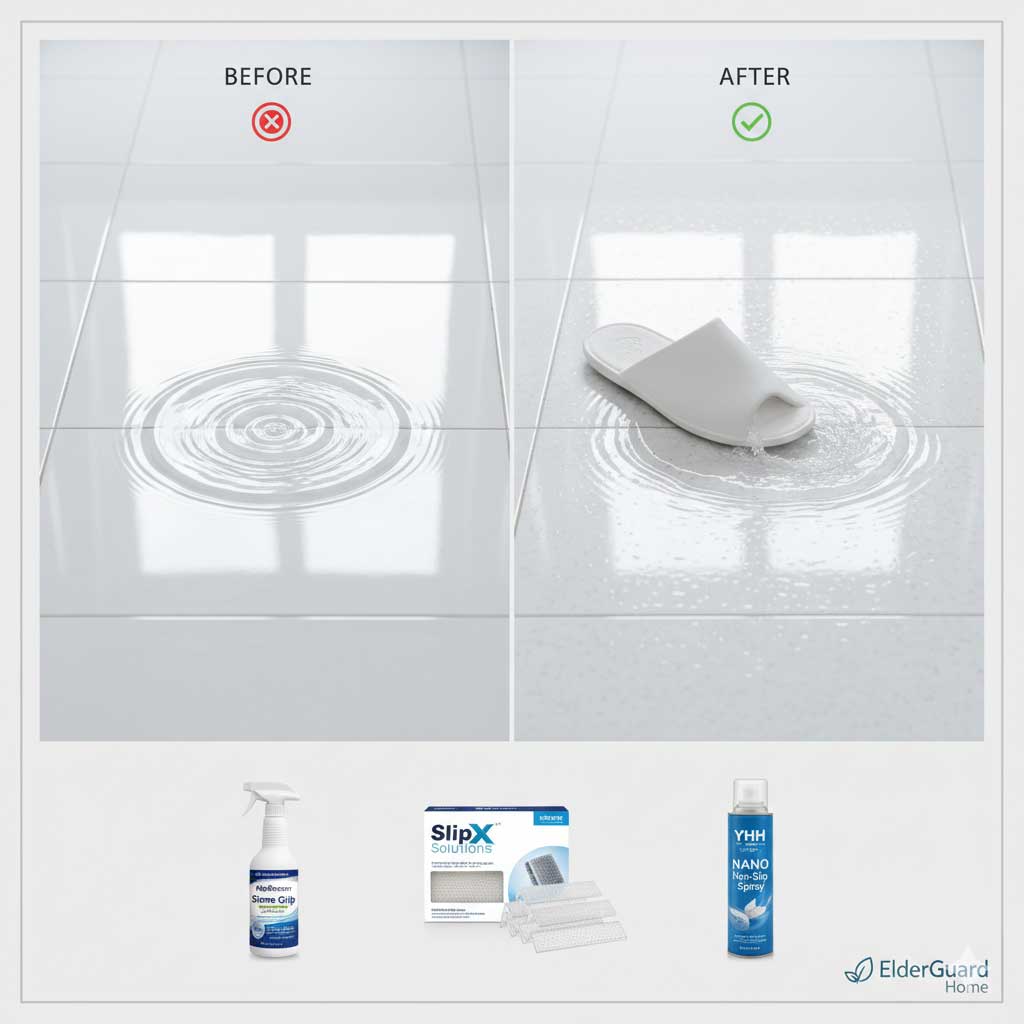
A non-slip spray may sound too good to be true. After all, it’s a clear liquid that makes floors safer without changing their appearance. Many homeowners wonder how something invisible can help seniors with balance or mobility issues.
In reality, these products work differently from traditional coatings. They don’t sit on top of the tile like tape or paint. Instead, a DIY anti-slip tile treatment changes the surface at a microscopic level.
When applied, the solution creates thousands of tiny textures on the tile. These small peaks and valleys act like invisible treads. As a result, the floor stays smooth while gaining extra grip.
How the treatment improves safety
Creates microscopic traction on ceramic tile
Keeps the original look of the floor
Activates stronger grip when the floor gets wet
Works well in bathrooms, kitchens, and laundry areas
Helps reduce slip risks for seniors
Interestingly, you may not feel the difference when the floor is dry. However, the real benefit appears when water touches the surface. The microscopic texture acts like tiny suction points against bare feet or rubber soles.
Another advantage is durability. Many experts recommend anti-slip tile treatment for elderly safety because it is a long-term solution. Unlike mats or adhesive strips, it doesn’t peel or shift. It also handles regular cleaning and heavy foot traffic.
Still, preventing spills is equally important. For example, using safe electric kettles for seniors with tremors can stop hot water from splashing on the floor. This reduces the chance of slippery surfaces before a fall risk even begins.
How long does non-slip spray last on ceramic tile floors?
Most non-slip sprays last between 3 to 5 years, depending on foot traffic, cleaning habits, and exposure to water. High-traffic areas may need reapplication sooner than lightly used rooms.
How to Apply Non-Slip Spray on Bathroom Tiles?
Bathroom tiles often become slippery, especially when wet. This is why many homeowners look for the best non-slip spray for ceramic tile floors for seniors. The good news is that applying a traction spray is simple and quick.
Unlike wax-based cleaners, a clear traction spray for bathroom tiles improves the surface grip. It increases friction on the tile, which helps reduce slips and falls. As a result, bathrooms become much safer for seniors.
Before applying the spray, proper preparation is important.
Step-by-Step Application
1. Clean the tile thoroughly
First, remove soap residue, oils, and dirt. Use a mild cleaner and rinse the floor well.
2. Let the floor dry completely
Next, allow the tiles to dry. A dry surface helps the spray bond properly.
3. Apply the anti-slip spray evenly
Then spray the solution across the tile surface. Follow the instructions provided with the best anti slip solution for tile floors.
4. Wait for the treatment to activate
Most sprays need about 30–60 minutes. During this time, the solution creates microscopic texture on the tile.
5. Rinse or wipe if required
Some products recommend a light rinse after application. This step removes any leftover residue.
Why this upgrade matters
Improves traction on slippery bathroom tiles
Keeps the original tile appearance
Reduces fall risks for seniors
Works in showers, bathrooms, and laundry areas
For extra protection, many families combine this upgrade with bathroom fall detection systems for seniors. Together, these solutions help create a safer environment for aging in place.
Best Non-Slip Spray for Ceramic Tile Floors for Seniors
1. SlipDoctors Stone Grip – Invisible Anti-Slip Treatment for Ceramic Tile
SlipDoctors Stone Grip is a professional anti-slip floor treatment designed for ceramic tile, stone, and other hard surfaces. Instead of adding a visible coating, it chemically increases microscopic traction on the tile surface while keeping the original appearance intact.
This makes it a strong long-term solution for bathrooms, kitchens, and entryways where seniors are at higher risk of slipping.
Key Benefits:
Invisible anti-slip finish that keeps the natural look of ceramic tiles
Works on ceramic tile, porcelain, granite, and natural stone
Long-lasting traction improvement compared with temporary mats
Safe for wet areas like bathrooms and shower floors
Reduces fall risk without altering flooring design
Best For
Homes with slippery ceramic tile floors
Senior bathrooms where fall prevention is critical
Kitchens or laundry areas exposed to water
Homeowners who want permanent traction improvement
Limitations
Requires proper surface cleaning before application
Not ideal for already textured or rough flooring
Application may require reapplication after several years
2. SlipDoctors Anti-Slip Spray for Fiberglass and Acrylic
This SlipDoctors anti-slip spray is specifically designed for fiberglass showers, bathtubs, and acrylic surfaces where traditional anti-slip treatments may not bond properly.
Instead of installing bulky mats, the spray creates a lightly textured safety layer that improves grip on smooth bathroom surfaces.
Key Benefits:
Designed for fiberglass showers and acrylic tubs
Quick spray-on application
Improves traction without bulky safety mats
Works well in wet bathroom environments
Helps reduce bathroom slip hazards for seniors
Best For
Fiberglass shower floors
Acrylic bathtubs used by elderly family members
Small bathrooms where mats create clutter
Homes needing fast anti-slip improvement
Limitations
Surface must be dry and clean before spraying
May require periodic reapplication
Not designed for large tile floor areas
3. SlipX Solutions Adhesive Safety Treads
SlipX Solutions Adhesive Safety Treads provide an easy peel-and-stick traction solution for slippery bathroom floors and shower areas. Instead of treating the entire surface, these textured strips add grip exactly where slips usually occur.
This option is often preferred for quick safety upgrades without tools or chemicals.
Key Benefits:
Simple peel-and-stick installation
Textured surface improves foot traction in wet areas
Works well on bathtubs, shower floors, and steps
Affordable safety upgrade for senior bathrooms
No special tools or chemicals required
Best For
Temporary slip prevention
Renters who cannot modify flooring permanently
Bathtubs and shower entry areas
Quick safety improvements for seniors
Limitations
Visible strips may affect bathroom aesthetics
Adhesive may wear over time in high-use areas
Requires periodic replacement
Does non-slip spray change the look or feel of ceramic tiles?
Most quality non-slip sprays are clear and do not change the tile color. Some glossy tiles may feel slightly less smooth, but the surface usually looks the same once dry.
Understanding DCOF Floor Safety Standards
n the flooring industry, experts don’t just guess if a floor is slippery; they measure it using something called the Dynamic Coefficient of Friction (DCOF). Think of this as a technical “grip score” for your floor. The higher the number, the more traction you have underfoot.
Most standard ceramic tiles have a baseline DCOF of about 0.42. While that sounds official, it’s often the bare minimum for dry areas. Once you add a little water or soap into the mix, that number plummets, turning your bathroom into a high-risk zone. Our team pays close attention to these metrics because they are the difference between a “pretty” floor and a safe one.
When you apply the non-skid coating for ceramic floors in senior homes, you are essentially giving your floor a technical upgrade. These treatments physically raise the DCOF, moving your surface from a “high risk” category into a “safe” one.
Large commercial hotels and hospitals have used this same logic for decades to prevent liability and accidents. By bringing these professional safety standards into your residential home, you aren’t just following a trend—you’re using a proven engineering strategy to ensure your environment is stable for everyone, regardless of their mobility levels.
Choosing the Right anti slip spray for tile floors
Here is a bit of “insider” advice: not all sprays are created equal. If you walk into a hardware store and grab the first “anti-slip” can you see, you might end up with a mess. You need to look for products labeled specifically for ceramic or porcelain. Many heavy-duty sprays are designed for porous concrete or outdoor wood, and they simply won’t bond correctly to the slick, glass-like glaze of a ceramic tile.
One of the most important terms to look for is “non-filming.” In plain English, this means the treatment doesn’t sit on top of the tile like a layer of plastic or paint. Cheap clear coats often look great for a month, but then they start to peel, flake, or turn yellow. A high-quality non-filming treatment becomes part of the tile itself, so there’s nothing to wear away or look “crusty” down the road.
Since most home safety upgrades happen in bathrooms or kitchens, you also need to check the “indoor rating.” You don’t want a product that smells like a chemical factory for three days. Fortunately, many of the anti-slip tile treatment for elderly safety in 2026 are water-based. These are much friendlier for indoor use because they don’t produce those harsh, dizzying fumes. It makes the application process much safer, especially if you can’t easily open every window in the house.
How to Prepare Your Floor for anti slip treatment
I’ve seen many DIY projects fail not because the product was bad, but because the prep work was rushed. Think of this like painting a wall—if the surface is oily, nothing is going to stick. Before you even touch the spray bottle, your floor needs to be surgically clean. Any lingering grease, dust, or old floor wax will act as a barrier, preventing the treatment from bonding with the ceramic.
Start by giving the tiles a serious scrub with a heavy-duty degreaser. I often recommend a specialized cleaner like SlipDoctors Maintain Grip for this phase. It’s designed specifically to strip away the invisible buildup that standard “grocery store” soaps leave behind over the years.
Once you’ve finished scrubbing, don’t just mop it up and move on. You need to rinse the floor at least twice with plain, clear water. You have to be 100% certain that there isn’t a single bubble of soap residue left on the surface.
Finally—and this is the part most people rush—let the floor dry completely. Before you apply the best non-slip spray for ceramic tile floors for seniors, double-check that no moisture is hiding in the grout lines. If the floor is even slightly damp, the treatment might turn cloudy or fail to bond correctly. Taking an extra hour to ensure the floor is bone-dry is the most important step in any DIY anti-slip tile treatment project.
Is non-slip spray safe to use in bathrooms and kitchens?
Yes, non-slip spray is safe for bathrooms and kitchens when applied correctly. These areas benefit the most because water spills can make ceramic tiles especially slippery.
How to Apply Your Non-Slip Treatment: Step-by-Step Guide
The image below shows the basic steps to apply non-slip spray correctly.
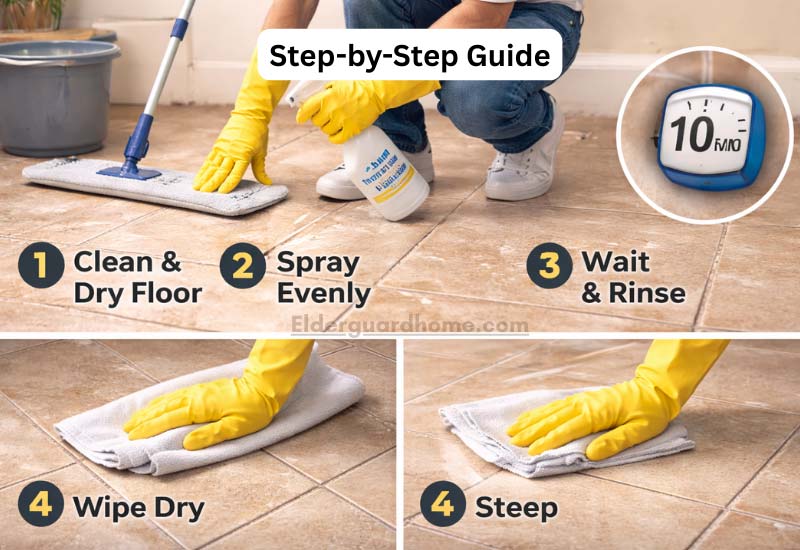
Applying non-slip spray does not take much time. However, following the correct order is important. The steps below show a simple and effective way to improve grip on ceramic tile floors.
Below is a quick overview of how non-slip spray is applied to ceramic tile floors.
- Clean the tile surface to remove grease and dirt.
- Rinse the floor and let it dry fully.
- Shake the non-slip spray well.
- Apply the spray evenly in small sections.
- Wait for the recommended time.
- Rinse off any excess spray.
- Let the floor dry before walking on it.
Once your floor is clean and bone-dry, the actual application is surprisingly fast. Most high-quality bottles come with a standard trigger sprayer, but the trick isn’t in the spray—it’s in the technique.
Work in Small Squares
Don’t try to tackle the whole room at once; you’ll likely miss spots or step on your own work. I recommend working in manageable 3-foot by 3-foot sections. This allows you to stay in control and ensures the liquid doesn’t dry out before you’ve had a chance to level it.
The “Less is More” Rule
Spray a light, even mist over the ceramic surface. A common mistake is “flooding” the floor—you aren’t watering a lawn! A thin, consistent layer is all it takes to activate the grip. Use a microfiber mop or a clean sponge to gently spread the liquid, making sure you reach into the corners and cover the grout lines evenly.
The Waiting Game
Once the floor looks “wet,” let it sit. Depending on the brand, you’ll usually wait between 10 and 20 minutes. This is when the chemical magic happens. While you wait, keep pets and family members away so the surface remains undisturbed.
The Final Rinse
When the timer goes off, you have successfully applied the non-skid coating for ceramic floors in senior homes. But you aren’t done just yet. You must rinse the area thoroughly with plain water. This “neutralizes” the reaction and washes away any leftover chemicals, leaving behind nothing but a safe, high-traction surface that’s ready for use.
Room-by-Room Action Steps for Safer Ceramic Tile Floors
Ceramic tile floors can become slippery over time. This is especially true in wet or high-traffic areas. For this reason, improving ceramic tile slip resistance room by room is the safest approach.
🛁 Bathroom Tile Floors (High-Risk Area)
Bathrooms are one of the most dangerous areas for smooth tile surfaces. When tiles get wet, ceramic tile slip resistance for elderly users drops quickly.
Apply a tile traction improvement spray near the shower, tub, and sink. These areas collect water often. As a result, adding an anti-slip treatment for ceramic tiles helps reduce sliding and improves grip underfoot.
🍳 Kitchen Tile Floors (Spill-Prone Area)
Kitchen floors face regular spills. Water and oil can reduce tile slip resistance without warning. Because of this, kitchens benefit from ceramic tile traction improvement tips.
Apply a non-slip spray for porcelain and ceramic tiles near sinks and cooking areas. In addition, clean the surface well before spraying. This allows the treatment to bond better and increase long-term traction.
🚪 Entryways and Door Areas
Entryway tiles often collect moisture from shoes. During rainy weather, ceramic tile slip risk increases. Therefore, this area needs added grip.
Apply non-slip spray where people step inside first. Focus on high-traffic paths. This helps reduce slips caused by water and dust buildup on tile surfaces.
🧺 Laundry Rooms and Utility Spaces
Laundry rooms often have smooth tile floors and hidden moisture. As a result, tile traction improvement tips are important in these spaces.
Use a ceramic tile slip resistance spray near washers, sinks, and drains. These areas stay damp longer. Improving grip here reduces the chance of unexpected slips.
🏠 Hallways and Connecting Spaces
Hallways may look safe, but polished tiles can still be slick. In busy homes, ceramic tile slip resistance for seniors should not be ignored.
Apply a non-slip spray treatment for ceramic tiles evenly along walking paths. Avoid spot treatment only. Even coverage improves balance and confidence while moving between rooms.
In summary, not all tile areas need the same level of treatment. Focus first on wet and high-traffic zones. Then, apply non-slip spray where ceramic tile slip risk is highest. This step-by-step approach improves safety without overusing product.
How to Know It Worked: Testing the Results
Once the floor is dry and the air has cleared, you’ll want to see the results for yourself. Since the treatment is invisible, you can’t rely on your eyes—you have to rely on the “feel.”
I always recommend a simple “Wet Stress Test.” Pour a small amount of water onto one of your treated tiles and try to slide your shoe across the wet spot. You shouldn’t feel that heart-sinking “skate” anymore. Instead, you should feel a distinct “drag” or resistance. That physical pushback is the proof that your clear traction spray for bathroom tiles has successfully done its job, turning a slick hazard into a high-grip surface.
What if it still feels slick?
Don’t panic if the first pass isn’t perfect. Some high-end porcelain tiles are incredibly dense and “stubborn,” meaning they might need a second application to fully develop those microscopic treads. However, for 90% of standard ceramic floors, one thorough treatment is all you’ll need for the next three to five years.
To keep that grip at its peak, avoid using those “mop and shine” waxes we talked about earlier. Stick to a simple, neutral pH cleaner. This ensures that dirt and soap scum don’t fill in the micro-treads, keeping your kitchen and bathroom safe for the long haul.
How to Protect and Maintain Non-Slip Tile Floor Treatments
After applying a non-slip treatment, proper cleaning is essential. Otherwise, you may accidentally reduce the grip you just created. Many homeowners make this mistake during routine cleaning.
For example, some people use “mop and shine” products. These cleaners promise a glossy finish. However, they usually contain wax or silicone. As a result, they leave a thin layer on the floor. This layer can cover the microscopic texture created by the non-slip treatment.
To keep the floor safe, it is better to keep your cleaning routine simple.
Simple cleaning tips to maintain traction
Use warm water with a small drop of dish soap.
Choose cleaners labeled “residue-free” or “pH-neutral.”
Avoid wax-based or shine-enhancing products.
Mop regularly to remove dust, oils, and dirt.
Over time, small particles can still collect in the tile texture. Because of this, the floor may start to feel smoother. However, this does not always mean the treatment has worn off.
The quick scrub method
Mix warm water with a mild cleaner.
Use a stiff-bristled brush to scrub the surface.
Focus on high-traffic areas.
Rinse and allow the floor to dry.
This simple step helps reopen the tiny treads created by the treatment. As a result, the grip often returns quickly.
In the end, regular maintenance only takes a few minutes. Yet it can prevent serious slip risks. Consistent cleaning helps keep your home both safe and comfortable for years to come.
Pros and Cons of Using Non-Slip Spray on Ceramic Tiles
Pros
Improves traction on wet ceramic tiles
Invisible finish that preserves tile appearance
Easy DIY installation
Affordable compared to floor replacement
Can last 3–5 years with proper maintenance
Cons
May require reapplication in high-traffic areas
Not suitable for some natural stone tiles
Surface must be cleaned thoroughly before application
Slight haze may appear on very dark tiles in rare cases
Limitations of anti slip spray for tile floors
While anti-slip sprays improve traction, they are not a complete fall-prevention solution. Homes should still combine floor treatments with grab bars, better lighting, and proper footwear to reduce senior fall risk.
Non-Slip Spray vs Non-Slip Mats vs Adhesive Safety Treads
Understanding the differences between non-slip spray, safety mats, and adhesive safety treads can help homeowners choose the safest option for senior-friendly flooring.
While each solution improves traction, they vary in durability, visibility, and maintenance needs. The comparison below highlights which anti-slip solution works best for ceramic tile floors in bathrooms, kitchens, and other high-risk areas.
| Feature | Non-Slip Spray | Safety Mats | Adhesive Safety Treads |
|---|---|---|---|
| Appearance | Invisible finish that keeps the original tile look | Visible mats placed on the floor | Visible textured strips |
| Installation | Spray applied directly to ceramic tile surface | Simply place the mat on the floor | Peel and stick adhesive strips |
| Durability | Long lasting (often 3–5 years) | Short-term solution | Moderate durability |
| Maintenance | Low maintenance once applied | Requires regular cleaning | May peel or collect dirt over time |
| Best Use Case | Permanent anti-slip treatment for ceramic tile floors | Temporary traction in bathrooms or showers | Targeted grip for steps or small areas |
For homeowners looking for a long-term solution, non-slip spray is often the best choice because it improves traction without changing the appearance of ceramic tiles. However, safety mats and adhesive treads can still work well for temporary or targeted fall-prevention areas.
Frequently Asked Questions
Does non-slip spray change the color of my tiles?
No, most high-quality sprays are completely clear. They are designed to be invisible. You may notice a very slight decrease in the “glossiness” of the tile, but the color and pattern will remain exactly the same.
How long does the non-slip treatment last?
In a typical home, a professional-grade spray will last between 3 and 5 years. In high-traffic areas like an entryway, you might want to reapply it every 2 years. Proper cleaning is the key to making it last longer.
Is the spray safe for pets?
Once the spray has been applied, rinsed, and dried, it is completely safe for pets. In fact, many pet owners use these sprays to help older dogs who struggle to walk on slippery tile floors.
Can I apply this over grout?
Yes. The spray will go over both the tile and the grout. While it is designed for the tile surface, it will not harm the grout. It actually helps create a uniform “grip zone” across the entire floor surface.
Is non-slip spray safe for elderly homes?
Yes. Most high-quality non-slip sprays are designed for indoor use and are safe for bathrooms and kitchens when applied correctly.
Can non-slip spray be used on shower tiles?
Yes. Many sprays are specifically designed for wet environments such as showers, bathtubs, and pool areas where tile surfaces become slippery.
Conclusion: Making Safety an Invisible Priority
Choosing the right floor treatment isn’t just about technical specifications; it is about the peace of mind that comes from knowing your home is safe. Whether you opt for a chemical reaction like SlipDoctors Stone Grip or the physical reassurance of SlipX Adhesive Treads, you are taking a proactive step toward independence.
By applying a Non-Slip Spray for Ceramic Tile Floors, you remove a major daily anxiety for both the resident and their family. You don’t have to change the look of your beautiful tile to make it functional. Most of these treatments are invisible, yet they provide a level of security that “standard” floors simply cannot match.
Some modern home safety systems can also automatically notify caregivers, such as security systems that alert family members during emergencies.
The best time to address floor safety is before a slip occurs. If you take the afternoon to treat your high-risk areas today, you can enjoy your home with confidence for years to come. If you found this guide helpful, don’t forget to check our related safety tips for a fully fall-proof home.
For complete home safety, many families combine safer flooring with AI fall detection systems that work without wearable buttons.