
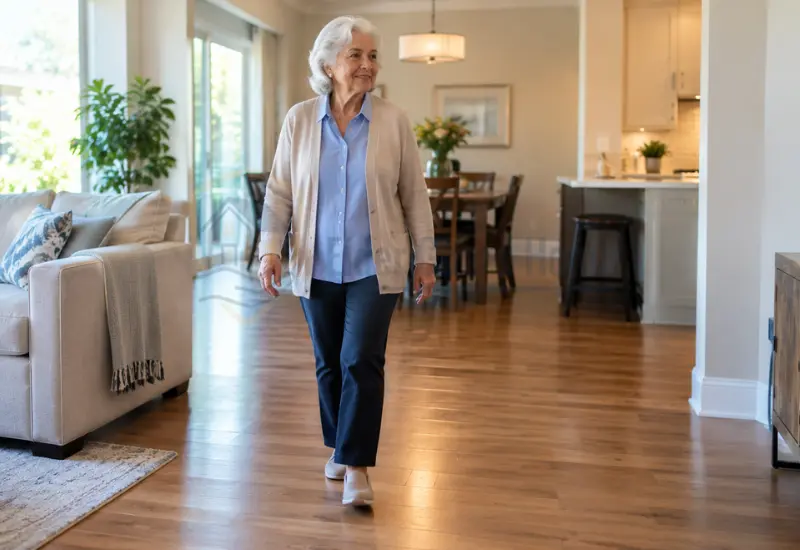
Flooring safety involves much more than choosing a popular material.
Two floors made from similar materials can perform very differently.
Their finish, installation, moisture exposure, and maintenance can change the experience.
Choose Flooring That Stays Firm
Firm flooring provides a more predictable walking surface.
This becomes especially important for people using mobility equipment.
Soft or unstable surfaces can change how wheels move across the floor.
The Access Board describes firmness as resistance to deformation from applied forces.
Look for Suitable Slip Resistance
Slip resistance matters wherever people walk.
However, no flooring label guarantees safety for every person.
The Access Board does not specify one universal slip-resistance value.
Wet conditions can also change how a surface behaves.
Bathrooms therefore need extra attention during flooring selection.
Keep Floor Transitions Manageable
Floor transitions connect different flooring materials.
They can also create unexpected obstacles.
Common examples include carpet edges, thresholds, reducers, and uneven surfaces.
A small raised edge can affect walker wheels or cane tips.
Our guide on floor transition height explains how to check these problems.
Match Flooring With Mobility Equipment
A flooring choice should work with the person’s mobility equipment.
Walkers need predictable surfaces and manageable transitions.
Rollators need enough room for smooth wheel movement.
Wheelchairs can struggle with thick or soft carpet.
Canes can catch on raised flooring edges.
Always test flooring with the person’s actual mobility equipment.
Consider Moisture and Spills
Wet floors can become more difficult to cross.
Bathrooms face this problem more frequently than most rooms.
Kitchens also experience regular spills and dropped liquids.
The NIA recommends cleaning kitchen spills immediately.
It also recommends nonskid solutions on surfaces that may become wet.
Consider Visual Clarity
Flooring should not make walking routes unnecessarily confusing.
Strong patterns can make floor changes harder to recognize.
Glare can also make surface details less noticeable.
Simple patterns may work better for some older adults.
Good lighting should support every important walking route.
Best Flooring Options for Seniors at a Glance
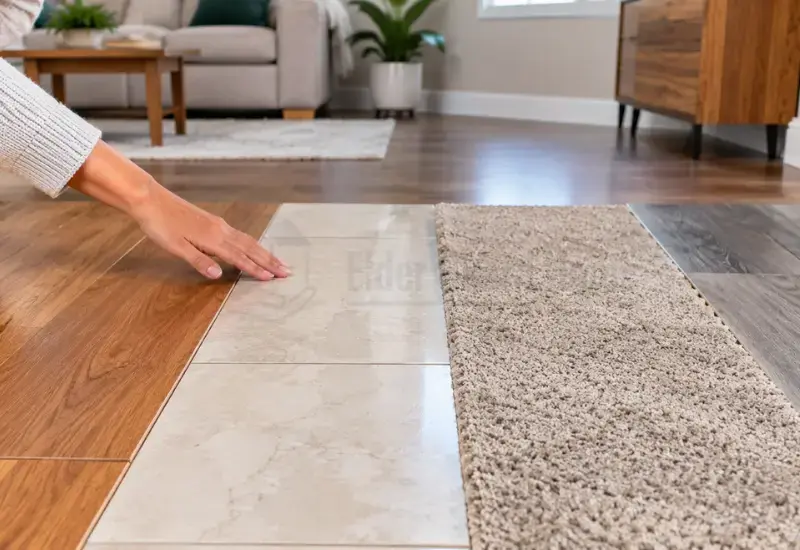
Every flooring material has advantages and limitations.
The right choice depends on the room and the person’s needs.
Use the following table as a starting point.
Do not treat it as a universal safety ranking.
| Flooring Type | Main Advantages | Main Concerns | Common Senior-Friendly Uses |
|---|---|---|---|
| LVP | Firm, easy to clean, many styles | Surface traction varies | Living rooms, kitchens, hallways |
| Sheet Vinyl | Few seams, simple maintenance | Some surfaces become slippery when wet | Kitchens, bathrooms |
| Hardwood | Firm, durable, long-lasting | Finish and moisture require attention | Living rooms, bedrooms |
| Low-Pile Carpet | Comfortable and warm | Can resist walker movement | Bedrooms, living rooms |
| Tile | Firm and durable | Wet surfaces require careful selection | Bathrooms, kitchens |
| Cork | Resilient and comfortable | Moisture limitations | Bedrooms, living spaces |
| Rubber | Resilient and potentially high-traction | Appearance varies | Utility areas, selected rooms |
| Laminate | Firm and widely available | Water resistance varies | Dry living areas |
Always evaluate the actual flooring product before installation.
Surface texture and finish can vary between manufacturers.
Installation quality can also change the finished result.
Best Flooring for Seniors by Room
Different rooms create different flooring challenges.
A flooring material that works well in one room may fail elsewhere.
Room conditions should therefore influence the final decision.
Best Flooring for Elderly Living Rooms
Living rooms usually need comfortable and predictable walking surfaces.
LVP, hardwood, and suitable low-pile carpet can all work.
The person’s mobility should guide the final choice.
Loose area rugs need special attention.
The NIA recommends avoiding throw rugs and small area rugs.
If keeping a rug matters, inspect it carefully.
Our guide explains how to make a rug safer for an elderly parent.
Best Flooring for Senior Bedrooms
Bedrooms need safe walking routes during nighttime hours.
Low-pile carpet can provide warmth and a softer walking feel.
Hard flooring can also work when transitions remain smooth.
Avoid loose rugs beside the bed.
Keep the route between the bed and bathroom clear.
Nightlights can also improve visibility along that route.
Best Flooring for Elderly Kitchens
Kitchen flooring should handle frequent spills and cleaning.
LVP and sheet vinyl can provide practical options.
Tile can also work when its surface suits the environment.
Clean spills quickly after they happen.
The NIA specifically recommends immediate spill cleanup in kitchens.
Avoid unstable decorative rugs around cooking and food preparation areas.
Best Flooring for Senior Bathrooms
Bathrooms require extra attention because water is common.
Choose flooring designed for the expected moisture conditions.
Do not judge bathroom flooring by appearance alone.
Surface finish and wet conditions both deserve consideration.
The NIA recommends nonskid mats, strips, or carpet on wet surfaces.
Best Flooring for older adults Hallways
Hallways should provide clear and predictable walking routes.
Avoid loose runners and poorly secured floor coverings.
Pay special attention to doorway transitions.
Long hallways can contain several different floor hazards.
Good lighting is also important throughout hallway routes.
Best Flooring for Senior Entryways
Entryways experience water, dirt, and changing outdoor conditions.
Choose flooring that remains manageable when moisture enters.
Keep shoes and other objects away from walking routes.
Check the transition between outdoor and indoor surfaces.
Best Flooring for Elderly Walkers, Rollators, or Wheelchairs
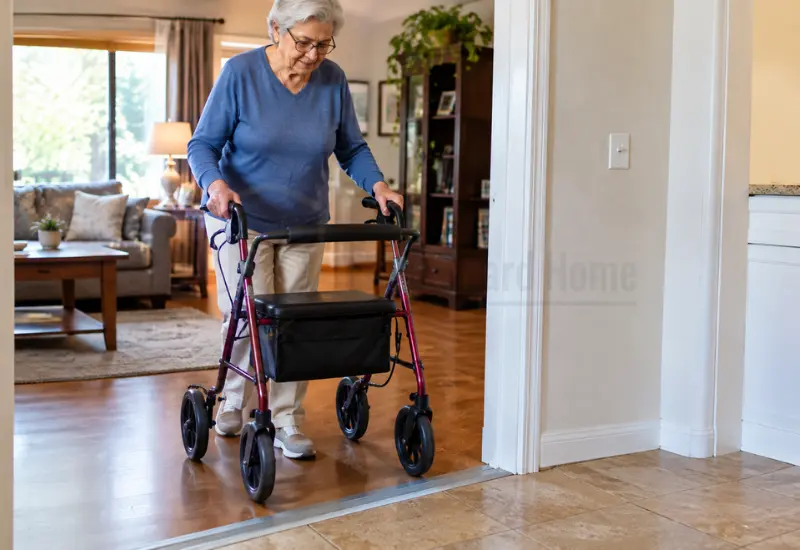
Mobility equipment changes how flooring should be evaluated.
A floor can feel comfortable while still resisting walker wheels.
Testing the actual equipment provides useful practical information.
Best Flooring for Walker Users
Walkers generally work better across firm and predictable surfaces.
Raised edges can catch walker legs or wheels.
Thick carpet can also increase rolling resistance.
Keep floor transitions smooth whenever possible.
Our guide explains how to identify difficult floor transitions for walkers.
Best Flooring for Rollator Users
Rollators depend on wheels moving smoothly across surfaces.
Flooring changes can affect wheel movement.
Loose rugs can bunch underneath rolling equipment.
Test forward movement and turning before finalizing a flooring choice.
Best Flooring for Wheelchair Users
Wheelchairs require attention to rolling resistance.
Thick carpet can make movement more difficult.
Soft padding can also increase resistance.
The Access Board discusses firmness, stability, and carpet characteristics.
Firm surfaces generally provide more predictable movement.
Best Flooring for Cane Users
Cane users need stable contact with the walking surface.
Loose rugs can move beneath a cane tip.
Raised edges can also catch the cane.
Inspect flooring from the person’s normal walking direction.
Comparing Common Flooring Types for Seniors
Each flooring material behaves differently in real homes.
The best option depends on the room and person’s mobility.
Luxury Vinyl Plank
Luxury vinyl plank is popular in many aging-in-place remodels.
It provides a firm surface and relatively simple cleaning.
Many products also offer good moisture resistance.
However, surface texture varies between products.
Do not assume every LVP product has identical traction.
Check the manufacturer’s specifications before making your decision.
LVP can work well in living rooms and kitchens.
It can also work well in hallways with smooth transitions.
Sheet Vinyl
Sheet vinyl can provide a continuous floor with fewer seams.
That can make routine cleaning simpler.
Water resistance depends on the product and installation.
Some surfaces may become slippery when wet.
Always evaluate the specific product rather than the material name.
Hardwood Flooring
Hardwood provides a firm walking surface.
It can also last for many years when properly maintained.
However, finish and moisture deserve attention.
A wet hardwood floor can become more difficult to navigate.
Cleaning products can also affect surface characteristics.
If you already have hardwood floors, improving their traction can make them safer for older adults. Learn how to make hardwood floors less slippery for seniors with practical steps for safer everyday walking.
Low-Pile Carpet
Low-pile carpet can provide warmth and comfort.
It can work well in selected bedrooms and living spaces.
However, carpet should remain firmly secured.
Thick carpet can increase resistance for mobility equipment.
The Access Board also addresses carpet attachment and pile characteristics.
Ceramic and Porcelain Tile
Tile provides a firm and durable walking surface.
However, wet tile requires careful attention.
Surface finish can affect how the floor performs.
This matters especially in bathrooms.
Our non-slip spray for ceramic tile floors guide covers non-slip treatments separately.
Cork Flooring
Cork provides a softer feel than many hard surfaces.
It can work well in selected living spaces.
However, moisture exposure requires careful product selection.
Always follow the manufacturer’s maintenance instructions.
Rubber Flooring
Rubber can provide resilience and useful traction.
It is common in some commercial and utility settings.
Some rubber products can also suit residential spaces.
Appearance and maintenance requirements vary considerably.
Laminate Flooring
Laminate provides a firm surface in many homes.
It also offers many decorative styles.
However, water resistance varies between products.
Use extra care when considering laminate for wet areas.
Flooring Features Seniors Should Avoid or Approach Carefully
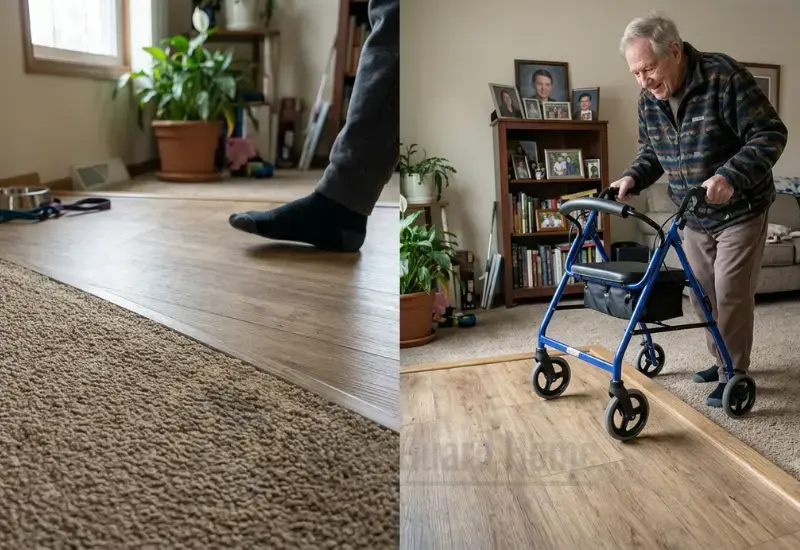
The material itself does not determine every safety issue.
Installation and maintenance can change the finished result.
Certain flooring conditions deserve extra attention.
Loose or Curling Flooring
Loose flooring can move during normal walking.
Curling edges can catch shoes, canes, and walker wheels.
Repair damaged flooring before relying on it.
Thick or Plush Carpet
Thick carpet may feel comfortable underfoot.
However, mobility equipment can become harder to move across it.
Consider the person’s actual mobility before choosing thick carpeting.
Loose Throw Rugs
Loose rugs can move unexpectedly during walking.
The NIA recommends avoiding throw rugs and small area rugs.
This recommendation deserves special attention in senior homes.
Raised Floor Transitions
Raised transitions can interfere with walker and rollator movement.
They can also catch shoes and cane tips.
Measure difficult transitions before buying a solution.
Highly Polished Surfaces
Highly polished surfaces deserve careful evaluation.
Wet conditions can make some polished surfaces more difficult.
Glare can also affect visibility.
Consider lighting and moisture before choosing highly polished flooring.
Busy Floor Patterns
Busy patterns can make floor changes harder to recognize.
This may matter for some older adults.
Choose flooring that keeps walking routes visually clear.
Damaged or Buckled Flooring
Damaged flooring can create unpredictable walking surfaces.
Buckling can also create raised edges.
Repair serious damage before continuing regular use.
How to Choose Flooring for Aging in Place
Aging-in-place flooring should support today’s needs and future changes.
Start with the person rather than the flooring advertisement.
Step 1 — Identify Mobility Needs
First identify how the person currently moves around.
Consider whether they use:
- A cane
- A walker
- A rollator
- A wheelchair
- No mobility equipment
Also consider whether their mobility may change later.
Step 2 — Identify Problem Areas
Walk through every room carefully.
Look for:
- Loose rugs
- Raised edges
- Wet surfaces
- Damaged flooring
- Uneven transitions
- Poor lighting
- Narrow walking routes
This simple inspection can reveal problems before choosing new flooring.
Step 3 — Consider Moisture
Identify where water commonly appears.
Bathrooms usually deserve the most attention.
Kitchens and laundry areas also need moisture planning.
Choose flooring according to the actual room conditions.
Step 4 — Examine Floor Transitions
Check every doorway and material change.
Look for raised strips and uneven edges.
Test difficult transitions using the person’s actual mobility equipment.
Step 5 — Consider Maintenance
Choose flooring the household can maintain properly.
A difficult floor may become harder to manage over time.
Follow manufacturer instructions for cleaning and maintenance.
Step 6 — Think About Future Mobility
Aging in place means planning beyond today’s situation.
Mobility needs can change as people get older.
A flooring choice should remain practical during those changes.
Do You Need to Replace Existing Flooring?
Not every unsafe floor requires complete replacement.
Sometimes a smaller correction can solve the problem.
When Existing Flooring Can Be Improved
Consider modifications when the flooring remains structurally sound.
Possible improvements include:
- Securing loose rugs
- Repairing damaged sections
- Improving transitions
- Improving lighting
- Addressing slippery surfaces
- Removing unnecessary floor coverings
When a Modification May Be Enough
A threshold ramp can sometimes address a raised doorway.
A suitable rug pad can stabilize some existing rugs.
A damaged section may also receive professional repair.
Always test the finished solution afterward.
When Flooring Replacement Makes More Sense
Replacement may make sense when problems remain after reasonable corrections.
Examples include:
- Severe buckling
- Persistent moisture damage
- Repeatedly unsafe transitions
- Worn surfaces
- Structural damage
- Flooring unsuitable for changing mobility needs
Do not replace flooring simply because another material is fashionable.
Replace it when the existing floor no longer meets practical needs.
How to Make Existing Floors Safer
Replacing flooring is not always the first solution.
Many homes can improve floor safety through smaller changes.
Secure Rugs and Carpets
Check every rug for movement and curling.
Look for bunching, raised edges, and damaged backing.
Our guide explains how to make an existing rug safer for an elderly parent.
We also explain how to choose non-slip rug pads for hardwood floors.
Address Hardwood Slipperiness
First determine why the hardwood feels slippery.
Check the finish, cleaning routine, moisture, and rugs.
Then choose an appropriate solution.
Address Vinyl Slipperiness
Vinyl flooring can vary considerably between products.
Start by checking the surface and cleaning method.
Then consider moisture and the room’s normal conditions.
Improve Floor Transitions
Transitions should provide a predictable route between surfaces.
Measure difficult transitions before buying any product.
Test the finished solution with the actual walker.
Use Low-Profile Floor Mats Carefully
Mats can help manage wet areas.
However, mats can also become trip hazards.
Choose low-profile options and secure them properly.
Address Tile Slipperiness
Tile deserves extra attention when moisture is present.
Cleaning methods can also affect surface characteristics.
Our ceramic tile guide discusses non-slip spray options separately.
Carpet vs. LVP for Seniors
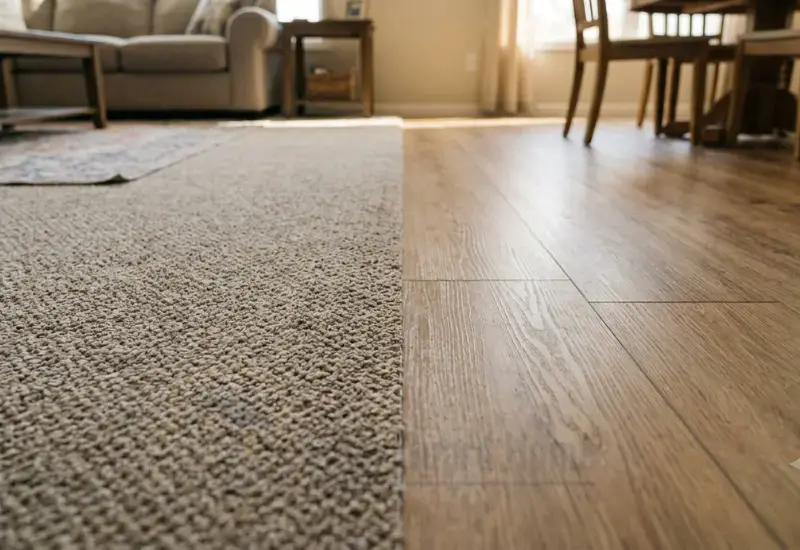
Carpet and LVP can both work in senior homes.
Their suitability depends on the room and person’s needs.
Carpet provides warmth and a softer walking feel.
LVP provides a firm and easy-to-clean surface.
Thick carpet can create more resistance for mobility equipment.
LVP can provide easier rolling for some mobility devices.
However, LVP surface texture and finish still matter.
A Simple Flooring Checklist for Seniors
Use this checklist before choosing new flooring.
Ask these questions:
- Is the surface firm?
- Does the flooring stay securely in place?
- Could it become slippery when wet?
- Are transitions smooth?
- Are flooring edges secure?
- Can a walker cross comfortably?
- Can a rollator cross comfortably?
- Can a wheelchair move across it?
- Is the floor easy to clean?
- Does it suit the room?
- Is the lighting adequate?
- Are rugs really necessary?
- Could mobility needs change later?
A flooring decision should consider the entire walking route.
Do not judge one flooring sample in isolation.