
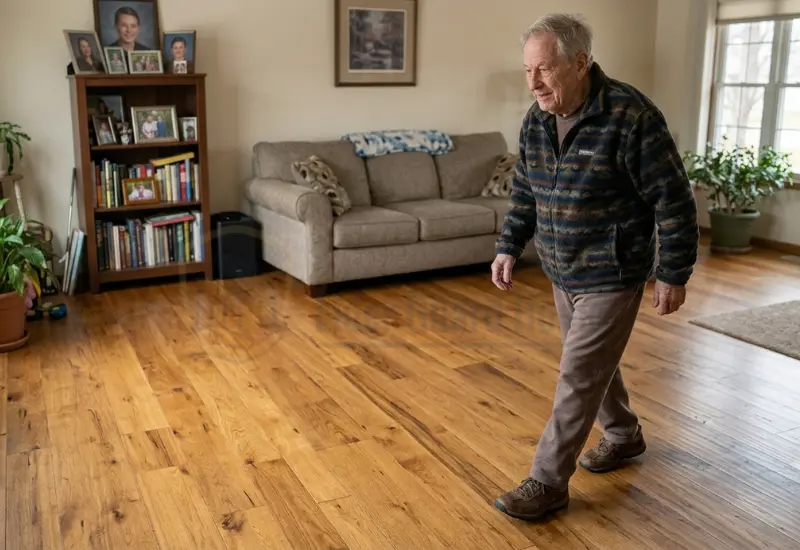
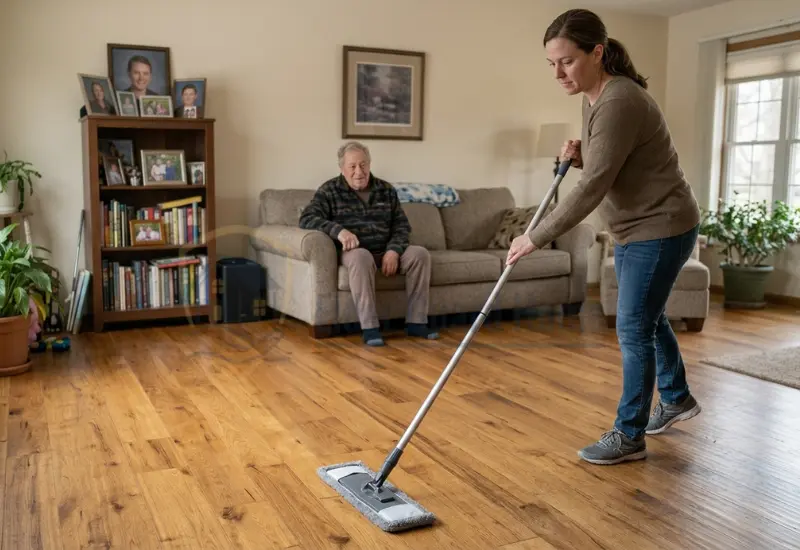
Hardwood floors are slippery for several possible reasons.
The finish, cleaning routine, moisture, and footwear can all affect traction.
A floor can also become slippery after years of maintenance.
Repeated polishing may leave buildup that changes the surface feel.
Moisture creates another common problem.
Even a normally stable floor can become slick when wet.
The first step is therefore finding the actual cause.
That helps prevent unnecessary treatments or potentially damaging cleaning methods.
Wax and Polish Can Make Hardwood Floors Slick
Wax and polish can change how the surface feels underfoot.
Excess buildup may create a smoother surface than intended.
Some products can also leave a film behind.
That film may become slippery under certain conditions.
Do not assume a shinier floor provides better traction.
If polish caused the problem, adding more polish is not the solution.
Check the existing finish before attempting to remove buildup.
Different hardwood finishes require different maintenance methods.
Cleaning Residue Can Make a Floor Slippery
A hardwood floor can look clean while carrying unwanted residue.
Using too much cleaner can leave a thin film behind.
The wrong product may also affect the existing finish.
Some products can leave the surface sticky, greasy, or slick.
Use a cleaner recommended for your specific hardwood finish.
Follow the manufacturer’s instructions instead of guessing.
Avoid using household cleaners designed for other flooring materials.
Their ingredients may not suit your hardwood surface.
Moisture Can Make Hardwood Floors More Slippery
Water can make a smooth hardwood surface harder to navigate.
Small spills can therefore become unexpected walking hazards.
Pay special attention around kitchens and entryways.
Wet shoes can also transfer moisture onto hardwood.
Clean spills promptly and dry the affected area completely.
Do not leave damp areas along frequently used walking routes.
High-Gloss Finishes Can Feel Slick
A high-gloss finish does not automatically make hardwood unsafe.
However, very smooth surfaces may feel less forgiving.
Glare can also make surface changes harder to notice.
This may matter for some older adults with reduced visual clarity.
Evaluate the actual walking surface rather than its appearance.
A shiny floor is not necessarily a safer floor.
How to Make Hardwood Floors Less Slippery
The safest approach starts with simple changes.
Do not immediately apply a new coating or traction product.
First inspect the floor, cleaning routine, moisture, and existing finish.
Then address rugs, footwear, and mobility equipment.
This process can prevent unnecessary changes to otherwise sound hardwood.
1. Remove Wax and Polish Buildup
First determine whether wax or polish has been used.
Do not immediately apply a strong stripping chemical.
Different hardwood finishes require different maintenance methods.
Some finishes can be damaged by inappropriate stripping products.
Check the flooring manufacturer’s instructions before removing buildup.
Consider professional advice when the existing finish is unknown.
The goal is a cleaner surface without damaging the hardwood underneath.
2. Clean Hardwood Without Leaving Residue
Use a cleaner designed for your specific hardwood finish.
Apply only the amount recommended by the manufacturer.
Avoid excessive water during cleaning.
Too much moisture can affect both wood and finish.
Do not assume more cleaner means cleaner floors.
Excess product can leave residue that changes the surface feel.
Allow the floor to dry before normal walking resumes.
Check the surface afterward for unusual slickness or tackiness.
3. Keep the Hardwood Floor Dry
Moisture deserves special attention in senior homes.
Spills should be cleaned as soon as they occur.
Check entryways after rain or wet weather.
Also inspect kitchens after cooking or cleaning.
Pet water bowls can create small wet areas.
Place them where accidental spills will not affect walking routes.
Dry wet flooring before the senior walks across it.
4. Use Area Rugs Carefully
Area rugs can help in selected parts of the home.
However, loose rugs can create separate fall hazards.
A rug should not slide during normal walking.
Its corners should also remain flat.
The National Institute on Aging recommends avoiding loose throw rugs.
It also recommends securing carpets firmly when they remain necessary.
For practical guidance, see how to make a rug safe for an elderly parent.
5. Choose the Right Rug Pad
A suitable rug pad can reduce unwanted rug movement.
However, the pad must suit both the rug and hardwood.
Check the pad material before placing it on hardwood.
Some materials may affect certain finishes over time.
A thick pad can also create a raised transition.
That transition may affect walkers, rollators, or canes.
See our guide to non-slip rug pads for hardwood floors for seniors for detailed guidance.
6. Consider a Non Slip Floor Treatment
A non slip floor treatment may help certain hardwood surfaces.
However, compatibility with the existing finish is essential.
Do not use a treatment designed for tile or concrete.
Check whether the product specifically supports your hardwood finish.
Follow the manufacturer’s application instructions carefully.
Test an inconspicuous area when the manufacturer recommends testing.
A professional application may be safer for unfamiliar finishes.
The treatment should improve traction without damaging the hardwood.
7. Choose Footwear With Good Grip
Footwear can change how someone moves across hardwood.
Choose shoes or slippers that fit securely.
Look for soles offering suitable indoor traction.
Avoid smooth socks when the floor already feels slippery.
Loose slippers can also move during normal walking.
The CDC recommends sturdy, properly fitting nonslip footwear for older adults.
Footwear should support movement without creating another hazard.
8. Check Walkers and Rollators
Mobility equipment changes how flooring should be evaluated.
A surface may feel different under wheels than shoes.
Inspect walker tips for visible wear.
Also check rollator wheels for damage or embedded debris.
Test mobility equipment across the actual hardwood surface.
Then test transitions between hardwood and rugs.
Do not assume stronger floor traction always improves mobility equipment movement.
Some surfaces can affect rolling resistance or wheel movement.
9. Address Damaged or Excessively Smooth Finishes
Sometimes cleaning is not the real problem.
The existing finish may be worn, damaged, or unusually smooth.
Look for peeling, uneven coating, or visible surface changes.
Also inspect areas that remain slick after proper cleaning.
A flooring professional can identify the existing finish.
They can then recommend suitable repair or refinishing options.
What Should You Not Put on Hardwood Floors to Prevent Slipping?
Trying to fix a slippery wood floor can create another problem.
Some popular household solutions are unsuitable for hardwood.
Avoid improvised treatments without checking flooring requirements first.
The safest product depends on the existing finish.
Avoid Excess Wax or Furniture Polish
Do not add wax simply because the floor feels slippery.
More polish can create additional surface film.
That can make the original problem worse.
Always follow the flooring manufacturer’s maintenance instructions.
Never assume furniture polish belongs on a hardwood walking surface.
Avoid Oil-Based or Improvised Treatments
Household oils are not reliable traction solutions.
They can leave residue and change the surface.
Oil can also attract dirt and complicate future maintenance.
Use only products designed for your specific flooring system.
Avoid Adhesive Materials That Can Damage Hardwood
Some adhesive products can leave residue behind.
Others can affect the finish when removed.
Avoid random tapes or sticky materials on hardwood.
Check compatibility before securing anything directly to the floor.
A suitable rug pad is usually a better starting point.
Do Not Use Products Made for Other Flooring
Tile and hardwood require different maintenance approaches.
A tile product may not be appropriate for wood flooring.
Always identify the existing finish before choosing a treatment.
Follow the flooring manufacturer’s recommendations whenever possible.
Are High-Gloss Hardwood Floors Safe for Seniors?
High-gloss hardwood is not automatically unsafe for older adults.
However, appearance alone cannot determine floor safety.
Surface condition, moisture, footwear, and mobility all matter.
Glare can also make certain surface changes harder to notice.
A very smooth floor may feel different under different footwear.
Therefore, focus on actual traction rather than shine.
If the floor remains unusually slick, investigate the cause.
Do not simply apply another product to change its appearance.
For broader flooring decisions, see best flooring for seniors aging in place.
Are Rugs Safe on Hardwood Floors for Older Adults?
Rugs can be useful when installed and maintained carefully.
They can also become serious trip hazards.
A sliding rug can move beneath someone’s feet.
A curled corner can catch shoes, canes, or walker wheels.
The National Institute on Aging recommends avoiding loose throw rugs.
The CDC also identifies throw rugs as fall hazards.
When an Area Rug Can Help
A properly secured rug can provide a defined walking surface.
It may also help manage selected entry areas.
However, the rug must remain completely stable.
Its edges should stay flat during normal household activity.
When an Area Rug Creates a Hazard
Watch for sliding, bunching, curling, and raised edges.
Also inspect rugs after vacuuming or cleaning.
A rug that moves during vacuuming may move during walking.
That movement deserves attention before continued use.
How to Make a Rug Safer on Hardwood
Choose a compatible, low-profile rug pad.
Make sure the pad fits the rug properly.
Keep the rug flat against the surrounding floor.
Then test it using the senior’s normal footwear.
Test it again with their walker or rollator.
For detailed steps, see how to make a rug safe for an elderly parent.
How to Make Hardwood Floors Safer With a Walker or Rollator
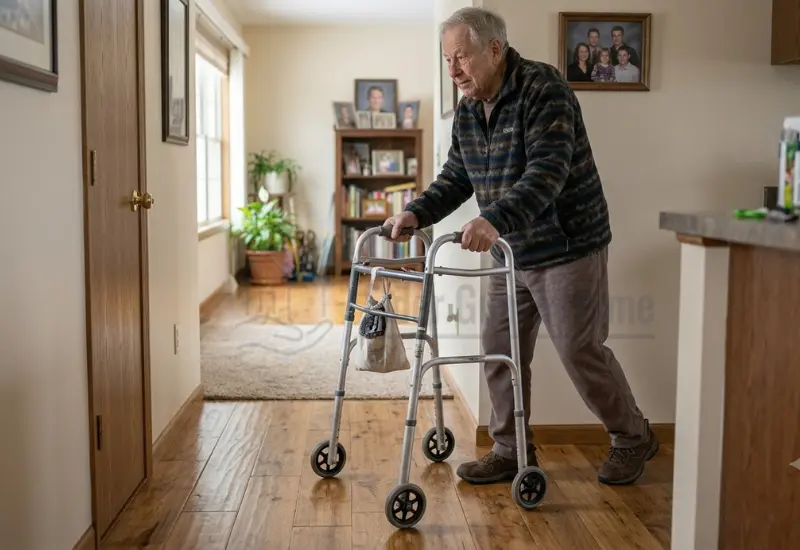
Mobility equipment changes the requirements for a walking surface.
A walker needs predictable contact with the floor.
A rollator also needs smooth wheel movement.
Rugs and transitions can therefore create additional challenges.
Check Walker Tips and Rollator Wheels
Inspect rubber walker tips for visible wear.
Check rollator wheels for damage or unusual wear.
Clean equipment according to the manufacturer’s instructions.
Replace worn components when required.
Test the equipment across the actual hardwood floor.
Watch for catching, sliding, or unexpected movement.
Avoid Sudden Changes Between Rugs and Hardwood
A small height change can affect walker movement.
The same problem can occur with cane tips.
Inspect every transition along the main walking route.
Keep changes smooth and predictable whenever possible.
Our guide explains how to tell if a floor transition is too high for a walker.
Keep Walking Paths Clear
Furniture can force awkward changes in walking direction.
Clutter can also create additional trip hazards.
Keep the main walking route open.
Pay special attention to frequently used paths.
The floor should provide enough space for the person’s mobility aid.
This includes space for turning and approaching doorways.
Test Any Floor Treatment Before Full Application
Never assume more traction automatically means better mobility.
Test the treated surface with the person’s normal footwear.
Then test it using their walker or rollator.
Observe both forward movement and turning.
This practical test can reveal problems before full application.
A Simple Hardwood Floor Safety Check for Seniors
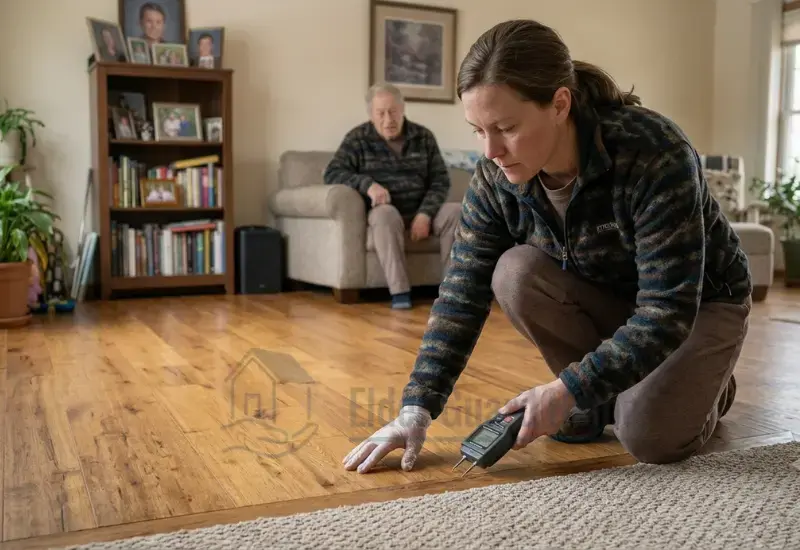
Use this check before changing the entire hardwood floor.
Walk through the senior’s normal daily routes.
Look at the surface and surrounding walking environment.
Small problems can become more noticeable during actual movement.
Check for Slick Residue
Look for unusual film, tackiness, or residue.
Do not rely only on visual appearance.
Check the floor after it has completely dried.
Compare areas that receive different cleaning routines.
Check for Moisture
Look near sinks, entrances, kitchens, and pet bowls.
These areas can develop wet spots during normal routines.
Dry every wet area promptly.
Check these locations again during busy household periods.
Check Rugs and Edges
Look for movement, curling, bunching, and raised edges.
Test every rug using normal footwear.
Then test it with the senior’s mobility equipment.
Remove unstable rugs when they cannot remain secure.
Check Footwear
Inspect the soles for smooth or uneven wear.
Replace footwear that has lost useful traction.
Avoid loose footwear that moves during walking.
Secure-fitting footwear can provide more predictable contact.
Check Mobility Aids
Inspect walker tips and rollator wheels.
Look for wear, dirt, damage, or unusual movement.
Test the mobility aid across the actual walking route.
Do not test it only on an isolated floor section.
Check Transitions
Inspect doorways and changes between flooring materials.
Look for raised edges or sudden surface changes.
These can affect walker wheels and cane tips.
Our guide covers safest flooring transitions for seniors using walkers.
When Should You Refinish or Professionally Treat Hardwood Floors?
Some slippery hardwood problems require professional attention.
This is especially true when the existing finish is unknown.
Professional help can also make sense after failed cleaning attempts.
Consider an assessment when the finish looks damaged.
Also seek advice when the floor remains unusually slick.
A professional can identify the existing finish.
They can then recommend compatible repair or refinishing options.
Avoid aggressive DIY stripping when the finish remains uncertain.
Protecting the hardwood is part of improving its safety.