
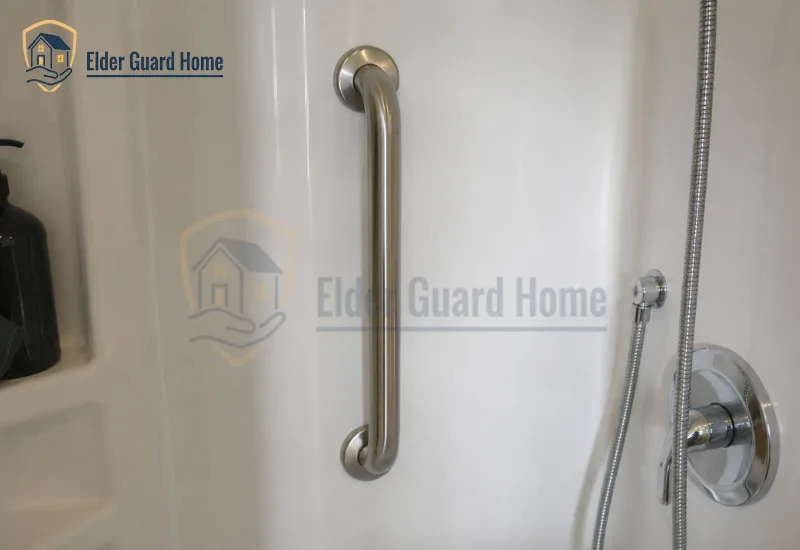
Who This Guide Is For
This guide is written for:
- Caregivers installing permanent support for a parent or spouse
- Homeowners with fiberglass, acrylic, or tile tub surrounds
- Anyone who tried suction rails and needs something sturdier
- Families preparing a bathroom after a fall risk assessment
Choosing the right shower handrails for the elderly is one of the most common questions I hear from caregivers. Most people search for “handrail,” but the product they need is often listed under “grab bar.” That mix-up leads to the wrong size or mounting type.
I have walked dozens of clients through this decision, and I always start with one question. What surface are you drilling into? Get that answer right, and length, angle, and hardware all fall into place. For a broader look at reducing fall risk, see our bathroom fall prevention guide.
Handrail vs Grab Bar — Is There a Difference
A shower handrail and a grab bar are usually the same product with different marketing names. “Handrail” tends to describe a longer bar mounted along a walking path into the tub. “Grab bar” tends to describe a shorter bar mounted at one fixed point.
Both terms describe the same hardware category, so either search term brings up overlapping listings. What actually matters is length, angle, and mounting strength, not the label on the box. The table below breaks down the typical differences shoppers run into when comparing listings.
| Feature | Typical “Handrail” Listing | Typical “Grab Bar” Listing |
|---|---|---|
| Length | 32 to 42 inches | 12 to 24 inches |
| Shape | Angled or multi-point | Straight, single bar |
| Common use | Full step-in path into tub | Single grip point at wall |
| Best paired with | Walk-in tubs, tub-to-shower conversions | Standard shower stalls |
| Weight rating range | 400 to 500+ lbs | 250 to 500 lbs |
Use this table as a starting point, but always confirm weight rating and mounting type on the listing itself when you buy shower handrails for the elderly. Labels vary by manufacturer, and a “grab bar” from one brand can be longer than a “handrail” from another.
Tub Grab Bars for Fiberglass Tubs — What to Look For
Tub grab bars for fiberglass tubs need extra reinforcement because fiberglass flexes under pressure. A screw driven directly into thin fiberglass can crack the surface. Over time, that crack can loosen the entire mount.
This puts the user at risk during the exact moment they need support most.
The safest approach uses a backing plate, or toggle-style anchors rated for the bar’s full weight capacity. Direct-to-stud mounting works only when studs line up with the bar’s mounting holes, which is rare in most fiberglass surrounds. The table below compares the three common anchor methods.
| Anchor Method | Best For | Typical Load Rating | Difficulty |
|---|---|---|---|
| Direct-to-stud | Bars that align with wall studs | Up to 500 lbs | Moderate |
| Backing plate | Any fiberglass or acrylic surround | Up to 500 lbs | Higher — requires wall access |
| Toggle-style anchors | Retrofits with no wall access | 250 to 300 lbs | Lower |
Look for a rail that lists fiberglass or acrylic compatibility in its mounting instructions before you buy. For a full walkthrough of each method, see our fiberglass shower grab bar installation guide.
Choosing the Right Length and Angle of bath grab rails for elderly
Handrail length depends on how the person moves through the shower or tub entry. A short bar suits a single grip point, while a longer angled bar supports a full step-in motion. Measure the exact movement path before buying, since an undersized rail leaves a dangerous gap in support.
| Length | Shape | Best Use Case |
|---|---|---|
| 12 to 16 inches | Straight | Single grip point beside the tub or toilet |
| 24 inches | Straight | General-purpose shower or tub wall support |
| 32 inches | Angled | Combined vertical and horizontal grip through a step-in motion |
| 42 inches | Angled | Full-length support for walk-in tubs or wider entries |
When in doubt, choose the longer option. A rail that extends past the needed reach still works, while a short one leaves a gap right where a slip is likely.
Top 3 Shower Handrails for Elderly Safety 2026
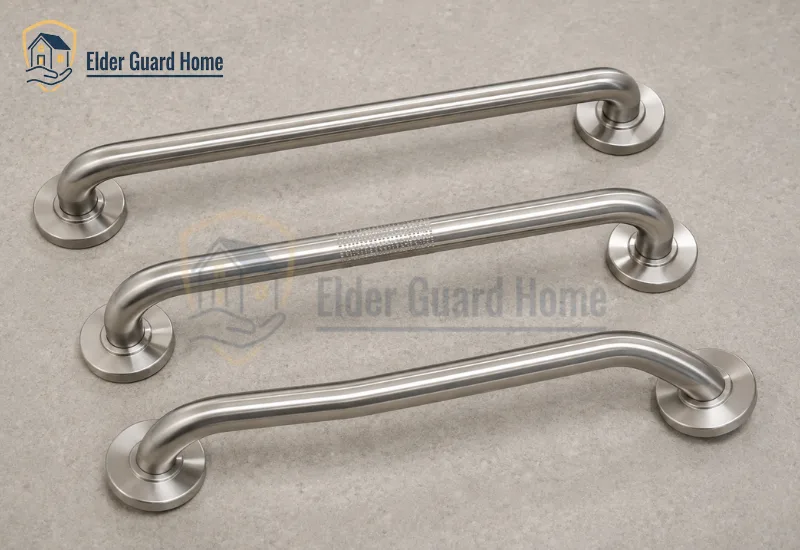
Each of these three shower handrails for the elderly is rated 4.5 stars or higher on Amazon. All three are built for permanent, drilled installation and list a 500-pound weight capacity. Real-world safety still depends on correct installation into studs or a backing plate.
| Product | Length | Material | Weight Capacity | Standout Feature |
|---|---|---|---|---|
| Moen Home Care 8724 | 24 inches | Stainless steel | 500 lbs | Concealed-screw mounting |
| Amazon Basics 24-inch Grab Bar | 24 inches | Stainless steel | 500 lbs | Budget-friendly ADA compliance |
| AquaChase Knurled Grab Bar | Varies by listing | Stainless steel | 500 lbs | Knurled anti-slip grip |
1. Moen Home Care 8724 - One of the best shower grab bars for seniors
The Moen Home Care 8724 is a stainless steel handrail with concealed screws for a clean, hospital-grade finish.
| Spec | Detail |
|---|---|
| Length | 24 inches |
| Material | Stainless steel |
| Weight Capacity | 500 lbs |
| Mounting | Concealed screws |
| ADA Compliant | Yes |
Verdict: This is the most consistently top-rated permanent handrail on Amazon, with a clean, concealed-screw finish caregivers love.
✅ Pros: Concealed screws, ADA compliant, trusted brand reputation
❌ Cons: Higher price than budget alternatives
👤 Best For: Caregivers who want a proven, bestselling option
2. Amazon Basics 24-inch Grab Bar
The Amazon Basics 24-inch Grab Bar offers ADA-compliant support at a lower price than name-brand options.
| Spec | Detail |
|---|---|
| Length | 24 inches |
| Diameter | 1.25 inches |
| Weight Capacity | 500 lbs |
| Material | Stainless steel |
| ADA Compliant | Yes |
Verdict: This bar matches the core safety specs of pricier competitors, making it a smart pick for budget-conscious households.
✅ Pros: Budget-friendly, ADA compliant, solid stainless build
❌ Cons: Fewer finish options than premium brands
👤 Best For: Families outfitting multiple bathrooms on a budget
3. AquaChase Knurled Grab Bar
The AquaChase Knurled Grab Bar uses a textured surface for extra grip when hands are wet.
| Spec | Detail |
|---|---|
| Diameter | 1.25 inches |
| Weight Capacity | 500 lbs |
| Material | Stainless steel |
| Grip Style | Knurled anti-slip |
| Warranty | Lifetime |
Verdict: The knurled grip stands out for anyone with reduced hand strength, and the lifetime warranty adds peace of mind.
✅ Pros: Textured anti-slip grip, lifetime warranty, rustproof stainless
❌ Cons: Slightly less common size availability
👤 Best For: Seniors with weaker grip strength or arthritis
How to Anchor a Handrail Correctly
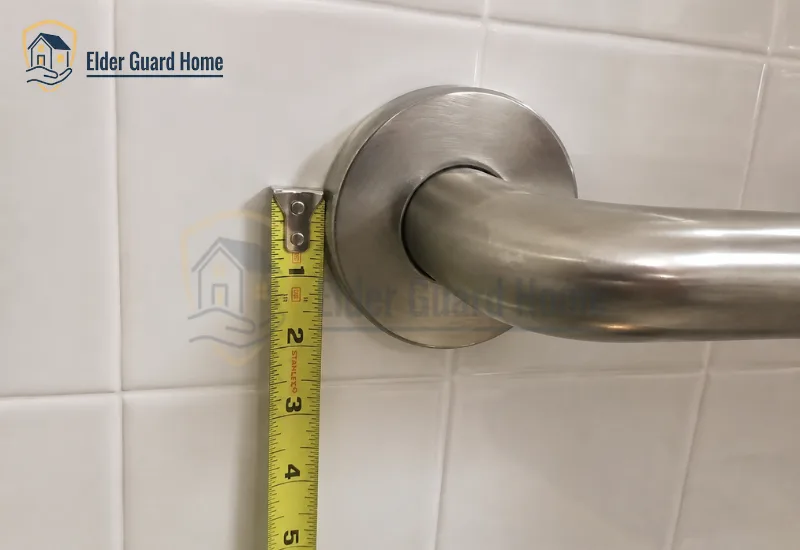
Every permanent handrail needs to anchor into wall studs or an approved backing plate, never into drywall alone. Mounting height matters just as much as strength, since a rail placed too high or low loses its usefulness.
The Americans with Disabilities Act recommends grab bars sit between 33 to 36 inches above the floor for reachable support.
This range works for most adults, though a caregiver should adjust slightly for a shorter or taller household member. Before drilling, confirm stud locations with a stud finder, and mark the exact mounting height with painter’s tape.
For exact height guidance by fixture type, see our ADA heights for grab bars guide. For a full stud and anchor walkthrough, see our tile installation guide.
Common Mistakes When Choosing a bath grab rail for elderly
Many shoppers pick a length before measuring the actual reach needed, leaving gaps right where a slip is likely. Others assume suction rails work as well as drilled rails, then learn the difference once real body weight is applied.
Our suction grab rail guide explains that trade-off in detail. A third common mistake is ignoring surface type, which leads to cracked fiberglass or a loose mount within months.
A fourth mistake is skipping the weight rating and choosing based on price or looks alone. Every rail on this list clears the 500-pound mark for a reason, since that margin protects against sudden weight shifts.
Frequently Asked Questions
Is a shower handrail the same as a grab bar?
Yes, in most cases. The terms describe the same hardware category, and the difference usually comes down to length and mounting style.
Are shower handrails covered by Medicare?
Original Medicare typically does not cover grab bars or handrails as durable medical equipment. Some Medicare Advantage plans offer home modification benefits, so check your plan.
Can you install a handrail in a fiberglass tub without a backing plate?
It is not recommended. Fiberglass flexes under weight, so a backing plate or rated toggle anchors offer much safer support.
What weight capacity should a shower handrail have?
Look for a minimum 500-pound rating, even if the user weighs less. That margin covers the extra force of a sudden slip.
How high should a shower handrail be mounted?
Most codes recommend mounting between 33 and 36 inches above the floor. Exact placement depends on the fixture and the user’s height.
Conclusion
Shower handrails for the elderly are one of the highest-impact bathroom upgrades you can make. That is especially true when the rail is mounted correctly for the surface behind it.
I always tell caregivers to prioritize mounting strength over style. A beautiful bar that pulls loose offers no real protection.
If you are working through a full bathroom safety plan, our 9-point Senior Safety Checklist is a good next step. You may also want to review our ADA compliant grab bars guide for full compliance details.