Why Microwave Safety Matters for Older Adults
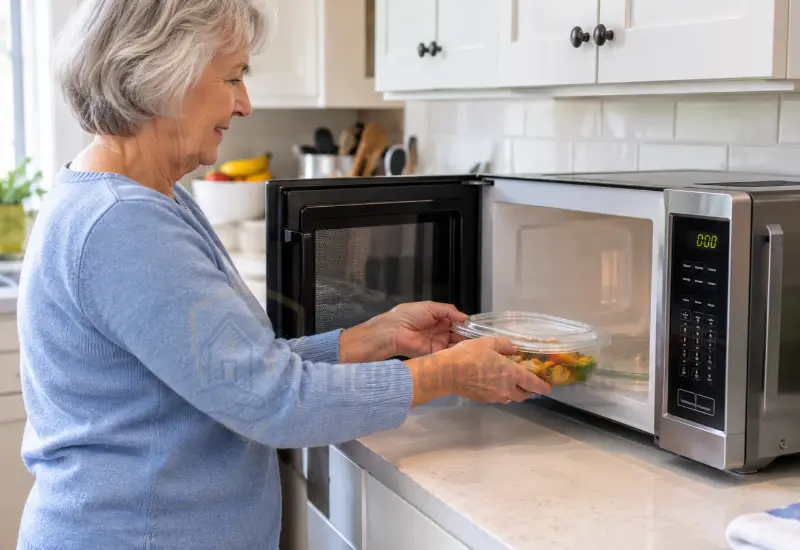
A microwave may seem simple to operate, but preparing a meal involves several steps. A person must select the right settings, handle containers, judge heat, and move food safely.
Certain changes in vision, strength, coordination, or memory can make these tasks harder. Understanding the specific difficulty helps families choose practical solutions.
Vision and difficulty reading controls
Small buttons, faint labels, and dim displays can make microwave settings difficult to read. Confusing symbols may also lead to incorrect heating times.
Better lighting and clear, high-contrast labels can help. A microwave with straightforward controls may be easier to operate than one with numerous unfamiliar functions.
Reduced grip strength or hand coordination
Some older adults find it difficult to hold a hot bowl securely or remove a slippery container. Tremors may make carrying hot drinks and soups particularly challenging.
Choosing manageable portions, using stable dishes, and keeping a clear landing space can reduce these difficulties. A person should not have to carry a heavy, hot container across the kitchen.
Memory, attention, and unfamiliar controls
Complicated settings can make it harder to remember which buttons to press. Some people may also forget heating cycles or leave food unattended.
A simple instruction card and a familiar routine can help. When memory changes create repeated safety problems, a caregiver may need to provide additional support.
Balance, mobility, and reaching
A microwave placed too high may require dangerous stretching. A low appliance can also make it difficult to bend and retrieve hot food.
The microwave should be positioned where the user can comfortably reach the controls and food compartment. A clear counter nearby provides a safer place to set down hot dishes.
Choose a Microwave That Is Easier for Seniors to Use
You do not always need to replace an existing appliance. First, consider whether its controls, door, and location suit the person’s needs.
Look for readable buttons and clear displays
Large labels and high-contrast displays can make controls easier to identify. Simple buttons marked Start, Stop, and Time may be more familiar than complicated touch panels.
The best controls depend on the individual. Some people prefer buttons, while others find a clearly marked dial easier to operate.
Prefer straightforward everyday settings
Many people regularly use only a few functions, such as reheating, defrosting, and setting a cooking time. A straightforward interface can reduce confusion.
Avoid assuming that every automatic program is necessary. The person should be able to operate the functions they use confidently and safely.
Consider door handles and opening mechanisms
A stiff door can be difficult for someone with limited hand strength. Look for a handle or release mechanism that the person can operate comfortably.
The door should open and close properly without excessive force. Never use an appliance with a damaged door, latch, or seal.
Check the microwave’s height and location
Choose a stable position that minimizes bending, overhead reaching, and stretching across hot food. The user should be able to reach the food compartment without losing balance.
If moving the appliance is necessary, ensure the counter or shelf can safely support it. Follow the manufacturer’s installation and ventilation requirements.
Set Up the Microwave to Reduce Everyday Risks
Small changes around the appliance can make daily tasks easier without requiring expensive equipment.
Keep frequently used items within comfortable reach
Store microwave-safe dishes, suitable covers, and dry oven mitts in an accessible cupboard or drawer. Avoid placing heavy bowls on high shelves.
Keep commonly used items together so the person does not need to search for them while handling hot food.
Use a stable, uncluttered counter
Leave enough space beside the microwave to place a hot dish safely. Keep the landing surface clear before starting to heat food.
Avoid trailing cords, loose packaging, and clutter around the appliance. These obstacles can make carrying food more difficult, especially for someone using a walking aid.
Improve lighting and control visibility
Good task lighting can make buttons, food labels, and container markings easier to see. Reduce glare where possible and keep the control panel clean.
Large-print labels may help when the controls are confusing. Do not cover manufacturer warnings or obstruct buttons with added labels.
For a broader review of potential hazards, see our guide to senior home safety tips for elderly people living alone.
Keep the instruction manual nearby
Store the appliance manual where the user or caregiver can find it easily. It explains model-specific functions, suitable containers, and important safety precautions.
A short instruction card can supplement the manual. It should not replace the manufacturer’s directions.
Use Only Microwave-Safe Containers and Covers
Choosing the right container is an essential part of microwave safety for seniors. A container that works for refrigerator storage may not be suitable for heating.
Which containers are generally suitable?
Glass, ceramic, and certain plastics can be suitable when specifically labeled microwave-safe. Always check the container’s markings and follow its manufacturer’s instructions.
Remember that the food can heat the container, even when the material itself absorbs little microwave energy. Use care when touching dishes immediately after heating.
Which containers should seniors avoid?
Avoid containers that are not intended for microwave use. This includes many disposable takeaway tubs and ordinary food-storage containers without microwave-safe labeling.
Do not use damaged, melted, or warped containers. Metal dishes and foil should also be avoided unless the appliance’s instructions explicitly permit a particular use.
Never assume a container is safe simply because it fits inside the microwave.
How should you cover food?
A suitable microwave-safe cover can reduce splashing and help retain moisture. However, steam needs a safe way to escape.
Follow the cover’s instructions and avoid sealing food in an airtight container during heating. Open the cover carefully after cooking because trapped steam can cause burns.
For further guidance, consult the USDA’s instructions for cooking with microwave ovens.
Prevent Steam Burns When Opening Microwave Food
Steam burns can happen even when food appears harmless. A covered bowl of soup or vegetables may release a sudden burst of hot steam when opened.
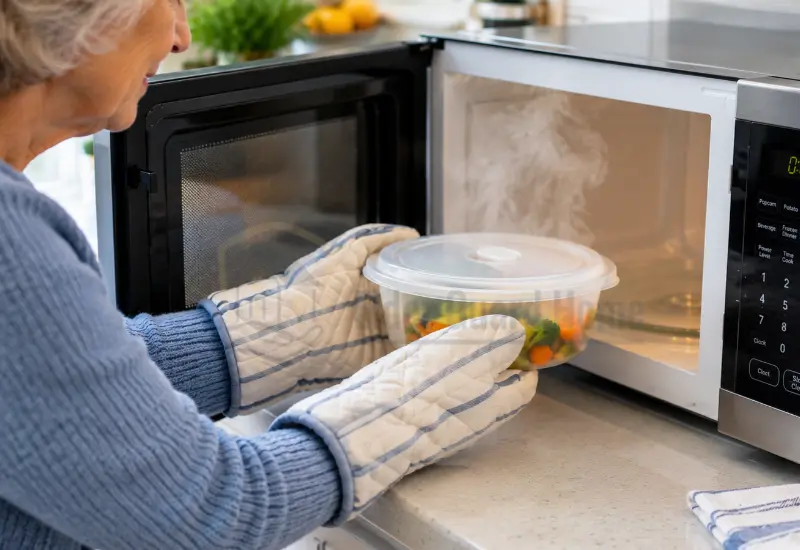
Open covers away from your face and hands
Let the food stand as directed before opening it. Lift the cover slowly, keeping your face and hands away from the opening.
Direct escaping steam away from your body. If the cover is difficult to handle safely, ask someone for assistance.
Allow steam to escape during heating
Use covers designed for microwave cooking and follow their venting instructions. Never assume a tightly sealed container is safe because it prevents spills.
Steam needs room to escape during heating. Incorrectly sealed containers can build pressure and may open suddenly.
Be careful with soups, sauces, and moist foods
Soups, sauces, and other moist foods can retain considerable heat. Their surfaces may look calm even when the contents are very hot.
Stir when appropriate, check the temperature carefully, and allow the food to cool enough for safe handling. Avoid tasting food immediately after removing it from the microwave.
Use suitable oven mitts or heat-resistant grips
Dry, well-fitting oven mitts can help protect hands when handling hot dishes. Choose mitts that allow a secure grip rather than bulky ones that make the container harder to control.
A mitt does not make an unstable or excessively heavy dish safe to lift. Ask for help when the container cannot be handled confidently.
How to Remove Hot Food Without Spilling It
Removing food can be one of the most difficult parts of microwave use for people with reduced grip strength or balance.
Choose smaller, manageable portions
Heating a smaller portion in a suitable container can reduce the weight being lifted. It may also make stirring and checking the food easier.
Use a container large enough to prevent food from overflowing. Leave appropriate space for liquids and follow the food’s heating instructions.
Use containers with stable bases and comfortable grips
Choose sturdy, microwave-safe dishes that the user can hold securely. Avoid containers with slippery surfaces or awkward shapes.
Two handles may help some people, but they do not guarantee safe lifting. The container must still be manageable for the individual.
Keep a clear landing space beside the microwave
Prepare a stable, heat-resistant surface before starting. Place the dish there before removing its cover or stirring the food.
Avoid carrying a hot container while searching for a plate or moving other items out of the way. Preparing the workspace first reduces unnecessary handling.
Avoid carrying hot food while using a walker
Carrying a hot dish while relying on a walker can compromise balance and leave no hand available for support. A spill can also cause serious burns.
Consider assistance, a safer meal arrangement, or an appropriate mobility solution. Do not assume that a tray or walking-aid accessory is suitable without checking its stability and compatibility.
Older adults who also struggle to pour hot drinks may benefit from our guide to safe electric kettles for elderly with tremors.
When should someone else lift the dish?
Assistance is appropriate when a dish feels too heavy, the user’s grip is unreliable, or reaching into the microwave causes pain or imbalance.
The aim is not to remove independence unnecessarily. It is to find a way for the person to prepare meals without taking avoidable risks.
Avoid Superheated Water and Unexpected Hot Liquid Spills
Heating plain water in a microwave requires particular care. Water can sometimes become superheated, meaning it becomes hotter than its normal boiling point without visibly bubbling.
Moving the cup or adding something to the water can trigger sudden boiling. This may cause hot water to erupt and create a serious scalding risk.
How can seniors reduce the risk?
Follow the microwave manufacturer’s recommended heating instructions.
Do not exceed the recommended heating time.
Use a suitable microwave-safe container.
Handle heated liquids carefully and keep the face away from the cup.
Allow the liquid to stand as directed before handling it.
Ask for assistance if lifting or carrying hot liquids is difficult.
Do not assume that water is safe to handle just because it looks still. Avoid unnecessary movement immediately after heating.
Why caregivers should pay attention to hot drinks
A sudden spill can be particularly difficult for someone with tremors, reduced grip strength, or limited mobility. A full cup of hot water may also be difficult to carry safely.
If the person regularly struggles with hot liquids, consider safer preparation arrangements. The FDA’s microwave oven safety guidance explains the risk of superheated water.
Prevent Uneven Heating and Make Sure Food Is Safe to Eat
Microwaves do not always heat food evenly. The outside may feel hot while the center remains cooler.
This matters for both comfort and food safety, particularly when reheating leftovers or preparing frozen meals.
Stir or rotate food during heating
Stirring or rotating food can help distribute heat more evenly. Follow the package and appliance instructions, using care when handling hot containers.
If stirring requires lifting a heavy dish, choose a manageable portion or ask for assistance.
Allow standing time after heating
Some foods need standing time after the microwave stops. This allows heat to spread through the food.
Follow the package directions and avoid rushing to eat or handle the contents. The required standing time varies by food.
Check reheated leftovers carefully
Use a clean food thermometer when appropriate, especially for foods that require thorough reheating. For U.S. food-safety guidance, the USDA recommends reheating leftovers to 165°F (74°C).
Stir the food and check its temperature in more than one place when needed. A hot surface alone does not prove that the center has reached a safe temperature.
Do not rely on appearance alone
Food can look ready while still containing cooler areas. Follow the recommended heating time, stirring instructions, and standing time.
The USDA’s microwave cooking guidance provides further advice on safe heating and food temperatures.
Create a Simple Microwave Instruction Card for Seniors
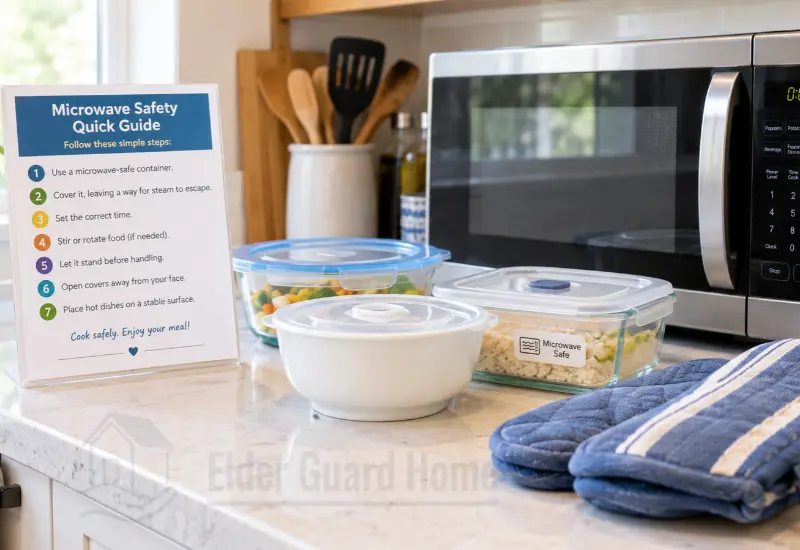
A short instruction card can make everyday microwave use easier for someone who forgets steps or finds the controls confusing.
Keep it near the appliance where it is easy to see. Adapt the instructions to the person’s abilities and the specific microwave model.
What should the instruction card include?
A simple checklist could include these steps:
- Place food in a microwave-safe container.
- Cover it as directed, allowing steam to escape.
- Select the correct heating time.
- Stir or rotate the food when needed.
- Allow the food to stand as directed.
- Open covers away from your face and hands.
- Place hot dishes on a stable surface.
The card should be a reminder, not a substitute for the manufacturer’s instructions or assistance when needed.
Keep the instructions easy to read
Use large print, high contrast, and simple words. Include only the steps the person needs for their usual meals.
Avoid listing every microwave function. Too much information can make the card harder to follow.
Practice the routine together
A caregiver can demonstrate the process and allow the older adult to practice at a comfortable pace. Observe whether the person can select settings, handle containers, and follow the steps safely.
Update the card if the appliance or the person’s needs change. If difficulties continue, consider additional support rather than relying on reminders alone.
For a broader home review, you can also use our printable home safety checklist for seniors.
When Should a Caregiver Supervise Microwave Use?
Not every older adult needs supervision. The right level of support depends on the person’s abilities, the appliance, and the tasks involved.
Signs that extra help may be useful
Consider additional support if the person repeatedly spills hot food, forgets heating cycles, chooses unsuitable containers, or struggles to lift dishes.
Difficulty reading controls or following instructions may also indicate that the setup needs to change. Discuss the problem respectfully and involve the older adult in choosing a solution.
Match assistance to the person’s needs
Some people need only better lighting, clearer labels, or more accessible storage. Others may need help removing hot dishes or preparing certain meals.
When memory or decision-making changes affect cooking, our guide to dementia kitchen safety offers additional caregiver considerations.
Stop using a damaged microwave
Stop using the appliance if its door, latch, or seal is damaged, or if the door does not close properly. Do not use a microwave that appears to operate with the door open.
Contact the manufacturer or a qualified service professional. Never attempt to bypass the door safety interlocks.
Protect safety without removing independence
A person’s age alone should not determine whether they can use a microwave. Focus on the tasks they can manage safely and the support that would help.
A practical setup, clear instructions, and targeted assistance can preserve independence while reducing avoidable risks.
If an older adult sometimes forgets to turn off kitchen appliances, consider reviewing other cooking safety measures as well. Our guide to automatic stove shut-off devices for elderly explains options that can help reduce the risk of a stove being left on unattended.
Common Microwave Safety Mistakes to Avoid
Avoid these common mistakes when preparing food:
- Using containers that are not labeled microwave-safe.
- Opening a cover toward the face or hands.
- Heating water longer than recommended.
- Lifting a heavy dish with an insecure grip.
- Assuming food is evenly heated without stirring or checking.
- Ignoring standing-time instructions.
- Placing the microwave where reaching or bending is difficult.
- Leaving clutter around the appliance or landing surface.
- Continuing to use a microwave with a damaged door or latch.
- Relying on an instruction card when direct assistance is necessary.
Small changes can make these tasks easier. However, no single precaution eliminates every kitchen hazard.
Frequently Asked Questions
Final Thoughts on Microwave Safety for Seniors
Microwave use can remain part of independent living when the kitchen setup matches the person’s needs. Clear controls, suitable containers, careful handling, and a simple routine can reduce common risks.
Caregivers should pay particular attention to hot liquids, steam, heavy dishes, and uneven heating. If a task becomes difficult, adjust the setup or provide assistance rather than expecting the person to manage it alone.
Good microwave safety for seniors is about supporting independence while recognizing when extra help is needed. Start with one practical change, observe what works, and build a safer routine over time.