
What Is the Safe Fridge Temperature for Seniors?
The safest refrigerator temperature is 40°F (4°C) or lower. This temperature slows the growth of many harmful bacteria and helps keep perishable food safer.
The freezer should remain at 0°F (-18°C) or lower. Freezing helps preserve food, although it does not reliably destroy all harmful microorganisms.
These temperature recommendations come from the U.S. Food and Drug Administration (FDA) and the U.S. Department of Agriculture (USDA).
Why the Refrigerator Setting May Not Show the Actual Temperature
Some refrigerators display a temperature, while others only have a numbered control dial. A setting such as three or four does not necessarily indicate the actual temperature inside.
Door openings, crowded shelves, faulty seals, and appliance problems can affect cooling. The refrigerator may also have warmer areas if cold air cannot circulate properly.
An appliance thermometer provides a more reliable reading. Check it regularly and adjust the refrigerator according to the manufacturer’s instructions.
For official guidance, read the USDA’s refrigerator temperature and food-safety recommendations.
How to Check Refrigerator Temperature Correctly
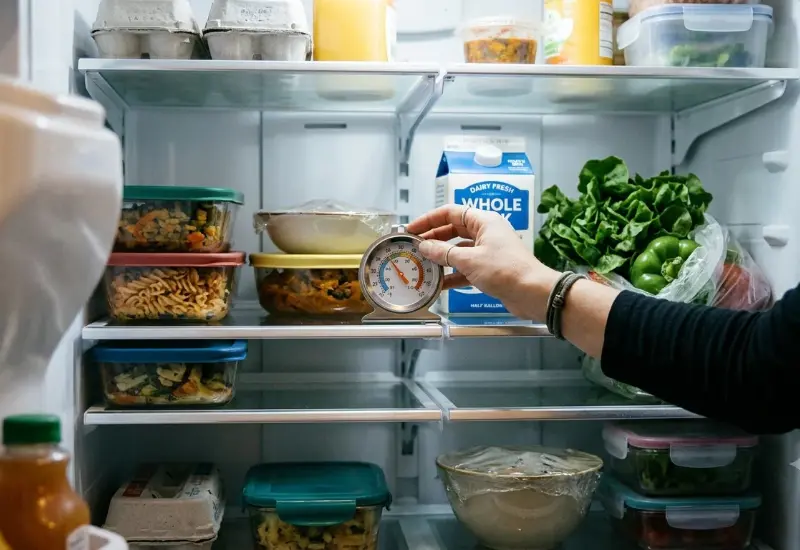
Use these simple steps:
- Place an appliance thermometer inside the refrigerator where it is easy to read.
- Follow the thermometer manufacturer’s instructions for placement and reading.
- Check the temperature regularly, ideally at least once a week.
- Adjust the refrigerator if the temperature rises above 40°F (4°C).
- If the refrigerator stays too warm, check the door seal and ventilation.
- Arrange for appliance servicing if the temperature remains unsafe.
Caregivers can record the reading on a small note attached to the refrigerator. This makes temperature checks easier to remember.
Important: If the refrigerator has been above 40°F for an uncertain period, do not assume the food is safe. Food that has been above 40°F for more than two hours should generally be discarded under USDA guidance. Power-outage guidance has additional considerations discussed below.
How to Store Leftovers Safely
Leftovers can save time and make meals easier for older adults. However, cooked food needs prompt refrigeration and clear storage dates.
The most important rule is to refrigerate perishable food within two hours of cooking or serving. If the surrounding temperature is above 90°F (32°C), refrigerate it within one hour.
These limits apply to cooked meals, takeaway food, and other perishable items. They also apply when food is sitting on the counter after a meal.
Cool and Store Food Without Waiting Too Long
Do not leave cooked food on the counter until it reaches room temperature. The refrigerator can safely receive hot food when it is handled correctly.
For faster cooling, divide large quantities into smaller, shallow containers. This allows heat to escape more efficiently than leaving food in one deep pot.
Follow these leftover storage steps:
- Divide large meals into shallow, clean containers.
- Cover the containers with suitable lids.
- Refrigerate them promptly within the recommended time.
- Keep containers away from raw meat and seafood.
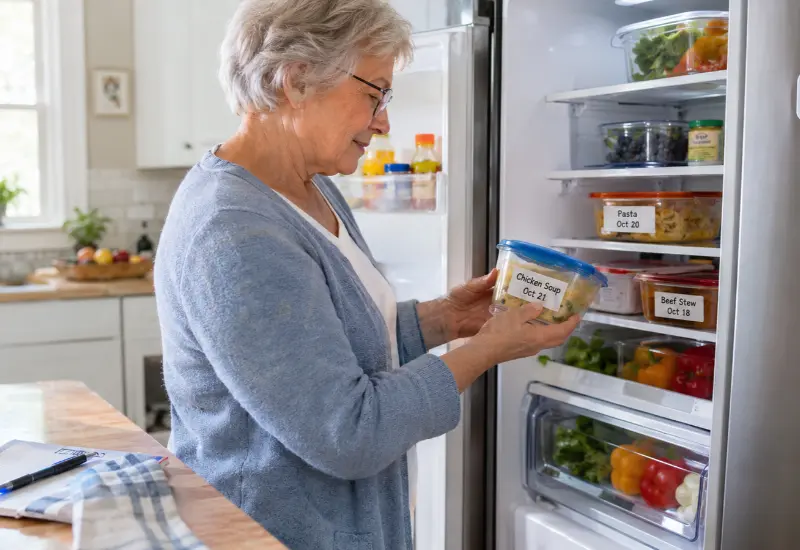
- Label each container with the preparation date.
- Freeze portions that will not be used within the recommended storage period.
Avoid putting a very large, deep pot of hot food directly into the refrigerator. Smaller portions cool more quickly and evenly.
Why Date Labels Matter for Seniors
A container can look perfectly normal even when it has been stored too long. A date label helps prevent guesswork.
Use a large, easy-to-read label with the food name and preparation date. For example, write “Chicken soup — Oct 21” instead of using a vague label such as “Tuesday.”
A caregiver can also maintain a simple leftover log on the refrigerator door. Remove entries when food is eaten or discarded.
These small steps are particularly useful when an older adult lives alone or experiences memory difficulties.
For more guidance on safe food storage, consult the USDA’s Leftovers and Food Safety guide.
How Long Do Common Foods Last in the Refrigerator?
Knowing how long leftovers last in the fridge helps seniors plan meals and avoid keeping food too long.
Storage times vary by food type, packaging, preparation, and temperature. The following chart provides general U.S. government recommendations for common refrigerated foods.
Use shorter package instructions when applicable. The time limits assume proper handling and continuous refrigeration at 40°F (4°C) or below.
Refrigerator Storage Times for Common Foods
Copy this HTML table into your website’s HTML or code editor.
| Food | Recommended Refrigerator Storage Time | Practical Safety Tip |
|---|---|---|
| Cooked meat, poultry, and most leftovers | 3–4 days | Label the preparation date and refrigerate promptly. |
| Raw ground beef, pork, lamb, or veal | 1–2 days | Keep sealed and separate from ready-to-eat foods. |
| Raw chicken or turkey | 1–2 days | Store in a leak-proof container on the lowest shelf. |
| Raw beef, pork, lamb, or veal steaks, chops, and roasts | 3–5 days | Keep juices away from other foods. |
| Hard-cooked eggs | 1 week | Keep refrigerated in a covered container. |
| Egg, chicken, ham, tuna, or macaroni salads | 3–4 days | Refrigerate promptly and keep covered. |
| Opened luncheon meat or deli-sliced meat | 3–5 days | Follow package instructions and use date labels. |
| Opened hot dogs | 1 week | Keep sealed and follow the package’s storage guidance. |
These are general storage guidelines, not guarantees that food will remain safe for the entire period. Food left out too long, stored in a warm refrigerator, or handled unsafely may need to be discarded sooner.
For additional foods, use the official FoodSafety.gov Cold Food Storage Chart.
What If You Cannot Eat the Food in Time?
Freeze suitable foods before they reach the end of their recommended refrigerator storage period. Divide meals into portions that can be thawed and eaten separately.
Label frozen containers with the food name and freezing date. This helps avoid forgotten meals and unnecessary waste.
Frozen food kept continuously at 0°F (-18°C) or below remains safe indefinitely, although its quality may decline over time. Follow packaging instructions and use sensible rotation to maintain quality.
For seniors who eat smaller meals, freezing individual portions can be easier than managing a large container of leftovers.
How to Tell If Refrigerated Food Is Unsafe
Many people check food by smelling it or looking for visible mold. These checks can reveal some spoilage, but they cannot confirm that food is safe.
Harmful bacteria may be present without changing a food’s smell, taste, or appearance. Food that smells normal can still cause illness.
Warning Signs That Food Should Be Discarded
Discard food when you notice any of these problems:
Visible mold on food where the product should not have mold.
Unusual slime or unexpected changes in texture.
Swollen, leaking, or damaged packaging.
Unusual odors or signs of decomposition.
Food past its safe storage period.
Food left at room temperature beyond the recommended time.
Food with an unknown preparation date or uncertain storage history.
Some foods, such as certain cheeses, are intentionally made with specific molds. Follow product-specific safety advice rather than applying one rule to every food.
Can Food Be Unsafe Even If It Smells Normal?
Yes. Smell and appearance cannot reliably identify all foodborne hazards.
Do not taste a questionable food to see whether it is safe. Even a small taste can expose someone to harmful microorganisms or toxins.
When you cannot confirm how long food has been stored, use the storage timeline and handling history. If the food’s safety remains uncertain, discard it.
This is especially important for older adults, who may experience more serious complications from foodborne illness.
The FDA explains this risk in its refrigerator thermometer and food-safety guidance.
Prevent Cross-Contamination Inside the Refrigerator
Cross-contamination occurs when harmful microorganisms spread from one food or surface to another. Raw meat juices are a common concern, especially when they drip onto ready-to-eat food.
A clean and organized refrigerator helps reduce this risk.
Store Raw Meat Below Ready-to-Eat Foods
Keep raw poultry, meat, and seafood in sealed, leak-proof containers. Place them on a lower shelf so their juices cannot drip onto cooked food or produce.
Keep ready-to-eat foods, such as cooked meals and washed fruit, away from raw animal products. Store leftovers in covered containers rather than uncovered bowls.
Do not put raw meat above a prepared meal simply because the lower shelf is crowded. Reorganize the refrigerator to create a safe space.
Keep the Refrigerator Clean and Uncluttered
Wipe spills promptly, especially juices from raw meat packages. Clean shelves and drawers according to the appliance manufacturer’s instructions.
Avoid packing the refrigerator so tightly that cold air cannot circulate. Leave enough room for air to move around stored food.
Check containers for leaks and make sure refrigerator doors close completely. Damaged seals or persistent cooling problems may require professional attention.
Caregivers can help seniors arrange frequently used foods at a comfortable height. This reduces unnecessary reaching and makes it easier to find food without moving many containers.
Reheat and Thaw Refrigerated Food Safely
Safe refrigeration is only one part of food safety. Meals also need proper reheating and thawing before serving.
Reheat Leftovers to 165°F
Reheat leftovers to an internal temperature of 165°F (74°C), measured with a food thermometer. Check the temperature in several places, especially when using a microwave.
Microwaves can heat food unevenly, leaving cold spots. Cover food with a microwave-safe lid, stir or rotate it when appropriate, and allow standing time before checking the temperature.
Bring soups, sauces, and gravies to a rolling boil when reheating them. Do not rely only on steam or a hot container to judge whether food is thoroughly heated.
For more practical advice, read our guide to microwave safety for seniors.
Thaw Food Without Leaving It on the Counter
Never thaw perishable food at room temperature on a kitchen counter. The outside can warm while the center remains frozen.
Use one of these safer methods:
Refrigerator: Thaw food inside the refrigerator, allowing enough time.
Cold water: Use a leak-proof package and change the water every 30 minutes.
Microwave: Use the defrost setting and cook the food immediately afterward.
Food thawed using cold water or a microwave should be cooked promptly. Follow USDA guidance for safe handling and refreezing.
Reduce Burns When Handling Hot Food
Older adults may have difficulty lifting heavy containers or gripping slippery dishes. Use smaller portions and stable, easy-to-hold containers whenever possible.
Avoid filling containers to the brim with hot soup or liquids. Use dry oven mitts and keep handles away from the edge of the counter.
Our guide on how to prevent burns in the kitchen for seniors covers additional precautions for hot food, cookware, and steam.
What Should Seniors Do After a Power Outage?
A power outage can make refrigerated food unsafe even when the refrigerator looks normal. The key questions are how long the power was off and how warm the food became.
Keep the Refrigerator Door Closed
Keep the refrigerator and freezer doors closed as much as possible during an outage. Opening them repeatedly allows cold air to escape.
A closed refrigerator generally keeps food cold for about four hours. A full freezer can maintain its temperature for approximately 48 hours, or about 24 hours when half full, if the door remains closed.
These estimates assume the doors stay shut. Actual conditions may vary, so check temperatures and follow official food-safety advice.
Which Foods Should You Discard?
Once power returns, check the refrigerator thermometer if one is available. Perishable refrigerated foods should be discarded if they have been above 40°F (4°C) for four hours or more.
If the temperature history is uncertain, do not use smell or appearance to decide whether food is safe. Discard questionable perishable items.
For frozen foods, items that still contain ice crystals or are at 40°F (4°C) or below can generally be refrozen or cooked. Check individual packages and follow official guidance.
For more details, read the FDA’s Power Outages: Key Tips for Consumers About Food Safety.
Make Refrigerator Food Safety Easier for Seniors
The best food-safety system is one that people can follow every day. A complicated routine may be difficult for someone with limited mobility, poor eyesight, or memory challenges.
Small adjustments can make refrigerator use safer and less stressful.
Use Large Labels and a Simple Leftover Log
Write the food name and preparation date in large, dark lettering. Use labels that are easy to read without removing the container from the shelf.
Keep a small notepad or checklist on the refrigerator door. Record new leftovers and cross them off when eaten or discarded.
A simple reminder might say:
Check refrigerator temperature.
Label newly stored food.
Eat older safe leftovers first.
Discard food that has exceeded its storage period.
Check the refrigerator before shopping.
Arrange Food for Easy Access
Place frequently used foods on middle shelves where they are easy to reach. Avoid storing everyday items in high cabinets or low drawers that require uncomfortable bending.
Use lightweight containers with secure lids. Choose clear containers when they help identify food, but always add a date label.
Do not overload shelves or stack containers so high that they may fall. Make sure food remains stable when a person opens the refrigerator.
Caregivers can also prepare individual meal portions for easier handling. This may reduce heavy lifting and help seniors use leftovers within the recommended time.
For related practical ideas, explore our guides to senior-friendly kitchen safety gadgets and safe electric kettles for elderly people with tremors.
When Should Caregivers Provide Extra Help?
Some older adults can manage food storage independently with labels and reminders. Others may need help checking dates, organizing shelves, or preparing meals.
If memory difficulties lead to repeated unsafe food choices, introduce a consistent checking routine. Family members can coordinate meal preparation and refrigerator checks without removing more independence than necessary.
Our guide to dementia kitchen safety offers additional ideas for reducing kitchen risks. If an older adult repeatedly leaves appliances running, see our guide on preventing seniors from leaving the stove on.
A Simple Weekly Refrigerator Cleaning and Safety Routine
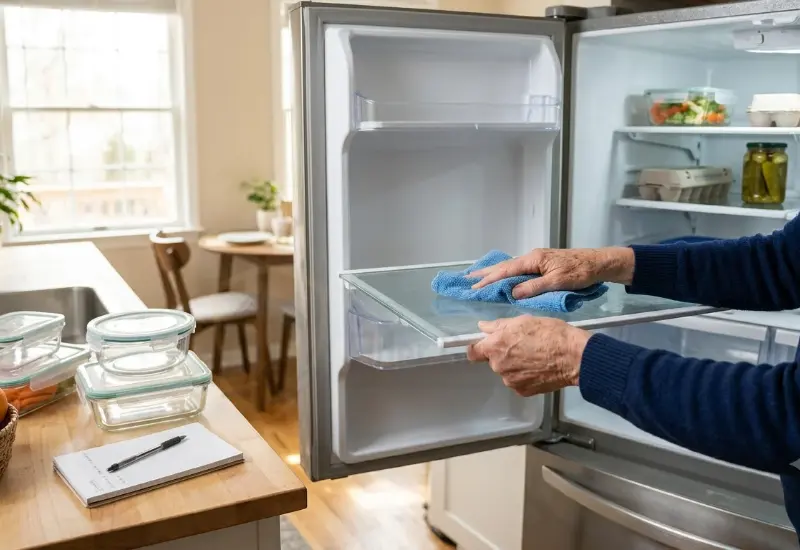
A regular refrigerator check helps prevent forgotten leftovers, temperature problems, and messy shelves. Choose a consistent day each week so the task becomes easier to remember.
The routine can take only a few minutes when the refrigerator stays organized.
Weekly Refrigerator Safety Checklist
Follow these steps once a week:
Check the temperature. Confirm that the refrigerator remains at 40°F (4°C) or below.
Review leftovers. Check preparation dates and discard food that has exceeded safe storage times.
Inspect packaging. Look for leaks, damaged containers, and unusual swelling.
Clean spills. Wipe shelves and drawers using suitable cleaning supplies.
Check older items. Move older food forward when it remains within its safe storage period.
Review groceries. Check dates and storage instructions before buying more food.
Confirm easy access. Keep frequently used items within comfortable reach.
Do not keep food simply because it would be wasteful to throw it away. Preventing illness is more important than saving a questionable leftover.
Caregivers can make this routine part of a broader home-safety review. Our printable home safety checklist for seniors can help organize other household checks.
Frequently Asked Questions
What Is the Safe Fridge Temperature for Seniors?
Keep the refrigerator at 40°F (4°C) or below. Use an appliance thermometer to check the actual temperature rather than relying only on the control setting.
What Is the Safe Food Temperature for a Refrigerator?
The recommended refrigerator temperature is 40°F (4°C) or lower. The freezer should be maintained at 0°F (-18°C) or below.
How Long Can Leftovers Last in the Fridge?
Most cooked leftovers can be refrigerated for three to four days when handled correctly and kept at 40°F (4°C) or below. Freeze suitable leftovers earlier if they will not be eaten within that period.
How Can You Tell If Refrigerated Food Is Unsafe?
Warning signs include visible mold, unusual texture, damaged packaging, or an unsafe storage history. However, harmful bacteria may be present without obvious warning signs. Follow storage limits and discard food when safety is uncertain.
Can Food Be Unsafe Even If It Smells Normal?
Yes. Smell and appearance cannot reliably detect harmful bacteria. Never taste questionable food to check its safety.
How Long Can Cooked Food Stay Out Before Refrigeration?
Refrigerate perishable cooked food within two hours. If the surrounding temperature exceeds 90°F (32°C), refrigerate it within one hour.
What Temperature Should Leftovers Reach When Reheated?
Reheat leftovers to an internal temperature of 165°F (74°C). Use a food thermometer and check several places, particularly when reheating food in a microwave.
Where Should Raw Meat Be Stored in the Refrigerator?
Place raw meat, poultry, and seafood in sealed, leak-proof containers on a lower shelf. This helps prevent juices from dripping onto cooked food and other ready-to-eat items.
What Should You Throw Away After a Power Outage?
Discard refrigerated perishable food that has been above 40°F (4°C) for four hours or more. If the temperature history is uncertain, follow official outage guidance and do not rely on smell or appearance.
How Often Should Seniors Clean Out Their Refrigerators?
Check food dates and leftovers at least weekly, and clean spills immediately. Clean shelves and drawers as needed, following the appliance manufacturer’s instructions.
Conclusion: Simple Fridge Safety Tips Can Protect Older Adults
Refrigerator food safety for seniors does not need to be complicated. Keeping food cold, labeling leftovers, and following storage limits can reduce avoidable food-safety risks.
Use an appliance thermometer to confirm the safe fridge temperature. Refrigerate perishable food promptly, keep raw meat separate, and reheat leftovers to 165°F (74°C).
Caregivers can make these habits easier with readable labels and a weekly refrigerator check. When food has been stored unsafely or its history is uncertain, discard it rather than taking a risk.
Small, consistent habits help older adults enjoy meals with greater confidence while maintaining as much independence as possible.