
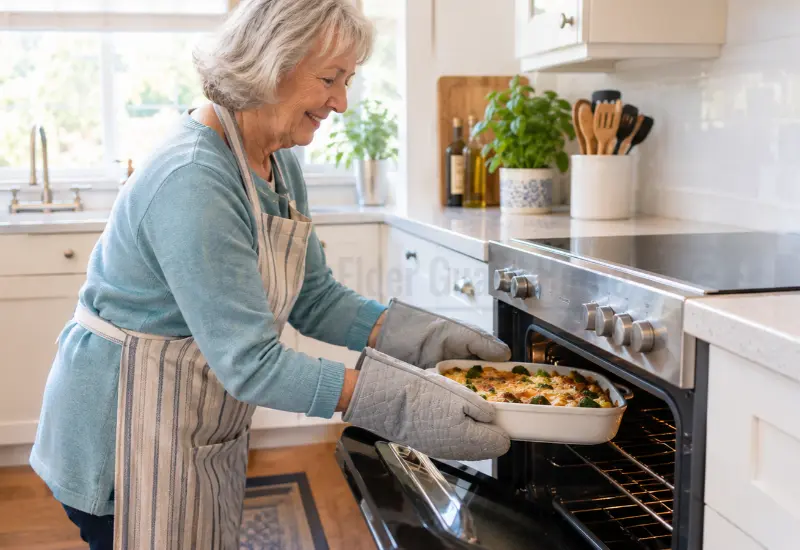
Kitchen burn prevention for seniors starts with small changes that make everyday cooking safer. Hot drinks, boiling water, cookware, steam, and oven trays can all cause painful injuries. These hazards become harder to manage when grip strength, balance, eyesight, or coordination changes.
Older adults should not have to give up cooking simply because certain tasks become difficult. The right equipment, a better kitchen layout, and safer habits can help them prepare meals with greater confidence. Caregivers can also make practical adjustments without unnecessarily limiting independence to avoid burns in the kitchen.
There are many ways to prevent burns and scalds in the kitchen which we will discussed here.
1. Reduce Spills From Hot Drinks, Soup, and Other Liquids
Hot drinks and soup can cause scalds when they spill onto the hands, arms, legs, or lap. A small spill can become serious when someone cannot move away quickly or has difficulty removing wet clothing.
The safest approach is to reduce the amount of hot liquid being carried and keep the journey as short as possible.
Use Smaller, Stable Cups and Containers
Choose cups with comfortable handles that are easy to grip. A stable base can also reduce the chance of a drink tipping over when placed on a table.
Avoid filling mugs, bowls, or soup containers to the brim. Leaving some space at the top helps reduce spills during movement. Lightweight containers may be easier to manage, provided they remain stable and heat-resistant.
For someone with hand tremors, a cup with two handles or a suitable lidded drinking cup may help. However, the lid must be designed for hot liquids and used according to its instructions.
Move Hot Drinks Only Short Distances
Place the cup near the kettle before pouring whenever possible. This avoids carrying boiling water across the kitchen.
If carrying a hot drink is difficult, consider using a stable serving trolley or preparing the drink directly beside the place where it will be consumed. Do not use a trolley if its wheels, brakes, or movement create a fall risk.
People who struggle with pouring may benefit from reviewing our guide to the best electric kettle for elderly with tremors. It explains features that can make hot-water preparation easier to manage.
Avoid Carrying Several Hot Items Together
Do not carry a full kettle, a mug, and a plate at the same time. Carrying multiple items can make it harder to maintain balance and react to a spill.
Make separate trips when necessary. If using a walking aid, keep one hand available to use it correctly rather than carrying a hot container that prevents safe handling.
2. Keep Hot Pans Away From Edges and Walkways
A pan can cause a serious burn if someone catches its handle while passing the stove. A projecting handle can also be knocked accidentally by a walking aid, clothing, or another person.
Good cookware placement reduces these risks without requiring expensive equipment.
Turn Pot Handles Inward
Turn pot and pan handles toward the back of the stove or inward over the cooking surface. Keep them away from walkways and neighboring burners.
Make sure handles do not extend beyond the edge of the stovetop. Avoid positioning a handle directly over another active burner, where it could become dangerously hot.
Never leave a hot pan where someone must reach across it to access another item. Keep frequently used utensils and ingredients nearby before cooking begins.
Keep Hot Cookware Away From Counter Edges
Place hot pans on a stable, heat-resistant surface with enough space around them. Avoid placing cookware close to the edge, where a sleeve or hand could knock it down.
Do not place a hot pan on an unsuitable plastic surface, an unstable tray, or a damp cloth. Check that the surface can safely withstand the cookware’s temperature.
Keep Walkways Clear
Keep the floor and route between the stove, counter, and dining area free of bags, stools, cords, and other obstacles. A person carrying hot food needs a clear path and enough room to turn safely.
If someone uses a walker, arrange the kitchen so they can reach essential items without squeezing past hot cookware. For broader home safety improvements, see our guide to senior home safety tips for elderly people living alone.
3. Use Oven Mitts and Heat-Resistant Handles Correctly
Oven trays, baking dishes, pot handles, and cookware can remain hot after the heat source is turned off. A quick touch may cause a painful burn, especially when someone does not recognize how hot a surface has become.
Suitable protective equipment helps, but only when it fits properly and is in good condition.
Choose Mitts That Fit Securely
Look for oven mitts that provide enough coverage for the hands and wrists. They should allow a secure grip without being so bulky that the wearer struggles to hold a dish.
Check for worn fabric, torn seams, exposed areas, and damaged heat-resistant material. Replace mitts when they no longer provide reliable protection.
Keep Oven Mitts Dry
Always use dry oven mitts or potholders. Moisture can transfer heat more quickly and increase the risk of a burn.
Do not substitute an ordinary dish towel for proper heat protection. Towels may slip, bunch up, or leave parts of the hand exposed.
Keep protective mitts in a visible, easy-to-reach place near the oven. They should be accessible without reaching over a hot burner or opening a cupboard above a cooking surface.
Use Both Hands When the Task Requires It
Before lifting a hot baking dish, make sure both hands are protected and the destination is ready. Clear the counter first so there is no need to search for space while holding the dish.
If the dish is too heavy or awkward to grip, ask for help. Alternatively, divide the food into smaller portions after it has cooled enough to handle safely.
Do not assume a pot handle is safe to touch just because it looks cool. Use suitable protection and follow the cookware manufacturer’s instructions.
4. Prevent Steam Burns From Pot Lids and Microwave Containers
Steam can burn skin quickly. It may be difficult to see, and it can escape suddenly when a lid or food container is opened.
This makes steam safety particularly important when preparing soup, vegetables, rice, and other foods that release moisture during cooking.
Open Pot Lids Away From Your Face
When removing a lid, lift the edge farthest from your body first. Let steam escape away from your face, hands, and arms.
Avoid leaning directly over a boiling pot. If steam is heavy, pause and allow it to dissipate before continuing.
Use a suitable oven mitt or heat-resistant handle when removing a hot lid. Never place your hand directly above the opening to test whether steam is present.
Follow Microwave Container Instructions
Use containers specifically marked as microwave-safe. Cover food as recommended, leaving a vent for steam to escape when the instructions require it.
After heating, allow the food to stand for the recommended time. Open the container carefully and direct the opening away from your face.
Some foods can release trapped steam even when the container itself feels manageable. Do not place your face close to the lid or pull it off in one quick movement.
For a more complete explanation of safe heating, suitable containers, and handling hot dishes, read our guide to microwave safety for seniors.
Avoid Rushing Hot Food Preparation
Do not reach over boiling water to retrieve utensils or ingredients. Gather what you need before heating the food.
If a lid sticks, do not force it toward your face or grip it with bare hands. Let the container cool enough to handle safely, following its instructions.
5. Make Kettle and Hot-Water Use Safer
Kettles can cause burns through spills, splashes, and contact with hot surfaces. Their cords can also create problems when they hang over the counter edge or cross a walking route.
The goal is to make heating and pouring easier without requiring an older adult to carry boiling water unnecessarily.
Place the Kettle on a Stable Surface
Position the kettle on a flat, stable, heat-resistant counter away from the edge. Keep the surrounding area dry and clear.
Arrange the cord so it does not hang where someone could catch it with a hand, sleeve, or walking aid. Follow the manufacturer’s instructions for cord placement and safe operation.
Do not place a kettle where reaching it requires leaning over a stove or another hot appliance.
Avoid Overfilling the Kettle
Fill the kettle only to the recommended level. A very full kettle can be heavy and difficult to control when lifted.
If lifting is difficult, consider a suitable kettle designed for easier pouring or a model with an appropriate tipping mechanism. Choose equipment based on the person’s actual abilities and follow its safety instructions.
Bring the Cup Closer Before Pouring
Place the cup on a stable surface near the kettle before pouring. Avoid holding the cup in the air while lifting a heavy kettle.
Never pour boiling water while walking or while trying to maintain balance with a walking aid. If pouring remains difficult, another preparation method or caregiver assistance may be safer.
Our guide to safe electric kettles for elderly people with tremors covers this equipment-specific problem in greater detail.
6. Organize Cooking to Reduce Carrying and Reaching
A kitchen can become more dangerous when someone must rush, reach overhead, or carry hot food through a cluttered space. Better organization can reduce the number of movements needed during cooking.
These changes are often inexpensive and can make meal preparation more comfortable.
Prepare Ingredients Before Turning on the Heat
Gather ingredients, utensils, and serving dishes before starting the stove. Keep frequently used items within comfortable reach.
This reduces the need to leave a hot pan unattended or search for something while food is cooking. It also helps prevent hurried movements when a meal is nearly ready.
Keep Everyday Items at an Accessible Height
Store commonly used pans, plates, and cooking utensils where they can be reached without stretching or bending excessively.
Avoid storing heavy cookware on high shelves. Reaching overhead while holding a heavy object can affect balance and increase the chance of dropping it.
Do not climb on chairs or unstable stools to reach kitchen items. Ask for help moving rarely used equipment to a safer location.
Reduce the Need to Carry Hot Food
When possible, prepare food near the surface where it will be served. Keep plates and bowls close enough to avoid unnecessary trips.
Use smaller cookware or divide food into smaller portions when lifting a full pot would be difficult. If a serving trolley is appropriate, make sure it rolls smoothly, remains stable, and does not interfere with walking aids.
Keep the Work Area Dry and Clear
Wipe up spills promptly after ensuring the area is safe to approach. Keep towels, packaging, and other loose items away from burners.
A clear counter gives someone more room to place hot cookware securely. It also reduces the chance of knocking a pan or container while reaching for another item.
7. Choose Kitchen Equipment That Is Easier to Handle
Some kitchen products become difficult to use when grip strength, dexterity, or coordination changes. The answer is not always buying more gadgets. Often, replacing one awkward item can make a meaningful difference.
Look for Comfortable Handles and Stable Bases
Choose cookware with handles that feel secure and remain comfortable to hold. Check that handles are firmly attached and do not become excessively hot during normal use.
A stable base can help prevent pots and pans from tipping. Avoid cookware that wobbles, has damaged handles, or requires excessive force to lift.
Lightweight cookware may be easier to manage, but it must still be stable and appropriate for the cooking method.
Reduce the Weight of Hot Loads
A full pot of soup or boiling water may be much heavier than it appears. Do not ask someone to lift it if they struggle with the weight or cannot maintain a secure grip.
Where suitable, prepare smaller quantities or use a smaller pot. Transfer food into smaller serving containers only after it is safe to do so.
Review Equipment That Creates Repeated Problems
If a particular appliance or utensil repeatedly causes spills, burns, or difficulty, reassess whether it remains suitable. A different design may be easier to use.
Our guide to senior-friendly kitchen safety gadgets offers more ideas for adapting a kitchen to changing needs.
8. Know When a Caregiver Should Provide Extra Help
Caregiver support can help older adults continue cooking safely. The right amount of help depends on the person’s abilities, preferences, and the tasks that cause difficulty.
A change in kitchen habits may be enough for some people. Others may need someone nearby during tasks involving boiling water, hot oil, or heavy cookware.
Watch for Signs That a Task Has Become Difficult
Pay attention if an older adult regularly spills drinks, drops utensils, struggles to grip a pan, or has trouble moving hot food safely.
Repeated burns, forgotten pans, and difficulty following familiar cooking steps also deserve attention. These problems may reflect changes in vision, dexterity, balance, medication effects, or memory.
Discuss persistent or sudden changes with a healthcare professional rather than assuming they are simply part of aging.
Adjust the Task Before Removing Independence
Consider safer alternatives for the specific task that causes difficulty. For example, a caregiver might prepare boiling water while the older adult completes another part of the meal.
Someone who struggles with heavy cookware may still be able to prepare ingredients, season food, or assemble a meal safely. Keep the person’s preferences involved when making changes.
Pay Attention to Memory and Appliance Safety
If an older adult forgets cooking steps or leaves heat sources unattended, supervision and changes to the cooking routine may be necessary.
Our guide to dementia kitchen safety explains additional ways to reduce kitchen risks when memory changes affect daily activities.
You can also review automatic stove shut-off devices for elderly people if a stove is sometimes left on unattended. These devices address a different hazard from burns caused by hot cookware, so they should complement—not replace—safe cooking habits.
9. What to Do Immediately After a Kitchen Burn
A kitchen burn may come from boiling water, hot oil, steam, a pan, or an oven tray. Acting promptly can help limit further injury, but it is important to recognize when professional care is needed.
The following is general first-aid information. It does not replace medical advice or emergency assessment.
Step 1: Move Away From the Heat Source
Stop the burning process if you can do so safely. Turn off the appliance if appropriate and move away from the hot liquid, cookware, or steam.
If the person has fallen, appears faint, or has a serious injury, do not put yourself at risk while trying to move them. Call for assistance when necessary.
Step 2: Cool the Burn With Running Water
Place the affected area under cool running water for 20 minutes, as soon as possible. Do not use ice or iced water.
Remove rings, watches, or nearby clothing before swelling develops, but do not pull away anything stuck to the burned skin. Keep the rest of the person warm, particularly when cooling a large area.
The NHS guidance on burns and scalds recommends immediate cooling with running water for 20 minutes. https://www.nhs.uk/conditions/burns-and-scalds/
Step 3: Avoid Unsafe Home Remedies
Do not apply butter, cooking oil, toothpaste, or household remedies to the burn. Do not use ice, and do not pop blisters.
These actions can worsen the injury or interfere with appropriate treatment. Avoid pulling off clothing that has stuck to the skin.
After cooling, protect the area with a clean, non-fluffy dressing if appropriate. Do not wrap a burn tightly or apply anything that sticks to the injured skin.
Step 4: Know When Urgent Medical Help Is Needed
Seek emergency medical help for burns that are deep, large, charred, leathery, or white, brown, or black in appearance. Serious burns affecting the face, hands, feet, genitals, buttocks, or major joints also require urgent assessment.
Electrical and significant chemical burns need immediate medical attention. Seek emergency help if the person has difficulty breathing, signs of shock, or rapidly increasing swelling.
Older adults may need medical assessment even when a burn initially appears minor. This is especially important for burns involving the hands or other areas needed for daily activities, or when the person has diabetes, reduced sensation, or other health concerns.
10. Create a Simple Daily Kitchen Burn-Safety Routine
A short safety routine can help older adults and caregivers remember the most important precautions. Keep it visible near the kitchen work area, away from heat and water.
Before cooking, check that:
Oven mitts are dry, undamaged, and easy to reach.
Pot handles face inward and do not extend into walkways.
Kettle cords are safely positioned and do not hang over counter edges.
Ingredients and utensils are ready before heating begins.
The route between the stove, counter, and dining area is clear.
Cups, bowls, and serving dishes are stable and easy to handle.
Microwave covers and pot lids can be opened without placing the face over rising steam.
Heavy or awkward cookware can be handled safely, with assistance when needed.
After cooking, turn off appliances as appropriate and allow hot cookware to cool in a safe place. Keep hot dishes away from edges until they are safe to move.
For a wider review of household hazards, use our printable home safety checklist for seniors. It can help caregivers assess other areas of the home alongside kitchen safety.
Frequently Asked Questions
What Are the Most Common Kitchen Burn Hazards for Seniors?
Common hazards include hot water, tea, soup, cooking oil, steam, oven trays, and hot pan handles. Spills and awkward lifting can increase the risk when grip strength or balance changes. A clear work area and suitable protective equipment can help reduce these hazards.
How Can Older Adults Prevent Burns While Cooking?
Keep pot handles turned inward, use dry oven mitts, and place hot cookware on stable surfaces away from edges. Prepare ingredients before heating food and avoid carrying several hot items together. Open lids and microwave containers carefully to release steam away from the body.
How Can Caregivers Help Prevent Scalds in Older Adults?
Caregivers can make hot-water tasks easier by positioning cups near kettles, reducing the need to carry boiling water, and choosing suitable containers. They can also clear walkways and provide help with heavy cookware. The amount of support should match the person’s abilities and preferences.
Are Oven Mitts Safer Than Kitchen Towels for Handling Hot Pans?
Properly fitted, dry oven mitts or potholders generally provide more reliable protection than ordinary kitchen towels. Towels may slip, bunch up, or expose the skin. Check the mitts regularly and replace them if the protective material is damaged.
How Should an Older Adult Treat a Minor Kitchen Burn?
Move away from the heat source and cool the burn under cool running water for 20 minutes. Do not apply ice, butter, toothpaste, or other household remedies. Protect the area with a suitable clean dressing and seek medical advice when needed. Older adults should have a low threshold for professional assessment.
When Does a Kitchen Burn Need Urgent Medical Attention?
Urgent help is needed for deep, large, charred, or unusually colored burns, as well as burns involving the face, hands, feet, genitals, or major joints. Electrical or significant chemical burns and burns accompanied by breathing difficulties also need urgent attention. Older adults may require medical evaluation for injuries that appear relatively minor.
How Can Someone With Hand Tremors Safely Handle Hot Drinks?
Use a stable cup with a comfortable handle and avoid filling it to the brim. Place the cup near the kettle before pouring, and avoid carrying boiling water across the kitchen. If pouring remains difficult, choose a suitable alternative or ask for assistance.
What Kitchen Changes Help Reduce Burns for Seniors Living Alone?
Keep commonly used items within easy reach, clear walking routes, and position hot appliances away from edges. Store oven mitts where they are easy to find and use cookware that can be handled comfortably. A simple visible checklist can reinforce safer habits.
Conclusion: Small Kitchen Changes Can Help Prevent Burns
Kitchen burn prevention for seniors is about making everyday tasks easier to manage. Stable cookware, dry oven mitts, careful handling of hot liquids, and better kitchen organization can reduce avoidable risks.
Caregivers should also recognize when a task has become difficult and offer support without unnecessarily taking away independence. If a burn occurs, prompt cooling and appropriate medical assessment are essential. A safer kitchen begins with practical changes that fit the older adult’s needs.