
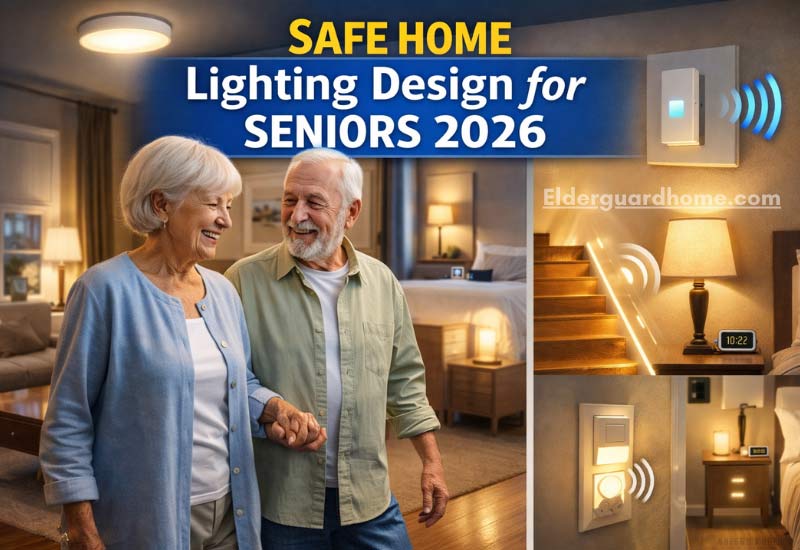
Proper safe home lighting design for seniors 2026 is vital for a secure house. Many people forget that light changes how we move. Bad light can hide a trip hazard. Good light makes every step clear and safe. We want to help you fix your home today. Our team found the best ways to brighten your space.
Why Lighting for Aging Eyes Requires a Strategic Plan
Aging eyes need more light to see clearly. However, just adding bright bulbs is not enough. Too much light can cause painful glare. You need a balance of soft and bright zones. This helps you judge depth and distance better. Our floor safety guide explains why this matters for walkers.
A good plan looks at every room in the house. You must think about how light hits the floor. Many seniors fall because a shadow looked like a hole. Others trip because a bright spot blinded them. We focus on even light for every room. This strategy keeps you moving with total confidence.
When Should Home Lighting Be Upgraded?
Home lighting should be reviewed whenever bulbs flicker, shadows appear in walking paths, or rooms feel unevenly lit to make safe home lighting design for seniors. Lighting upgrades are also useful after furniture changes, room rearrangements, or seasonal daylight shifts.
Positioning Lights to Stop Floor Reflections
Floor glare is a hidden danger in many kitchens. High-gloss tiles act like a mirror for bright lights. This reflection can hide water spills or small objects. Positioning lights to stop floor reflections is a top priority. You should move your light source to the side. Never place a bare bulb directly over a shiny floor.
Furthermore, bright lights can reflect off your shiny hardwood floors. Consequently, it becomes harder to see edges or small rugs. To solve this, you should use anti-skid mats for polished floors to keep your home stable. Indeed, these safety liners for wood prevent rugs from sliding under your feet. Finally, this step works perfectly with your new lighting plan to stop trips.
How to Identify Dangerous Glare Zones on Shiny Surfaces
Walk through your home during the brightest part of the day. Look for “hot spots” on your tile or wood. These are areas where light bounces back at you. If you squint, the glare is too high. Mark these spots with a small piece of tape. This helps you know where to adjust your lamps. It’s a very important step for safe home lighting design for seniors.
Where should lights be placed to reduce glare on floors?
Lights should be placed along walls, under cabinets, or at low heights rather than directly overhead. Side lighting spreads light evenly across the floor and helps prevent bright reflections that can hide edges or changes in surface level.
Simple Fixes for Overhead Light Hot Spots
You do not always need to move the wires. Use frosted globes on your ceiling fixtures. These spread the light out more evenly. You can also add a shade to your bulbs. Shades point the light where you need it most. They keep the bright “hot spot” away from your eyes.
Using Warm Spectrum Lighting for Night Safety
The color of your light matters as much as brightness. Most modern bulbs are too blue for night use. Using warm spectrum lighting for night safety helps your brain rest. Blue light can make you feel alert and confused at 2 AM. Warm light is softer and easier on the eyes. It helps you see the floor without waking you up fully.
Furthermore, choosing the right bulb is not just about brightness. Specifically, the color of the light affects how well you see at night. For instance, the official government guide to energy-efficient lighting explains how to pick the best ‘K-value’ for your home. In addition, using a warmer light helps reduce harsh glare on your eyes. Indeed, this simple change makes your hallways much safer to walk through. Consequently, you can feel more relaxed and secure in every room.
Why Blue Light Increases Confusion During Night Trips
Bright white or blue light mimics the sun. Your brain thinks it is daytime when you see it. This can lead to poor sleep after a bathroom trip. It also makes shadows look much darker. This high contrast is hard for older eyes to handle. Stick to amber or soft yellow tones for night lights.
The Best Placement for Amber Path Lights
Place amber lights along the baseboards of your hall. They should guide your feet from the bed to the bath. Do not put them at eye level. This prevents the light from shining directly into your face. Low-level lighting keeps the path clear and the room calm. It is a simple fix for any hallway.
Why Warm and Amber Lighting Works Best at Night?
Warm and amber lighting works best at night because it provides enough visibility without creating harsh glare or sharp reflections. These softer light tones help illuminate walking paths, stairs, and room edges while keeping the environment calm and comfortable.
Unlike bright white light, warm lighting does not bounce strongly off floors or walls. This reduces shiny reflections that can make it harder to judge distance or see changes in surface levels. Amber lighting also creates smoother shadows, which makes doorways, steps, and furniture edges easier to recognize in low-light conditions.
Another benefit of warm lighting is that it feels less disruptive when turning lights on at night. It allows the eyes to adjust more naturally, helping people move safely from one room to another without feeling blinded or disoriented. For these reasons, warm and amber lighting is ideal for bedrooms, hallways, bathrooms, and nighttime walking paths.
What type of lighting is safest for nighttime movement at home?
The safest lighting for nighttime movement is soft, low-level lighting that clearly shows walking paths without creating glare. Amber or warm-tone lights placed near the floor work best because they reduce harsh reflections while keeping steps and edges visible.
Improving Visual Contrast with Task Lighting
Most falls happen when a person cannot see a change. This could be a step or a rug edge. Improving visual contrast with task lighting fixes this problem. Task lights focus on a small area for a specific job. They make the edges of objects look sharp and clear. This is very helpful for people with limited vision.
Good lighting helps prevent falls. However, prevention isn’t everything.
Many homeowners now add smart fall detection technology that sends automatic alerts if a fall happens.
Strategic Lighting for Kitchen Counters and Prep Areas
Kitchens need very strong task lighting. Add thin lights under your top cabinets. These light up the counter where you cut food. This prevents shadows from your own body. You can see your senior friendly kitchen safety gadgets much better this way. It makes cooking a safer and more fun task.
Creating Shadow-Free Reading and Hobby Zones
Place a lamp right next to your favorite chair. The light should come from over your shoulder. This stops the book or craft from casting a shadow. Use a lamp with a flexible neck. This lets you move the light as you sit. It reduces eye strain and helps you stay active.
Simple Lighting Fixes Based on Common Home Situations
If hallway lights feel too bright at night, replace overhead bulbs with wall-mounted or step-level lights.
If kitchen counters look dark while working, add under-cabinet lighting to remove body shadows.
If bathroom mirrors create glare, move light sources to the sides instead of directly above.
If bedroom paths are hard to see, add low-level night lights that guide the way to the door.
Room-by-Room Action Steps for Safer Home Lighting
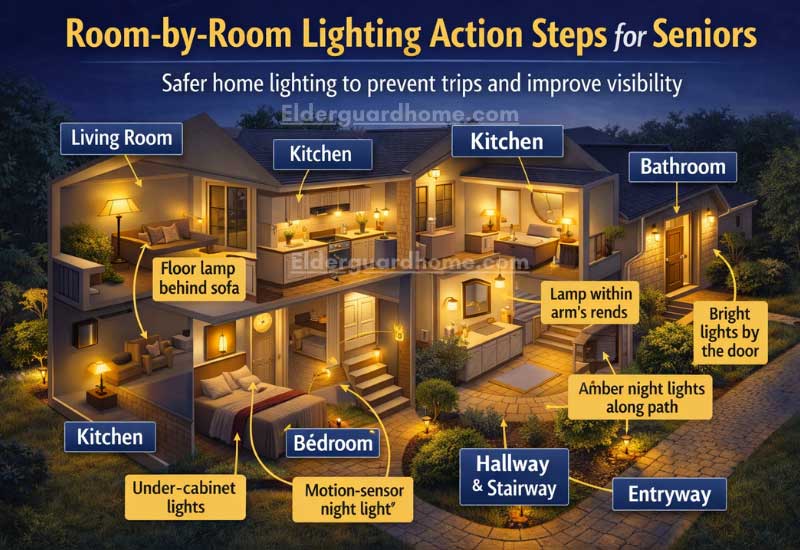
Every room in the home has different lighting needs. Use the action steps below to improve visibility, reduce shadows, and create safer walking paths throughout the house.
1. Living Room Lighting Action Steps
The living room is often used for walking, sitting, and relaxing, so balanced lighting is very important.
What to do:
Place floor lamps behind chairs or sofas to avoid cords in walkways.
Use lampshades that soften light and reduce harsh glare.
Add a second light source to remove dark corners.
Keep remote controls or switches within easy reach.
Use warm, even lighting instead of one bright ceiling light.
Specifically, place a dedicated reading lamp beside your favorite chair.
In addition, hide all lamp cords behind heavy furniture pieces.
Indeed, this prevents trips while providing bright light for hobbies.
Therefore, your main seating area stays both bright and safe.
Why it helps:
Even lighting makes it easier to move around and reduces sudden light changes that can cause missteps.
2. Kitchen Lighting Action Steps
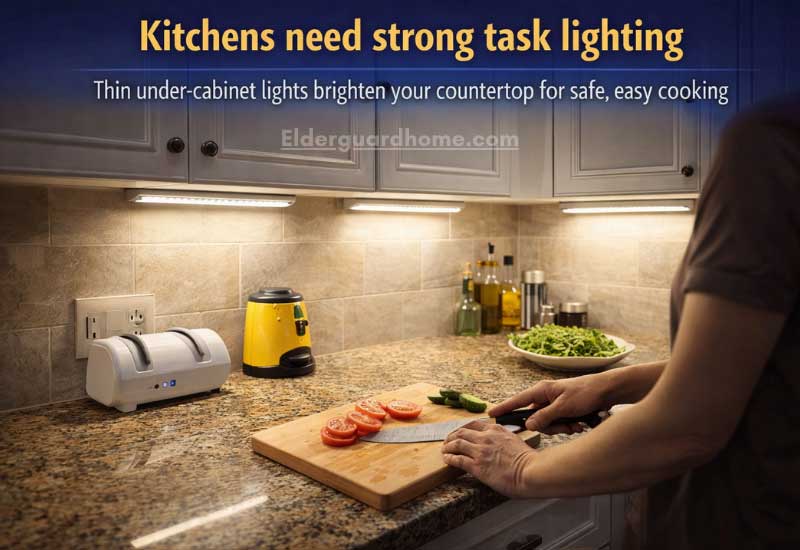
The kitchen needs strong, focused lighting for everyday tasks.
What to do:
Install thin LED lights under upper cabinets.
Light up countertops where food is prepared.
Furthermore, these lights remove dark shadows on your food counters.
Specifically, this helps you see clearly while using kitchen tools.
Consequently, you can prepare meals with much more confidence.
Avoid placing lights directly behind you while working.
Use bright bulbs above sinks and cooking areas.
Make sure shadows are not blocking your work surface.
Why it helps:
In a perfect home lighting design for seniors, good task lighting improves visibility and helps you clearly see tools, surfaces, and safety gadgets.
3. Bathroom Lighting Action Steps
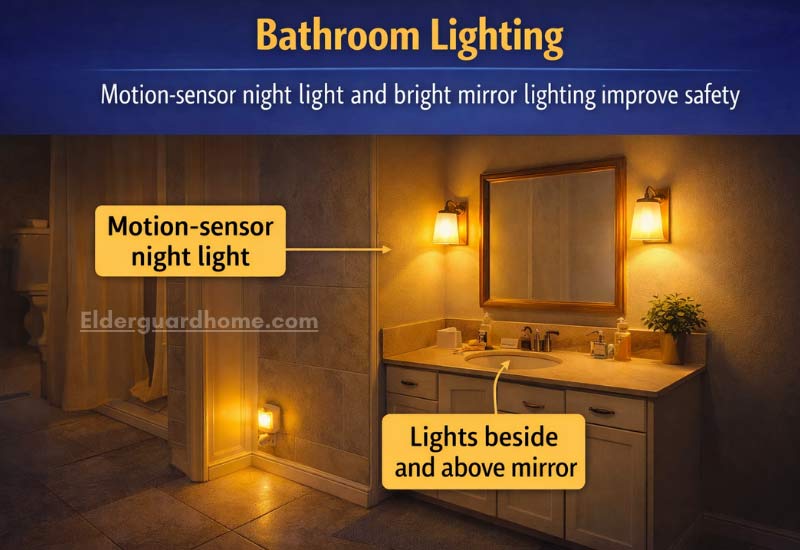
Bathrooms often have slippery floors and tight spaces, so lighting must be clear and reliable.
What to do:
Add bright lights above and beside the mirror.
Use motion-sensor lights for nighttime visits.
Install a night light with soft amber tones.
Make sure switches are easy to reach when entering.
Avoid glossy bulbs that reflect off mirrors.
Why it helps:
Soft night lighting and motion sensors make bathroom visits safer without shocking the eyes. For more bathroom safety tips, read our bathroom fall prevention guide.
4. Bedroom Lighting Action Steps
Bedroom lighting should support nighttime movement without being too bright.
What to do:
Place a lamp or light switch within arm’s reach of the bed.
Use amber or red night lights near the floor.
Light the path from bed to bathroom.
Avoid blue or white lights during nighttime hours.
Use lampshades that direct light downward.
Why it helps:
Low-level lighting keeps pathways visible while remaining comfortable for nighttime use.
5. Hallway and Stairway Lighting Action Steps
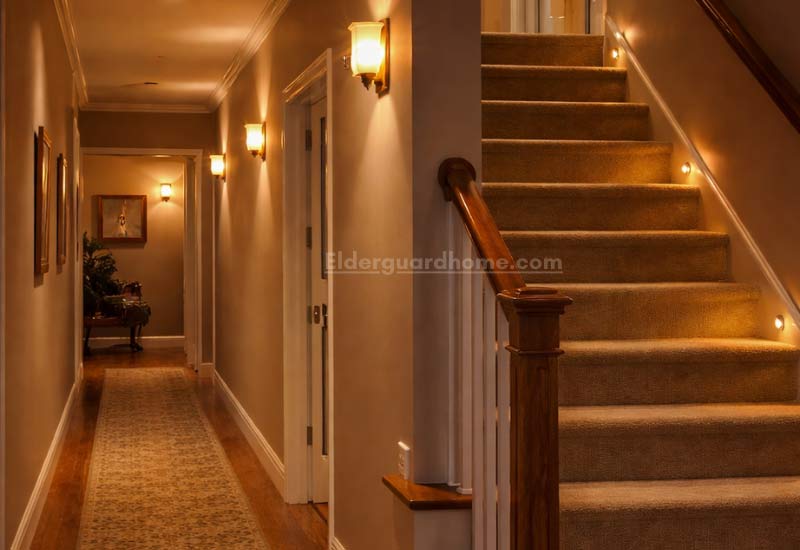
These areas are high-traffic zones and must stay evenly lit at all times.
What to do:
Install lights at both ends of hallways.
Add motion-sensor lights for nighttime walking.
Light stairs from the side, not directly overhead.
Avoid strong reflections on floors or steps.
Make sure handrails are clearly visible.
Specifically, replace any burnt-out bulbs as soon as possible.
Furthermore, use matte covers to stop bright light from bouncing.
Why it helps:
Consistent lighting reduces shadows and makes changes in floor height easier to see.
6. Entryway and Outdoor Path Lighting Action Steps
First and last steps of the day should always be well lit.
What to do:
Use bright lights near doors and entryways.
Add path lights along walkways.
Choose amber lights to reduce glare.
Keep bulbs clean and dust-free.
Replace flickering lights immediately.
Why it helps:
Clear outdoor lighting improves visibility and helps prevent slips when entering or leaving the home.
7. Laundry and Storage Area Lighting
These spaces are often overlooked but still need proper lighting.
What to do:
Add ceiling lights or LED strips.
Light up shelves and corners.
Use wide-angle bulbs to avoid dark spots.
Keep switches at an easy height.
Avoid placing lights directly behind doors.
Why it helps:
Better lighting helps you clearly see objects and move safely in smaller spaces.
💡 Final Tip: Walk the Home at Night
After making changes, walk through the home at night with lights on.
Check for shadows
Look for glare on floors
Make sure every step is clearly visible
Adjust lamp placement as needed
Small changes in lighting placement can make a big difference in daily comfort and safety.
Reducing Shadows in Senior Living Spaces
Large shadows can be very scary for some seniors. They can hide shoes, pets, or loose cords. Reducing shadows in senior living spaces creates a more open feel. You want the light to fill the whole room. Avoid having one bright spot and four dark corners. This “patchy” light is a common cause of trips.
How to Achieve Even Light Distribution in Hallways
Hallways are often the darkest parts of a home. Use multiple small lights instead of one big one. Space them out every few feet. This creates a “lane” of light for your walker. It removes the dark gaps between your ceiling fixtures. This simple change makes the walk much safer.
Using Floor Lamps to Fill Dark Corners Safely
Corner shadows make a room feel smaller and tighter. Place tall floor lamps in the corners of your lounge. Make sure the cords are tucked behind the furniture. A lamp with an upward-facing bowl is best. It bounces light off the ceiling to fill the room. This creates a soft glow without any harsh glare.
Smart Lighting Zones for Limited Mobility
Actually, modern technology makes home safety much easier today. For example, smart lighting zones for limited mobility can do the work for you. Specifically, you no longer need to reach for high wall switches in the dark. Instead, your lights can turn on as soon as you enter a room. Furthermore, this setup prevents many common trips before they ever happen.
Voice-Activated Lighting for Hands-Free Safety
Consequently, voice control is a great tool for seniors using walkers. For instance, you can simply tell your lights to turn on from bed. Because of this, you always have a clear path to the bathroom. In addition, you can keep both hands on your walker for better balance. Indeed, this simple change offers a huge boost to your daily independence.
Setting Up Automated Routines for Morning and Night
Similarly, you can set your home to a regular schedule. For example, your lights can dim slowly when the sun goes down. Next, they can switch to a soft amber glow late at night. Therefore, your house stays bright exactly when you need it most. Ultimately, these smart zones create a worry-free environment for everyone in the home.
Comparison: Standard Bulbs vs. Safe Home Lighting Design for Seniors 2026
| Feature | Standard Home Lighting | Safe Home Lighting Design for Seniors 2026 |
|---|---|---|
| Bulb Type | Simple bright white LEDs. | Frosted bulbs with warm tones. |
| Light Placement | Single bright ceiling fixtures. | Layered task and path lights. |
| Glare Level | High glare on shiny floors. | Soft light with zero reflections. |
| Control Style | Manual wall power switches. | Voice and motion sensor zones. |
| Night Safety | Dark hallways and high contrast. | Low-glow amber path lighting. |
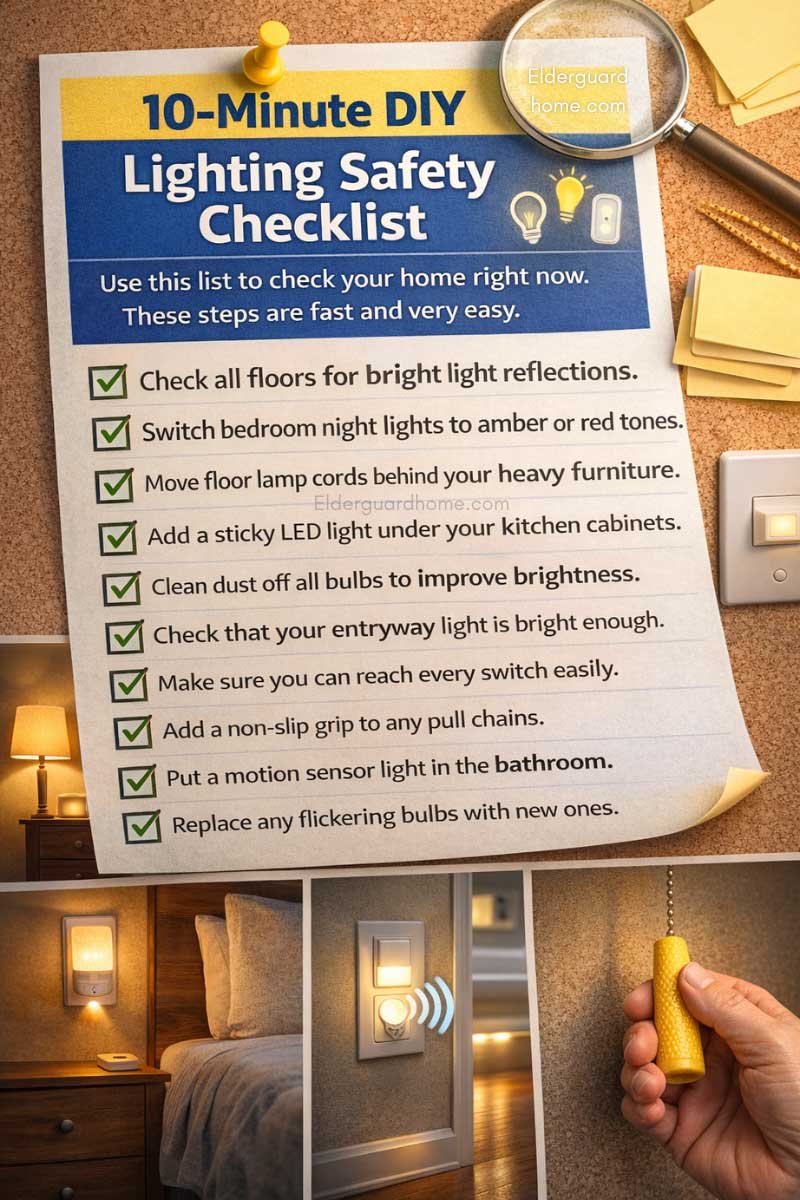
10-Minute DIY Lighting Safety Checklist
-
- Check all floors for bright light reflections.
- Switch bedroom night lights to amber or red tones.
- Move floor lamp cords behind your heavy furniture.
- Add a sticky LED light under your kitchen cabinets.
- Clean dust off all bulbs to improve brightness.
- Check that your entryway light is bright enough.
- Make sure you can reach every switch easily.
- Add a non-slip grip to any pull chains.
- Put a motion sensor light in the bathroom.
- Replace any flickering bulbs with new ones.
Pros and Cons of Automated Motion Sensors
Motion sensors are very popular in 2026 for senior homes. They turn on when they sense your movement.
✔Pros of Motion Sensors
- No Searching for Switches: The light finds you in the dark.
- Saves Energy: They turn off when the room is empty.
- Very Low Cost: You can buy “stick-on” units for cheap.
- Easy to Install: Most use simple tape or small screws.
✘ Cons of Motion Sensors
- Battery Changes: You must check the batteries every few months.
- Sudden Brightness: Some can be too bright if you wake up.
- False Triggers: A pet might turn them on at night.
💡 Expert Buyer’s Tip
Always look for sensors with a “dusk to dawn” feature. These units only turn on when the room is truly dark. This prevents lights from wasting power during the day. It also makes your batteries last twice as long. Choose adjustable brightness models to avoid a sudden glare at night.
Key Lighting Takeaways for a Safer Home
Use warm, glare-free lighting instead of harsh overhead bulbs.
Light walking paths from the side or below.
Focus on task lighting in kitchens and work areas.
Keep switches easy to reach.
Review lighting at night, not just during the day.
If you follow this checklist, you can make a perfect safe home lighting design for seniors in 2026.
FAQ About Senior Home Lighting
What is the best light color for night safety?
Warm amber or soft red is the best color choice. These colors do not hurt your night vision. They also do not wake your brain up like blue.
How do I stop light reflection on kitchen floors?
Use frosted bulbs instead of clear ones for overhead lights. You can also add “toe-kick” lighting under your bottom cabinets. This keeps the light low on the floor.Bright yellow or white usually provides the best contrast against dark wood or blue/grey carpets. For very light floors, use black or dark navy tape.
Where is the safest place for motion sensors?
Place them at ankle height along your hall and stairs. This ensures they see your feet moving immediately. It also keeps the light away from your eyes.
Does smart lighting help with limited mobility?
Yes, it allows you to control lights with your voice. You can also use a remote or a phone app. This removes the need to reach or stand up.
Final Thoughts from the ElderGuard Editorial Team
To summarize, creating a safe home lighting design for seniors 2026 is very important. Therefore, small changes can make a massive difference in your daily safety.
First, you should start by fixing the glare on shiny kitchen floors. Furthermore, you can add soft amber lights to guide your path at night. In addition, these steps will help you move with much more confidence.
Lighting is one of the most overlooked yet critical elements of fall prevention. However, proper illumination should be part of a broader home safety strategy that includes hazard removal, bathroom modifications, and emergency preparedness. For a complete checklist, explore our guide on home safety tips for elderly living alone.
Actually, you do not need to spend a lot of money to be safe. For example, most of these DIY fixes take less than ten minutes.
Similarly, you must remember that clear vision is your best tool against trips. Specifically, use our checklist to audit every room in your house this week. Finally, we want you to stay safe and independent in your own home.