
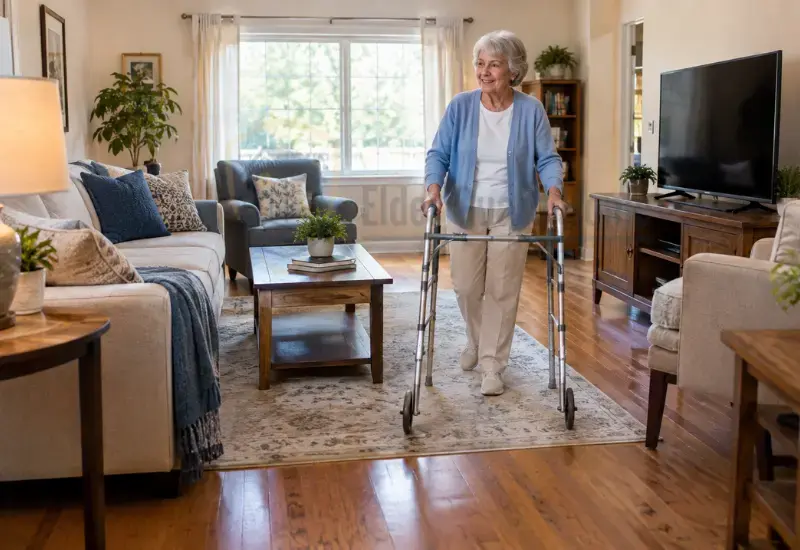
Why Living Room Furniture Layout Matters for Walker Users
Furniture placement can change how easily someone moves through a living room.
A senior using a walker needs enough space to move forward, turn, approach seating, and leave safely. Poor furniture placement can create narrow passages that make these movements harder.
The National Institute on Aging recommends arranging furniture and low coffee tables so they do not interfere with walking. It also recommends choosing sofas and chairs that are easy to enter and exit. NIA’s fall-prevention guidance provides additional home-safety recommendations.
A useful goal is not an empty room. The goal is a room where furniture supports normal daily movement.
Start by Mapping How Your Senior Actually Uses the Room
Before moving furniture, watch how the senior uses the living room.
Do not assume the most visually attractive arrangement will work best. The safest layout depends on the person’s walker, movement pattern, and daily routine.
Identify the Main Walking Route
Start at the doorway and follow the senior’s usual route.
Look for the path between the living room and:
- Bedroom
- Bathroom
- Kitchen
- Front door
- Favorite chair
- Sofa
- Television
- Dining area
Mark the routes that are used several times each day.
Mark the Most-Used Destinations
Some destinations matter more than others.
A senior may repeatedly walk between the sofa and bathroom. Another person may spend most of the day moving between a recliner and kitchen.
Design the main walking route around those repeated movements.
Watch How the Walker Moves Through the Room
Observe the walker without changing anything first.
Watch whether the senior:
- Walks straight
- Makes frequent turns
- Backs up
- Turns around furniture
- Approaches chairs from the side
- Uses furniture for support
- Lifts the walker over obstacles
These observations can reveal problems that measurements alone may miss.
Identify Places Where the Walker Currently Gets Stuck
Look for repeated contact between the walker and furniture.
Pay attention to:
- Chair legs
- Coffee tables
- Sofa corners
- Side tables
- Floor lamps
- Rugs
- Cords
- Doorways
These locations should receive priority during rearrangement.
Create a Clear Walker-Friendly Path Through the Living Room

The main walking route should be as predictable as possible.
Avoid creating unnecessary turns between frequently used areas. A direct route usually makes everyday movement simpler.
Keep the Main Walking Route Straight When Possible
A straight route reduces unnecessary maneuvering.
Position larger furniture along the room’s edges when practical. Keep the center or main route open when that matches the senior’s routine.
Avoid Narrow Gaps Between Furniture
Two pieces of furniture can create a difficult passage even when each piece looks harmless.
Check the narrowest point between:
- Sofa and wall
- Sofa and table
- Chair and coffee table
- Chair and side table
- Furniture and doorway
The U.S. Access Board specifies 36 inches as the minimum clear width for accessible walking surfaces. However, this is an accessibility standard, not a universal walker-specific residential safety rule.
Use the senior’s actual walker to confirm whether the available space works comfortably.
Keep Doorways and Room Entrances Clear
Avoid placing furniture where it interferes with a doorway approach.
The senior should have enough space to approach the doorway without making a sharp turn around furniture.
Do Not Force the Walker Around the Coffee Table
Coffee tables often become unnecessary obstacles.
If the senior must walk around the table to reach another room, reconsider its position.
Sometimes moving the table closer to the sofa works. Sometimes removing it creates a much better route.
Leave Space for Turning
Turning requires more room than straight walking.
A narrow route may work in one direction but fail when the senior needs to turn around.
Pay particular attention to turns near:
- Sofas
- Recliners
- Doorways
- Television areas
- Hallway entrances
Where Should the Sofa Go?
The sofa usually occupies a large part of the living room.
Its position can therefore determine the entire walking route.
Keep the Sofa Out of the Main Walking Path
Avoid placing the sofa across a frequently used route.
The senior should not need to walk around the sofa to reach another room.
Leave Clear Space in Front of the Sofa
The senior needs space to approach the sofa with the walker.
Allow enough room for the walker to reach the seating position without hitting the coffee table.
Check the Space Beside the Sofa
Side access may become important when the senior stands or sits.
Keep nearby tables, baskets, and lamps from creating a tight passage.
Make Sure the Walker Can Approach the Sofa Straight On
A direct approach is often easier than a diagonal approach.
If the senior must angle the walker sharply before sitting, reposition the sofa or nearby furniture.
Avoid Placing the Sofa Against an Important Walking Route
A sofa should define the room without blocking its main circulation path.
If the sofa creates a narrow corridor, test another position.
How to Position Chairs for a Senior Using a Walker
Individual chairs require careful positioning.
The senior should have a clear approach and enough space to sit and stand.
Choose Chairs With Stable Armrests
Armrests can provide useful support during sitting and standing.
Choose stable furniture that does not slide easily when weight is applied.
Avoid Very Low Chairs
Very low seating can make standing more difficult.
The correct seat height depends on the individual person’s mobility and physical needs.
Give the Walker Space Beside the Chair
The walker needs a predictable position when the senior sits down.
Do not trap the walker between the chair and another piece of furniture.
Leave a Clear Approach to the Seat
The senior should not need to approach the chair from an awkward angle.
Move nearby tables or decorative furniture when they interfere with the approach.
Avoid Angling Chairs Into Walking Paths
A chair angled into the main route can reduce usable clearance.
It can also create an unexpected corner for the walker to contact.
Where Should You Put the Coffee Table?
Coffee tables can be useful but often interfere with walker movement.
Do You Need a Coffee Table at All?
Ask whether the table provides enough daily value to justify its floor space.
If it repeatedly blocks movement, removing it may be more practical.
Keep the Coffee Table Away From the Main Walker Route
Do not place the table directly inside a frequently used path.
Keep the route between seating and other rooms as open as possible.
Avoid Sharp Corners in Tight Areas
Sharp corners become more problematic when the walker has little clearance.
Consider rounded furniture when replacement is necessary.
Check the Space Between the Table and Sofa
A sofa and coffee table can create a narrow corridor.
Test the actual walker through this space before finalizing the layout.
Test the Walker Before Finalizing the Position
Push the walker through the route at a normal pace.
Test both approaching and leaving the seating area.
How to Arrange Side Tables and End Tables
Small tables can create surprisingly difficult obstacles.
Keep Frequently Used Items Within Easy Reach
Place commonly used items where the senior can reach them safely.
Examples include:
- Remote controls
- Telephone
- Water
- Reading materials
- Lamp controls
Do Not Let Tables Narrow the Walking Path
Move side tables away from the main route.
A small table can still interfere with walker wheels.
Avoid Lightweight Tables That Move Easily
A table that slides can become unstable during everyday use.
Choose stable furniture that does not shift easily.
Check Table Corners and Edges
Look for corners that project into walking areas.
Reposition the table if the senior repeatedly passes close to it.
Keep Table Lamps and Cords Out of the Walker Path
Electrical cords should not cross walking routes.
CDC guidance recommends keeping cords next to walls and away from walking paths. CDC’s home fall-prevention checklist provides additional safety guidance.
How to Position a Recliner for a Senior Using a Walker
Recliners need special attention because they occupy more space when opened.
Leave Space Behind the Recliner
Check whether the recliner blocks a wall route or doorway.
Allow enough clearance for normal operation.
Leave Space Beside the Recliner
The senior needs room to approach and leave the chair.
Avoid placing another chair directly beside it.
Check the Footrest Area
Open the recliner fully during testing.
Make sure the extended footrest does not block the walking route.
Make Sure the Recliner Does Not Block the Main Path
A recliner should not become an obstacle when occupied.
Keep it outside the main route whenever possible.
Test the Walker With the Recliner Fully Open
Test the room in the same condition used during everyday activities.
A clear route beside a closed recliner may disappear when the footrest opens.
Where Should the Television Go?
Television placement affects both furniture arrangement and safe movement. Keep the viewing area comfortable without blocking the senior’s main walking route.
Avoid Placing Furniture Across the TV Viewing Route
- Keep the route between the seating area and other rooms clear.
- Avoid placing chairs or tables where they obstruct the walking path.
- Leave enough space for the walker to pass without sharp turns.
Keep Remote Controls Easy to Reach
- Place the remote within comfortable reach from the usual seat.
- Avoid requiring the senior to lean far forward or sideways.
- Keep commonly used controls on a stable nearby surface.
Prevent Television Cords From Crossing Walking Paths
- Route television cords along the wall whenever possible.
- Keep loose cords away from walker wheels.
- Avoid running cords across open walking areas.
- Check the cords again after moving furniture.
Reduce Glare Without Creating Dark Areas
- Position the television to reduce strong reflections from windows or lamps.
- Avoid creating dark areas along the walking route.
- Check visibility from the senior’s normal seating position.
- Test the room during both daytime and evening conditions.
What to Do With Rugs in a Walker-Friendly Living Room
Rugs can change how a walker moves across the floor.
The NIA recommends avoiding throw rugs and small area rugs as part of fall prevention.
CDC guidance also identifies loose rugs as hazards and recommends removing them or securing them appropriately.
Check Whether the Rug Slides
Push the rug lightly with your shoe.
Look for movement, bunching, or shifting edges.
Check the Rug Edges
Raised edges can interfere with walker wheels.
Inspect every edge along the senior’s walking route.
Check the Rug Thickness
A thick rug can change walker movement.
Test the actual walker rather than judging the rug visually.
Test the Walker Across the Rug
Move the walker across the rug from different directions.
Watch whether the front wheels catch or change direction.
Consider Removing a Problem Rug
If a rug repeatedly interferes with movement, removal may be the simplest solution.
Safety should take priority over keeping decorative floor coverings.
Use a Properly Fitted Rug Pad When Appropriate
Some rugs may be secured with an appropriate non-slip pad.
Our guide to Best Non-Slip Rug Pads for Hardwood Floors for Seniors explains features to consider.
You can also see How to Make a Rug Safe for an Elderly Parent Without Removing It for additional practical guidance.
How to Keep Electrical Cords Out of Walker Paths
Electrical cords can create avoidable obstacles.
Identify Every Cord Crossing the Room
Walk through the room and inspect every visible cord.
Include lamp, television, charger, telephone, and extension cords.
Move Lamps Away From Walking Routes
A lamp may be useful but poorly positioned.
Move it when its cord crosses a walking route.
Secure Cords Along Safe Edges
Keep cords close to walls where practical.
Avoid creating loose loops near furniture.
Do Not Run Cords Under Rugs
Do not use rugs to hide cords across walking routes.
This can create an unseen obstacle and complicate rug movement.
Check Behind Furniture After Rearranging
Moving furniture can expose previously hidden cords.
Inspect the entire route again after completing the layout.
How Lighting Changes the Safety of Your Furniture Layout
Furniture arrangement and lighting should be considered together.
A clear route can still be difficult to navigate if it is poorly illuminated.
Light the Main Walker Path
Provide sufficient lighting along frequently used routes.
Pay particular attention to transitions between rooms.
Reduce Dark Areas Behind Furniture
Large furniture can create shadows.
Check the room from the senior’s normal walking position.
Avoid Glare on Hardwood Floors
Bright reflections can make some surfaces harder to read visually.
Adjust lamp placement when glare interferes with floor visibility.
Light the Route to Frequently Used Seating
The route to a favorite chair should remain easy to see.
This becomes especially important during early morning or evening movement.
Check the Room at Night
Turn off the main lights and test the route.
Use appropriate night lighting when the senior regularly walks through the room after dark.
For more detailed guidance, see Safe Home Lighting Design for Seniors.
You can also review Night Lights for Elderly Adults for nighttime pathway lighting.
What Furniture Should You Remove From a Walker's Path?
Removing unnecessary furniture can create more usable space.
Look for items that rarely serve a practical purpose.
Consider removing or relocating:
- Decorative tables
- Extra chairs
- Floor baskets
- Magazine racks
- Footstools
- Plant stands
- Oversized lamps
- Decorative storage
- Unused furniture
- Pet items
Do not remove useful furniture simply because it takes up space.
Instead, ask whether each item interferes with a frequently used route.
How to Arrange Furniture Around a Senior's Favorite Chair
A familiar chair can support comfort and independence when its surrounding space is arranged carefully. Keep the chair accessible without creating obstacles around the senior’s daily walking route.
Keep the Chair in a Familiar Location
- Keep the chair where the senior normally uses it.
- Avoid moving it without a clear safety reason.
- Make sure the surrounding area stays uncluttered.
- Keep frequently used items nearby.
Create a Direct Walker Approach
- Leave a clear path toward the chair.
- Avoid placing tables directly in front of the chair.
- Keep nearby furniture from narrowing the approach.
- Make sure the walker can approach without sharp turns.
- Test the approach using the senior’s actual walker.
Put Frequently Used Items Within Reach
- Keep the remote control within easy reach.
- Place reading materials on a stable nearby table.
- Keep a phone within comfortable reach.
- Avoid requiring the senior to lean or stretch.
- Keep essential items accessible from the seated position.
Keep the Bathroom and Bedroom Route Clear
- Check the path between the chair and frequently used rooms.
- Keep furniture outside the main walking route.
- Remove baskets, footstools, and other temporary obstacles.
- Keep electrical cords away from the walker path.
- Check the route during both daytime and nighttime.
Check the Chair After Every Major Furniture Change
- Walk the route with the senior’s actual walker.
- Test approaching the chair from each direction.
- Check space around the chair after moving nearby furniture.
- Make sure the chair remains easy to enter and leave.
- Recheck the route after adding rugs, tables, lamps, or other furniture.
How to Arrange a Small Living Room for a Senior Using a Walker
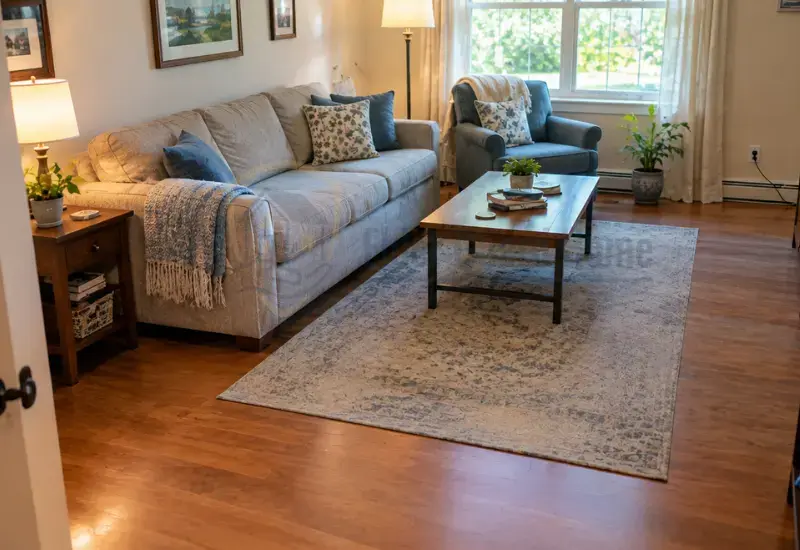
Small rooms require careful prioritization.
Do not try to preserve every existing furniture piece.
Start With the Main Walking Route
Identify the most important route first.
Then arrange furniture around that route.
Remove Furniture Before Buying New Furniture
You may solve the problem without purchasing anything.
Try removing unnecessary pieces before replacing furniture.
Choose Smaller Pieces When Necessary
Large furniture can consume valuable circulation space.
Consider appropriately sized pieces when replacement becomes necessary.
Use Wall Space Instead of Floor Space
Wall-mounted storage can reduce floor obstacles.
This may help preserve walking space.
Avoid Creating a Single Narrow Corridor
Do not simply squeeze furniture against opposite walls.
The senior may need turning space at the ends.
How to Arrange a Large Living Room for a Senior Using a Walker
Large rooms create different challenges.
Too much open space can make routes unclear or unnecessarily long.
Create One Predictable Main Route
Establish a clear route between frequently used destinations.
Avoid making the senior choose between several confusing pathways.
Divide the Room Into Functional Zones
Create separate areas for:
- Television
- Reading
- Conversation
- Rest
- Storage
Keep the main route connecting these areas clear.
Keep Furniture From Creating Dead Ends
Avoid arrangements that require backing up.
Give the walker a clear way out of each seating area.
Provide Clear Routes Between Seating Areas
Check movement between every frequently used chair.
Do not assume a large room automatically provides good access.
Check Long Walking Distances
A large room may require unnecessary walking.
Place frequently used furniture according to the senior’s actual routine.
Test the Living Room With the Actual Walker
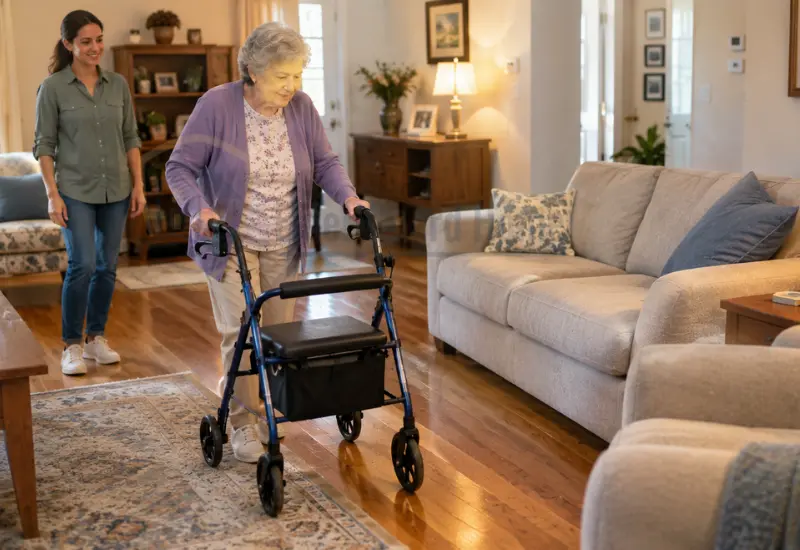
Testing the layout with the senior’s actual walker can reveal problems that measurements may miss. Check normal movements, turns, seating approaches, and common routes.
Test the Main Route
- Walk through the main route using the actual walker.
- Check whether the walker moves without hitting furniture.
- Make sure the route remains clear from room to room.
- Watch for rugs, cords, corners, and narrow spaces.
- Repeat the test at the senior’s normal walking speed.
Test Every Turn
- Test each turn the senior makes during normal activities.
- Check whether the walker has enough room to change direction.
- Watch for furniture corners that restrict movement.
- Test turns near sofas, chairs, tables, and doorways.
- Reposition furniture if turns require awkward movements.
Test Approaching the Sofa
- Approach the sofa with the walker from the usual direction.
- Check whether the walker can reach the seating area comfortably.
- Make sure nearby tables do not block the approach.
- Check whether the senior can position the walker safely.
- Test both sitting down and standing up.
Test Approaching the Favorite Chair
- Approach the chair using the senior’s normal route.
- Check whether furniture blocks direct access.
- Make sure there is enough space beside the chair.
- Test the approach from different directions when needed.
- Check whether the senior can sit and stand comfortably.
Test Getting Around the Coffee Table
- Walk around the coffee table using the actual walker.
- Check whether the table creates a narrow passage.
- Test movement around each side of the table.
- Watch for walker wheels catching on nearby furniture.
- Move or remove the table if it repeatedly obstructs movement.
Test From Both Directions
- Test the main route in both directions.
- Check movement toward and away from frequently used rooms.
- Test routes during normal daily activities.
- Watch for problems that appear from only one direction.
- Reassess the layout after making any changes.
Watch the Senior’s Body Position
- Watch whether the senior leans around furniture.
- Notice if they turn sideways to pass through gaps.
- Check whether they lift or tilt the walker.
- Watch if they reach for furniture while walking.
- Look for hesitation before turns or narrow spaces.
- Treat repeated awkward movements as signs to reassess the layout.
Signs Your Living Room Layout Is Not Working
A living room layout may look clear but still create problems during normal movement. Watch how the senior and walker actually move through the room.
The Walker Frequently Hits Furniture
- Notice repeated contact with sofas, chairs, or tables.
- Check whether furniture sits too close to the walking path.
- Look for marks showing repeated walker contact.
- Move the furniture if contact happens regularly.
Your Senior Has to Turn Sideways
- Watch whether the senior turns sideways to pass furniture.
- Check narrow gaps between sofas, tables, and walls.
- Look for awkward movements around corners.
- Create more space where possible.
Your Senior Lifts or Tilts the Walker
- Watch for lifting the walker over obstacles.
- Notice whether the walker gets caught on furniture.
- Check for rugs, cords, or floor transitions.
- Remove or reposition the obstacle causing the problem.
Your Senior Uses Furniture for Support
- Notice if the senior grabs furniture while walking.
- Check whether the walking route feels difficult to navigate.
- Look for unstable tables or lightweight furniture.
- Consider professional assessment if this happens repeatedly.
Your Senior Avoids Certain Parts of the Room
- Notice areas the senior stops using.
- Check whether furniture blocks access to those areas.
- Look for narrow paths or difficult turns.
- Rearrange furniture to restore easier access.
The Walker Gets Caught on Rugs or Furniture
- Check rug edges, thickness, and movement.
- Look for furniture legs blocking walker wheels.
- Check whether cords cross the walking path.
- Secure, move, replace, or remove the problem item.
Your Senior Has Difficulty Sitting or Standing
- Watch the approach to frequently used seating.
- Check whether nearby furniture restricts movement.
- Make sure chairs provide stable armrests when appropriate.
- Keep enough space for the walker beside the seat.
The Main Path Becomes Blocked During Normal Activities
- Check whether daily activities move furniture into the path.
- Watch for footstools, baskets, blankets, or temporary items.
- Keep frequently used objects outside the walking route.
- Recheck the room after normal daily activities.
Common Living Room Furniture Layout Mistakes
Small furniture placement mistakes can make a living room harder to navigate. Check the entire room instead of focusing on one piece of furniture.
- Blocking the main walking route: Keep the primary walker path clear between frequently used rooms.
- Creating narrow gaps: Avoid tight spaces between sofas, chairs, tables, and walls.
- Placing the coffee table in the walker path: Move or remove tables that obstruct normal movement.
- Angling chairs into walking routes: Position chairs so they do not restrict the main path.
- Leaving furniture too close to doorways: Keep entrances clear for easier walker access.
- Using unstable tables for support: Avoid lightweight tables that could move if grabbed.
- Ignoring rugs and floor edges: Check for sliding rugs, raised edges, and thick surfaces.
- Leaving electrical cords across paths: Route cords away from areas used by the walker.
- Creating dark areas behind furniture: Provide enough lighting along important walking routes.
- Forgetting turning space: Check whether the senior can turn the walker without hitting furniture.
- Arranging furniture for appearance only: Prioritize safe movement over visual symmetry.
- Not testing the finished layout: Walk through the room using the senior’s actual walker.
- Ignoring daily changes: Recheck the layout when furniture or frequently used items move.
When Should You Rearrange the Living Room Again?
A living room should be reassessed when the senior’s needs change.
Consider another review after:
- Getting a new walker
- Switching to a different walker
- A mobility change
- A fall or near-fall
- Buying new furniture
- Replacing a chair
- Adding or removing a rug
- Changes in vision
- Changes in caregiving routines
- Changes to bedroom or bathroom access
A layout that worked six months ago may not work after a meaningful mobility change.
For broader planning, see our Aging in Place Safely guide.
A 10-Minute Walker-Friendly Living Room Check
Use this quick check after arranging the room.
- ☐ Main walking path is clear.
- ☐ Furniture does not create narrow passages.
- ☐ Walker can approach the main seating.
- ☐ Walker can turn without hitting furniture.
- ☐ Coffee table does not block the route.
- ☐ Rugs are stable and do not catch walker wheels.
- ☐ Cords stay outside walking paths.
- ☐ Lighting covers the main walking route.
- ☐ Frequently used items are within comfortable reach.
- ☐ Senior can use the room without relying on furniture.
For a broader room-by-room review, use our Printable Home Safety Checklist for Seniors.
Living Room Furniture Layout: Quick Decision Guide
| Problem | What to Check | Possible Action |
|---|---|---|
| Walker hits sofa | Sofa position | Move sofa away from the main route |
| Tight turn | Furniture spacing | Create more turning space |
| Coffee table blocks route | Table position | Move or remove the table |
| Chair is difficult to approach | Chair angle and surrounding furniture | Reposition the chair |
| Rug catches walker | Rug edge, thickness, and movement | Secure, replace, or remove the rug |
| Cord crosses walking path | Lamp or television location | Reroute or secure the cord |
| Walking area is dark | Lighting coverage | Add or reposition lighting |
| Senior uses furniture for support | Furniture stability and route | Reassess the layout and mobility needs |
Frequently Asked Questions
How should I arrange living room furniture for a senior using a walker?
Start with the senior’s most-used walking route.
Keep that route clear and arrange furniture around it. Then test the layout using the actual walker.
How much space should a walker have between furniture?
There is no single residential clearance that works for every walker user.
The U.S. Access Board specifies 36 inches for accessible walking surfaces. However, individual walker dimensions and turning needs can require different space.
What is the best living room layout for a senior using a walker?
The best layout provides predictable routes between frequently used destinations.
It should also allow comfortable turns and easy access to seating.
Where should I put a coffee table for a senior using a walker?
Place the coffee table outside the main walking route.
If it repeatedly interferes with movement, consider removing it.
Should I remove the coffee table for a senior using a walker?
Not necessarily.
Keep it if the senior can move around it comfortably. Remove it if it creates repeated navigation problems.
How wide should a walking path be for a senior using a walker?
Use accessibility standards as a useful reference, not as a universal residential walker rule.
The U.S. Access Board specifies 36 inches for accessible walking surfaces. Turns and other maneuvers can require additional clearance.
Should a senior using a walker have a recliner?
A recliner can be appropriate when it provides comfortable, stable seating.
The important issue is whether the recliner leaves enough room for safe approach and exit.
How do I make a small living room walker-friendly?
Start by protecting the main walking route.
Remove unnecessary furniture before buying replacements. Then test the remaining arrangement with the actual walker.
Should I remove rugs from a living room used by a walker?
Consider removing rugs that interfere with walker movement.
NIA recommends avoiding throw rugs and small area rugs. CDC guidance also recommends removing loose rugs or securing them appropriately.
How can I keep furniture from blocking a walker?
Map the senior’s most-used routes before positioning furniture.
Keep sofas, chairs, tables, and decorative items outside those routes.
Final Thoughts
Learning how to arrange living room furniture for a senior using a walker starts with the person’s daily routine.
Create a clear route before arranging decorative furniture. Give the senior enough space to approach seating, turn, and leave comfortably.
Then test the room with the actual walker.
Check furniture, rugs, cords, lighting, and floor transitions together. A successful arrangement should make everyday movement more predictable without making the living room feel empty.
If you are planning broader home changes, continue with our Aging in Place Safely guide.