

Caring for an aging parent from a distance can create constant worry.
You may wonder whether your parent fell, forgot medication, or left something dangerous running.
You cannot remove every risk from an older adult’s home.
However, you can create a practical system that reduces avoidable risks.
The goal should remain safer independence rather than complete control.
The National Institute on Aging recommends room-by-room safety checks and organized caregiving responsibilities.
This guide explains how to build that safety system step by step.
Why Keeping an Aging Parent Safe Can Feel So Difficult
Caring for an aging parent can feel difficult when you cannot be there every day. You may worry about falls, medication mistakes, kitchen accidents, or emergencies.
You also want your parent to remain independent and comfortable at home. That balance can make safety decisions feel complicated.
The Main Challenges Caregivers Face
Several concerns can make home safety harder to manage:
- You cannot monitor your parent constantly.
- Your parent may minimize new safety problems.
- Small mobility changes can create new fall risks.
- Medication routines may become harder to manage.
- Emergency plans may not exist before something happens.
- Safety devices can feel intrusive or controlling.
- Family members may disagree about the right level of support.
The goal is not to remove every risk from your parent’s home. The goal is to reduce preventable risks while preserving independence.
Start with the areas that create the greatest concern. Then build simple routines around those risks.
A practical plan can include home safety changes, emergency contacts, regular check-ins, and appropriate monitoring. This approach gives caregivers more confidence without making every decision for their parent.
Start With a Complete Home Safety Assessment to keep elderly parent safe at home
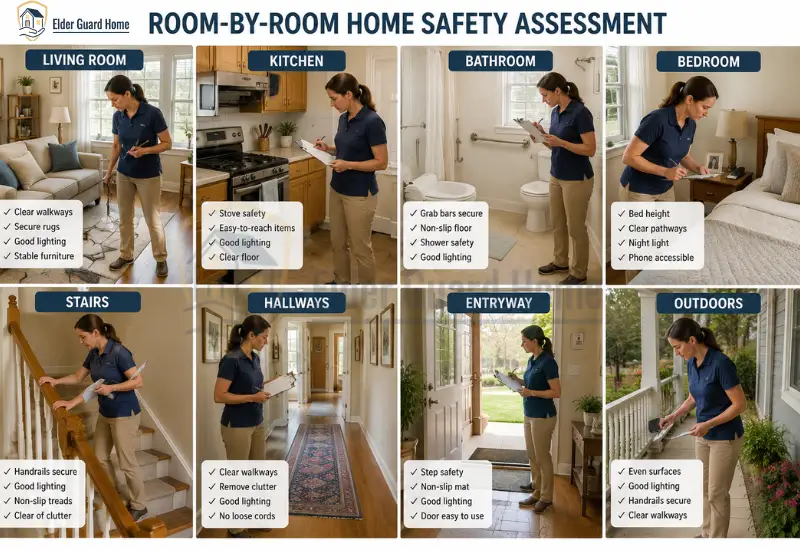
Before buying safety products, inspect how your parent actually uses their home.
Walk through every room and look for hazards affecting movement, visibility, and daily activities.
The National Institute on Aging provides a room-by-room home safety checklist for caregivers.
Check These Areas First
- Bathroom: Check wet floors, shower access, toilets, and support points.
- Bedroom: Check nighttime lighting and the path toward the bathroom.
- Kitchen: Check appliances, cookware, sharp objects, and reaching hazards.
- Stairs: Check handrails, lighting, loose carpeting, and uneven steps.
- Hallways: Remove clutter, cords, and poorly positioned furniture.
- Living areas: Check rugs, furniture placement, and walking paths.
- Entryways: Check thresholds, steps, lighting, and outdoor surfaces.
- Outdoor areas: Check walkways, steps, railings, and slippery surfaces.
Don’t try to fix everything simultaneously.
Start with hazards that could cause serious injury or prevent emergency response.
You can use the senior home safety checklist to organize your assessment.
Reduce Fall Risks Before They Cause an Emergency
Falls can threaten independence and make living alone more difficult.
CDC recommends removing trip hazards, improving lighting, and adding appropriate bathroom and stair supports.
Focus on the Places Your Parent Uses Most
Start with the routes your parent walks repeatedly.
Check the path between the bed, bathroom, kitchen, and main seating area.
Look for:
- Loose rugs
- Clutter
- Electrical cords
- Poor lighting
- Uneven flooring
- Broken steps
- Unstable furniture
- Slippery bathroom surfaces
- Missing handrails
- Difficult shower transfers
Don’t assume a product automatically makes an area safer.
Choose support based on your parent’s actual mobility and balance needs.
CDC also recommends discussing fall risks, medications, vision, and balance with healthcare professionals.
For more detailed guidance, see your senior home safety tips.
Make the Bathroom Safer for fall prevention for seniors

Bathrooms combine wet surfaces, transfers, tight spaces, and frequent movement.
That combination deserves careful attention when an elderly parent lives alone.
CDC recommends grab bars near toilets and inside and outside bathing areas.
Choose Support Based on Your Parent’s Needs
| Problem | Possible solution |
|---|---|
| Difficulty standing | Shower chair |
| Poor balance | Properly installed grab bars |
| Difficult shower entry | Safer shower access |
| Wet-floor concern | Appropriate nonslip surfaces |
| Nighttime bathroom trips | Better pathway lighting |
Don’t treat every bathroom product as a fall-prevention solution.
Suction grab rails should not replace properly installed grab bars when fall-arrest support is needed.
You can learn more about ADA-compliant grab bars and grab-bar heights.
For seating, see the best shower benches for elderly adults.
Make the Kitchen Safer for an Aging Parent
Kitchen risks can increase when memory, vision, strength, or coordination changes.
Pay particular attention to appliances, hot liquids, cookware, and frequently used cabinets.
Watch for Changes in Kitchen Habits
Look for signs such as:
- Forgetting cooking steps
- Leaving burners running
- Repeated spills
- Difficulty lifting cookware
- Difficulty reading appliance controls
- Confusion around familiar appliances
Move frequently used items to easier-to-reach locations.
Avoid making your parent climb chairs or unstable furniture.
If tremors affect pouring, consider whether a safer kettle design could reduce lifting.
Your safe electric kettle guide explains accessible options.
For memory-related concerns, read the dementia kitchen safety guide.
NIA identifies forgotten stoves and faucets as important safety concerns for people with Alzheimer’s disease.
Make the Bedroom Safer at Night
Nighttime movement can become harder when your parent wakes suddenly.
Poor lighting can also make obstacles and changes in flooring harder to see.
Keep Emergency Items Within Easy Reach
Place important items where your parent can reach them safely.
Consider keeping these nearby:
- Phone
- Emergency alert device
- Glasses
- Flashlight
- Important contact information
Keep the route between the bed and bathroom clear.
Add suitable lighting along that route.
CDC’s home fall-prevention checklist specifically recommends accessible bedside lighting and nightlights.
Don’t automatically add a bed rail because your parent gets out of bed.
Assess whether the rail could introduce additional risks.
Read our guide to bed rails for elderly adults before choosing one.
Create an Emergency Plan for keeping aging parents safe
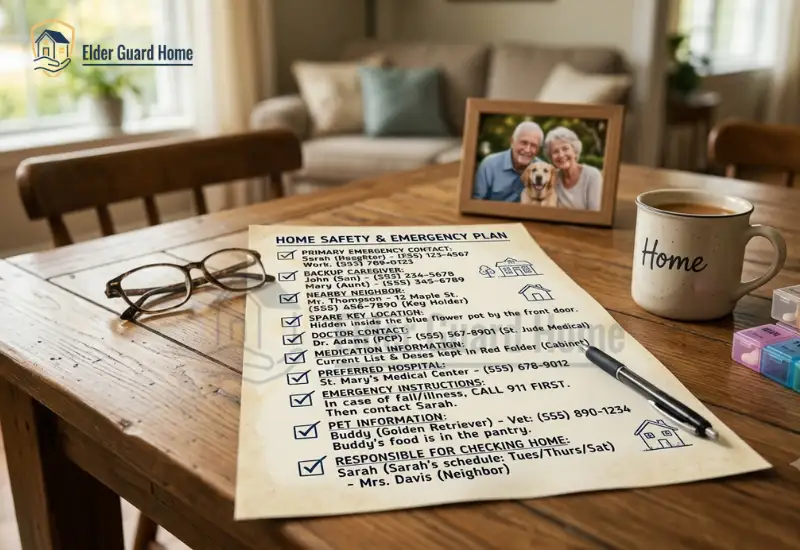
A home safety plan should answer one critical question.
What happens if your parent needs help and you cannot reach them?
Write the answers down before an emergency occurs.
Put These Details in the Plan
- Primary emergency contact
- Backup caregiver
- Nearby neighbor
- Spare key location
- Doctor contact
- Medication information
- Preferred hospital
- Emergency instructions
- Pet information
- Person responsible for checking the home
Keep important information accessible to authorized caregivers.
NIA provides worksheets for coordinating responsibilities, medications, and important documents.
Decide What Happens If Your Parent Does Not Answer
Create a simple escalation process.
Call → text → nearby contact → wellness check → emergency services when appropriate.
Local emergency procedures can vary.
Use your local emergency services guidance rather than assuming one process works everywhere.
See our guide on requesting a wellness check for additional planning help.
Decide Whether Your Parent Needs Home Monitoring

Technology can provide additional support when you cannot visit regularly.
However, not every older adult needs the same monitoring approach.
Match Monitoring to the Risk
Independent parent: Scheduled phone calls may provide enough support.
Missed calls: Automated reminders or additional check-ins may help.
Fall concerns: Consider an appropriate medical alert system.
Wearable refusal: Explore suitable non-wearable monitoring options.
Wandering concerns: Discuss appropriate location technology with professionals.
Nighttime concerns: Consider monitoring that fits your family’s privacy expectations.
Technology should support caregiving, not replace human contact.
NIA explains that emergency medical alert systems cannot replace regular caregiver check-ins.
Explore our in-home medical alert systems guide for more information.
You can also compare our MobileHelp medical alert system review.
Build a Simple Check-In Routine
A consistent routine can help you notice changes before they become emergencies.
Your routine should match your parent’s needs and your available support.
What to Check During Each Visit
Look for changes in:
- Food supplies
- Medication routines
- Bathroom conditions
- Flooring
- Lighting
- Appliance use
- Mobility
- Mood
- Injuries
- Home cleanliness
Don’t inspect only the physical environment.
Notice whether familiar tasks now seem unusually difficult.
What to Check During a Phone Call
Avoid asking only:
“Are you okay?”
Ask specific questions instead.
Try:
- What did you eat today?
- Did you go outside?
- Did anything make you dizzy?
- Did you have trouble getting into the shower?
- Did anything break at home?
Specific questions can reveal problems your parent might not mention voluntarily.
A regular routine also gives you a baseline for noticing changes.
Watch for Changes That Affect Home Safety
Some home-safety problems may reflect changes outside the physical environment.
New dizziness, confusion, weakness, or sleepiness can affect daily safety.
Don’t Assume a Safety Problem Is Only a Home Problem
Pay attention when your parent suddenly struggles with familiar activities.
Examples include:
- New balance problems
- Repeated falls
- New confusion
- Medication mistakes
- Difficulty seeing obstacles
- Unusual sleepiness
- Difficulty using familiar appliances
Ask the appropriate healthcare professional about concerning changes.
CDC recommends medication reviews because some medicines can cause dizziness or sleepiness.
Vision can also affect fall risk.
CDC recommends regular eye examinations and appropriate eyewear for older adults.
A new safety problem may signal a change in health, mobility, vision, cognition, or medications.
What If Your Parent Refuses Safety Changes?
Many caregivers struggle when parents reject safety recommendations.
Pushing harder can sometimes create more resistance.
Start With Independence, Not Fear
Avoid opening with:
“You can’t live alone anymore.”
Instead, ask:
“What would make things easier for you at home?”
This approach keeps your parent involved in the decision.
Introduce One Change at a Time
Start with one practical problem.
Consider:
- Better lighting
- A properly installed grab bar
- A shower chair
- Easier appliance controls
- Emergency communication
Let Your Parent Participate
Offer choices instead of issuing orders.
Explain what each change solves.
The goal is safer independence, not taking control away.
NIA also recommends considering what an older adult can do independently and where they need assistance.
How to Keep an Elderly Parent Safe From Far Away
Long-distance caregiving requires more planning because you cannot respond personally.
Build a local support network before you need it.
Build a Local Support Network
Your network might include:
- A nearby relative
- Trusted neighbor
- Friend
- Professional caregiver
- Healthcare provider
- Pharmacy
- Transportation service
- Emergency contact
- Home monitoring system
Keep everyone’s contact information current.
Make sure each person understands their specific responsibility.
NIA recommends coordinating caregiving responsibilities among family and friends.
Technology can help with communication, but it should not become the entire care plan.
Your parent needs a human backup when technology fails or circumstances change.
Signs Your Elderly Parent May No Longer Be Safe Alone
Living alone can remain appropriate while your parent manages daily activities safely.
The situation can change as mobility, memory, judgment, or health changes.
Watch for Repeated Warning Signs
Look for patterns involving:
- Repeated falls
- Medication mistakes
- Leaving appliances running
- Increasing confusion
- Wandering
- Unexplained injuries
- Missed appointments
- Poor nutrition
- Difficulty with personal care
- Repeated emergencies
- Unanswered calls
- Increasing difficulty with everyday tasks
Harvard Health highlights difficulties with medications, bills, groceries, appliances, paperwork, and decisions.
One Problem Does Not Automatically Mean Moving Out
Consider the frequency, severity, and progression of each problem.
A single mistake may require a simple safety change.
Repeated problems may indicate that your parent needs additional support.
Discuss significant changes with appropriate healthcare professionals and trusted family members.
Create a Simple Senior Home Safety Plan
A good safety plan brings separate precautions into one system.
It should also change as your parent’s needs change.
Your Parent’s Safety Plan Should Include
Home
- Fall prevention
- Bathroom safety
- Kitchen safety
- Lighting
Health
- Medication information
- Mobility concerns
- Vision needs
- Healthcare contacts
Communication
- Check-in schedule
- Emergency contact
- Backup caregiver
Technology
- Emergency alert system
- Monitoring
- Reliable phone access
Emergency
- Wellness-check process
- Spare key
- Emergency instructions
NIA recommends keeping medication information and important documents organized for caregivers and healthcare providers.
Review the plan whenever your parent’s abilities or circumstances change.
A 10-Minute Weekly Safety Check
You don’t need a complicated inspection every week.
A short, consistent review can help you notice important changes.
Ask These 10 Questions
- Has your parent fallen recently?
- Have they experienced new dizziness?
- Have any medications changed?
- Are they having bathroom difficulties?
- Are appliances working safely?
- Has new clutter appeared?
- Are lighting problems developing?
- Is enough food available?
- Does the emergency device work?
- Has anything changed since last week?
Use this checklist as a conversation starter.
It does not replace medical assessment or professional caregiving advice.
NIA recommends periodically reevaluating home safety as behaviors and needs change.
Frequently Asked Questions
How can I keep my elderly parent safe at home?
Start with a room-by-room safety assessment and remove major hazards. Focus on falls, bathrooms, kitchens, lighting, medications, and emergency communication.
Then establish regular check-ins and identify appropriate backup support.
CDC recommends removing trip hazards, improving lighting, and adding suitable bathroom and stair supports.
Your plan should change as your parent’s abilities change.
What safety devices should elderly parents have at home?
There is no single safety-device list that fits every older adult.
Start by identifying your parent’s specific risks.
Possible options include properly installed grab bars, shower seating, improved lighting, medical alert systems, and monitoring technology.
Choose equipment based on the actual problem rather than marketing claims.
A parent with serious fall risks needs different support from an independent senior.
How do I monitor an elderly parent living alone?
Start with regular phone or in-person check-ins.
Then consider technology based on your parent’s risks and preferences.
Options include medical alert systems, cameras, sensors, automated notifications, and other monitoring tools.
Monitoring technology should supplement human contact rather than replace it.
NIA specifically warns that emergency alert systems cannot replace regular check-ins.
How often should I check on an elderly parent?
The right frequency depends on your parent’s health, mobility, cognition, risks, and support network.
Some parents may need daily contact.
Others may remain independent with less frequent visits and reliable backup support.
Increase check-ins when you notice meaningful changes or repeated safety problems.
Create a predictable routine so your parent knows when to expect contact.
What are signs an elderly parent should not live alone?
Watch for repeated falls, medication mistakes, confusion, wandering, poor nutrition, and difficulty managing daily tasks.
Leaving appliances running can also indicate a developing safety concern.
Look for repeated or worsening problems rather than one isolated mistake.
Harvard Health recommends evaluating difficulties with medications, groceries, appliances, paperwork, and decision-making.
How can I help without taking away my parent's independence?
Start by asking what your parent wants help with.
Then explain the safety problem and offer practical choices.
Avoid presenting every safety change as proof that your parent cannot live independently.
Work with your parent instead of making every decision for them.
Small changes can sometimes provide meaningful support without disrupting familiar routines.
What should I do if my parent refuses help?
First, find out why your parent refuses.
They may fear losing independence, privacy, control, or familiar routines.
Start with one small problem instead of changing the entire home.
Offer choices and explain the benefit of each option.
If serious safety risks continue, involve appropriate family members and healthcare professionals.
Can a medical alert system replace caregiver check-ins?
No, a medical alert system should not replace regular caregiver check-ins.
An alert system can provide another way to request assistance during an emergency.
It cannot reliably identify every problem occurring inside a home.
NIA recommends regular contact with family, friends, or caregivers alongside emergency alert systems.
Conclusion - Keeping Your Aging Parent Safe Starts With a Plan
Keeping an elderly parent safe does not mean eliminating every possible risk.
It means identifying important risks and creating practical responses.
Start by assessing the home rather than buying products immediately.
Then fix major fall hazards, improve bathroom and kitchen safety, and review lighting.
Create an emergency plan that explains who responds when you cannot.
Add monitoring when your parent’s risks justify it.
Keep regular contact and watch for changes in mobility, memory, medication management, and daily activities.
If your parent refuses help, start with one problem and involve them in the solution.
If you live far away, build a local support network before an emergency occurs.
The goal is not perfect safety. The goal is helping your parent remain as safe and independent as possible.