
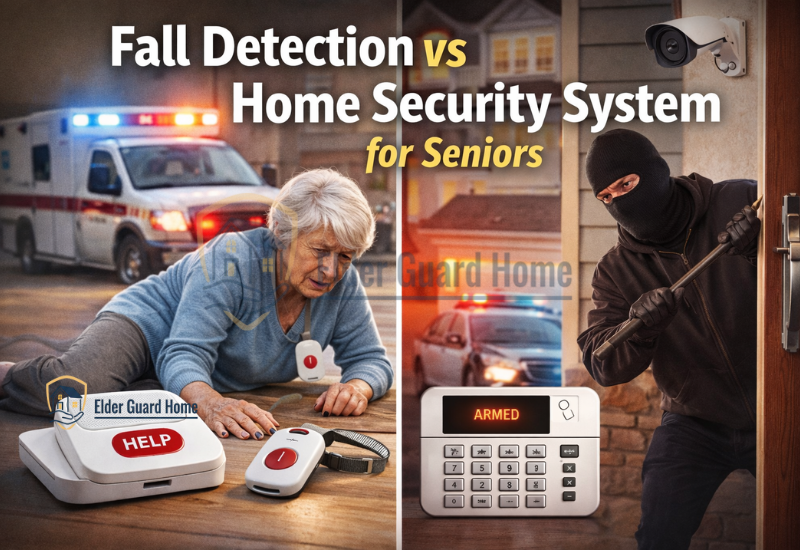
When families compare fall detection vs home security system for seniors, confusion is common.
Both promise safety.
They offer monitoring.
Both may include monthly fees.
However, they solve completely different problems.
One protects against medical emergencies.
The other protects against security threats.
Understanding this difference helps families choose the right protection — or decide if they need both.
If you’re still exploring how modern systems detect medical emergencies automatically, our complete guide to AI fall detection without wearable buttons explains how passive monitoring works and when it’s most effective.
What Problem Does Each System Actually Solve?
At the core, this is a medical alert system vs home alarm system decision.
They are built for different risks.
1. Medical Emergency vs Intrusion Threat
Fall detection systems respond to sudden health events.
Home alarm systems respond to break-ins, forced entry, or fire.
One is about physical health.
The other is about external danger.
2. Accidental Fall vs Burglary or Fire
Falls are the leading cause of injury among seniors.
Security systems, on the other hand, focus on:
Burglary
Unauthorized entry
Smoke or fire detection
These are very different emergencies.
3. Reactive vs Preventive Protection
Fall detection is reactive.
It activates when something happens.
Security systems are preventive.
They deter threats before they escalate.
4. Why Confusion Happens in Senior Households
Many systems advertise “complete protection.”
Marketing language overlaps.
But protection from a fall is not the same as protection from a break-in.
That’s where families must look deeper.
Security Threat vs Medical Emergency — Understanding the Core Difference
This section defines the real separation.
What Fall Detection Systems Are Designed For
Fall detection systems focus on:
Medical emergencies
Sudden collapse detection
Lack of movement alerts
Notifying family or EMS
They monitor activity patterns inside the home.
When something unusual happens, they trigger alerts.
The goal is fast medical response. If you’re comparing automatic monitoring with wearable panic devices, see our detailed breakdown of AI fall detection vs medical alert buttons to understand which option suits different mobility levels.
What Traditional Home Alarm Systems Focus On
Traditional alarm systems monitor:
Door and window sensors
Motion detectors
Glass break sensors
Smoke and fire alarms
Their purpose is to detect:
Intruders
Forced entry
Fire hazards
These systems are perimeter-focused.
They protect the home’s boundaries.
Monitoring Style Comparison: Police Dispatch vs Medical Response
The biggest difference in fall detection vs traditional alarm system decisions is who responds.
Security Systems
Alert a monitoring center
Dispatch law enforcement if needed
Contact homeowner
The priority is stopping a threat.
Fall Detection Systems
Notify family members
Contact emergency medical services
Trigger caregiver alerts
The priority is medical help.
Monitoring Center Differences
Security monitoring centers are trained for:
Intrusion verification
Fire protocol
Police coordination
Medical monitoring centers are trained for:
Health emergency assessment
EMS dispatch
Caregiver communication
They operate differently.
Who Gets Notified First?
Security system → Monitoring center → Police
Fall detection → Family or EMS directly
That sequence matters. Always use Fall detection devices that calls family members.
False Alarms in Fall Detection vs Home Security Systems
False alarms happen in both systems.
But the causes are different.
Why Security Systems Trigger False Intrusion Alerts
Common causes include:
Pets triggering motion sensors
Forgetting to disarm the system
High sensor sensitivity
Open windows during arming
These are environmental triggers.
Why Fall Detection Systems Trigger False Medical Alerts
Medical alerts may trigger due to:
Sudden sitting or lying down
Dropped objects
Fast body movements
Misinterpreted motion patterns
These are activity-based triggers.
Understanding this difference helps families set expectations.
Home Security System for Seniors Living Alone vs Fall Detection: Coverage Differences
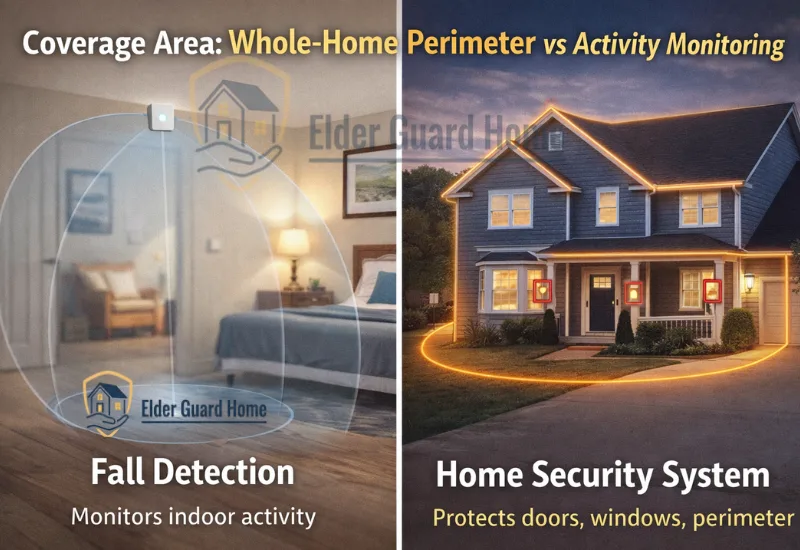
Coverage is another major separation.
A home security system for seniors living alone protects the perimeter.
It monitors:
Entry points
Exterior doors
Windows
Garages
Fall detection focuses inside.
It monitors:
Living rooms
Bedrooms
Bathrooms
Hallways
Which Rooms Matter Most?
Falls happen most often in:
Bathrooms
Bedrooms
Stairways
Security breaches usually occur at:
Front doors
Back doors
Ground-level windows
Different focus. Different placement.
Blind Spots in Each System
Security systems do not detect:
A senior collapsing in the kitchen
Sudden immobility in the hallway
Fall detection systems do not detect:
A forced entry at 2 AM
Window tampering
Each system has gaps.
Can a Home Security System Detect Falls in Seniors?
This is a common misconception.
Standard motion sensors cannot detect a fall.
They detect movement — not collapse.
A motion sensor only sees that “movement occurred.”
It does not understand the nature of the movement.
What About Security Cameras?
Traditional cameras:
Record video
Send motion alerts
They do not automatically recognize medical emergencies unless enhanced with specialized analytics.
Without medical-focused detection, a fall may go unnoticed unless someone actively monitors footage.
That’s an important distinction.
Do Seniors Need Both Fall Detection and a Home Security System?
This is where families ask:
Do seniors need both fall detection and security system protection?
The answer depends on risk level.
Seniors Living Alone
If a senior lives alone:
Fall detection ensures medical help.
Security system deters crime.
In many cases, both provide peace of mind. Some families go further by choosing multi-sensor home monitoring systems that combine fall detection, security alerts, and layered in-home monitoring for broader protection.
Seniors with Mobility Risks
Higher fall risk increases the value of medical monitoring.
Security systems alone are not enough in this scenario.
High-Crime Areas
In higher crime neighborhoods:
Security systems become essential.
Fall detection remains important for health.
Layered safety makes sense here. If your focus is perimeter protection and crime deterrence, review our guide on choosing the best home security system for seniors living alone.
Dementia or Cognitive Decline Cases
Cognitive decline introduces dual risks:
Wandering
Falls
Security systems can alert on door exits.
Fall detection can monitor medical emergencies.
In these cases, combining systems is often ideal.
Fall Detection vs Home Security System Cost Comparison
Cost is often the deciding factor when families compare safety systems.
However, pricing structures differ.
Equipment Cost
Fall detection systems may include:
In-home sensors or cameras
Wearable pendants (Fall detection wearable devices)
Base units
Equipment costs typically range from moderate to high depending on coverage size.
Home security systems usually include:
Door/window sensors
Motion detectors
Control panels
Sirens
Larger homes require more sensors, which increases upfront cost.
Monthly Monitoring Fees
Monitoring is where long-term costs add up.
Fall monitoring services usually charge monthly fees for:
Medical emergency response
Family notifications
24/7 monitoring center access
Traditional alarm systems charge for:
Intrusion monitoring
Fire dispatch
Police coordination
Some security companies lock users into contracts.
Medical monitoring providers may offer more flexible plans.
Always compare contract terms, not just price. You can also go with Fall Detection Device for Elderly without subscription.
Installation Costs
Fall detection systems can be:
Self-installed
Professionally installed
Security systems often require professional installation, especially wired setups.
Installation fees vary by provider and home size.
Long-Term Value
The real question is not cost — but value.
A fall detection system can prevent delayed medical response.
A security system can deter burglary and property loss.
For some families, one risk outweighs the other.
For others, both risks matter.
Choosing based only on price may leave protection gaps.
Fall Detection vs Home Security System: Feature Comparison Table
Here’s a clear feature comparison to simplify the decision:
| Feature | Fall Detection | Home Security System |
|---|---|---|
| Detects Falls | ✔ | ✖ |
| Detects Break-Ins | ✖ | ✔ |
| EMS Dispatch | ✔ | Limited |
| Police Dispatch | ✖ | ✔ |
| Perimeter Protection | ✖ | ✔ |
This table highlights the core difference:
- Fall detection protects health.
- Security systems protect property and entry points.
They serve different purposes.
Do Seniors Need Fall Detection or a Home Security System?
Choosing the right system depends on risk level and living situation.
Best for Medical-Risk Seniors
If a senior has:
Mobility challenges
Balance issues
Recent fall history
Fall detection should be the priority.
Medical emergencies require fast response.
Best for High-Crime Neighborhoods
If the home is located in:
Higher crime areas
Isolated neighborhoods
Ground-floor apartments
A home security system becomes essential.
Perimeter protection reduces intrusion risk.
Best for Families Wanting Layered Safety
Some families want full coverage.
Medical + perimeter protection.
In these cases, combining systems may offer the strongest peace of mind.
Layered safety reduces blind spots.
When Budget Is Limited
If budget allows only one system:
Choose fall detection if medical risk is higher.
Choose security monitoring if crime risk is higher.
Risk assessment should guide the decision.
FAQ
Is fall detection the same as a home security system?
No. A fall detection system monitors for medical emergencies like falls and can dispatch EMS. A home security system monitors break-ins, doors, windows, and motion activity, typically alerting police.
They serve different safety purposes.
Can a home security system detect falls?
Most traditional home security systems cannot detect falls automatically. They are designed for intrusion detection, not medical emergencies. Seniors at medical risk usually require a dedicated fall monitoring system.
Do seniors need both fall detection and home security?
It depends on risk factors:
High medical risk → Fall detection is essential
High crime area → Security system is important
Living alone + medical risk + neighborhood concerns → A layered approach may be best
Which system dispatches emergency medical services (EMS)?
Fall detection systems are designed to contact medical responders.
Home security systems typically dispatch police and may only offer limited medical response unless paired with special monitoring plans.
Is fall detection more expensive than a security system?
Not necessarily. Costs vary depending on:
Equipment type
Professional monitoring
Installation requirements
Some AI-based fall detection systems have similar or lower monthly costs than monitored alarm systems.
What is better for seniors living alone?
For seniors with health risks, automatic fall detection provides faster medical response.
For seniors worried about crime, a home alarm system offers perimeter protection.
The best solution depends on primary risk.
Can smart home devices replace fall detection?
No. Smart speakers or cameras are not designed for reliable medical emergency detection. Dedicated fall monitoring systems use specialized sensors to reduce false alarms and improve response accuracy.
Are there systems that combine fall detection and security monitoring?
Yes. Some multi-sensor monitoring systems combine:
Fall detection
Motion tracking
Entry monitoring
Remote caregiver alerts
These are designed for broader in-home safety coverage.
Fall Detection vs Home Security System for Seniors: Final Decision Guide
When comparing fall detection vs home security system for seniors, remember:
They solve different problems.
One addresses medical emergencies.
The other addresses external threats.
Simple Decision Tree
Ask these questions:
Is fall risk high? → Prioritize fall detection.
Is crime risk high? → Prioritize security system.
Are both risks present? → Consider combining both.
There is no universal answer.
The right choice depends on:
Health condition
Living situation
Neighborhood risk
Family support availability
If you’re still evaluating which monitoring approach fits your home, explore our related guides on fall detection systems and senior home security options to compare features in more detail.
Making an informed decision today can prevent emergencies tomorrow.